If you’re looking for one place in St. Lucia that combines views, history, hiking, beaches, and easy snorkeling without needing a full-day tour, Pigeon Island National Park absolutely earns its spot on your itinerary. Sitting on the northwestern tip of the island near Gros Islet and Rodney Bay, this is one of those rare places where you can hike to sweeping viewpoints, cool off in clear water, and still be back at your hotel by dinner.
It’s easy to access, affordable, and flexible depending on how ambitious (or lazy) you’re feeling that day. Which, honestly, is my favorite kind of travel spot.
Pigeon Island National Park sits right by Rodney Bay, just north of Gros Islet. It used to be a separate island, but a man-made causeway now connects it to the mainland, which means no boats, no tours, and no stress to get there.
If you’re staying in northern St. Lucia, it’s one of the easiest attractions to visit on your own. If you’re exploring the island independently, see my full review of renting a car in St. Lucia with Drive-O-Matic for exactly how we handled transportation without resort transfers or tours.
If you’re deciding where to stay near Pigeon Island, Sandals Grande St. Lucian is right next door and one of the most convenient luxury options. If you want to compare other options in the area, you can browse hotels near Pigeon Island here or read my guide on best hotels in St. Lucia.
Getting to Pigeon Island National Park is straightforward.
If you’re using Google Maps, set your destination to Joe’s Chill and Grill. That will take you directly to the beach entrance, and yes—there is free parking right there by the water.
Here’s how access works:
The beach area is completely free and open to the public
The national park entrance fee (for hiking trails and ruins) is about $10 USD
You can absolutely visit the beach without paying if you don’t plan to hike
Insider tip: Try to visit on a weekday when cruise ships aren’t in port. When ships are docked, it’s noticeably busier. Without them, it feels relaxed and local. You can check cruise schedules online ahead of time if you want to time it right.
I rented a car, and it makes visiting Pigeon Island so much easier — especially if you’re staying in the Soufrière area and still want to visit Pigeon Island during your trip.
Let’s be honest: not every labeled site inside Pigeon Island National Park is worth your time. Some spots are little more than old foundations with a sign next to them. That said, the ones that matter are genuinely impressive.
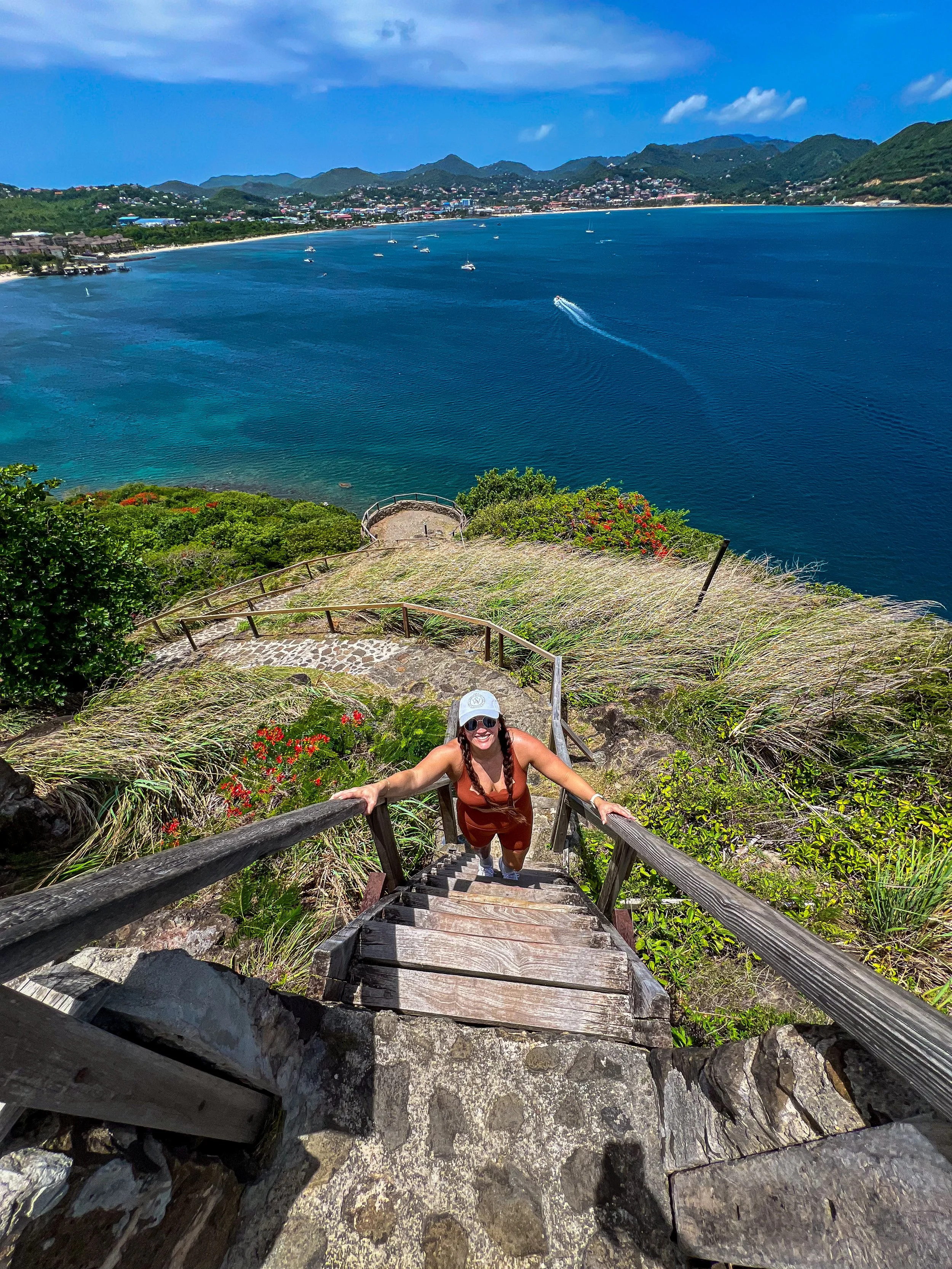
Fort Rodney is the star of the entire park. If you only do one thing at Pigeon Island National Park, make it this.
The walk up is short and scenic, and at the top you’ll find:
Historic cannons
Old stone military walls
Panoramic views over Rodney Bay and the Caribbean
This is the main reason people visit, and it fully lives up to the hype. The view alone makes the heat and uphill walk worth it.
Just above Fort Rodney is Signal Peak, the highest point on the island and your biggest “wow” moment.
The climb is a bit steeper but still very doable, and on a clear day you can see Martinique in the distance. It’s the kind of view that makes conversations stop mid-sentence. Bring water and good walking shoes—the terrain is rocky and uneven in places.
If you don’t want to commit to the full climb, the Lower Peak is an easier 15–20 minute hike with beautiful views over Rodney Bay and Reduit Beach. There’s an incline, and the stairs near the top are a little tricky, but overall it’s manageable for most people.
There’s also a Lookout and Rest Stop partway up that still delivers wide-open Caribbean views without going all the way to the top.
A bit off the main paths, you’ll find:
Musket Redoubt
Ridge Battery
The Gun Slide
These areas are quieter and less visited, with a mix of military ruins and peaceful viewpoints. They’re great if you enjoy photography or want a break from the busier trails—but they’re optional. You won’t miss anything major by skipping them.
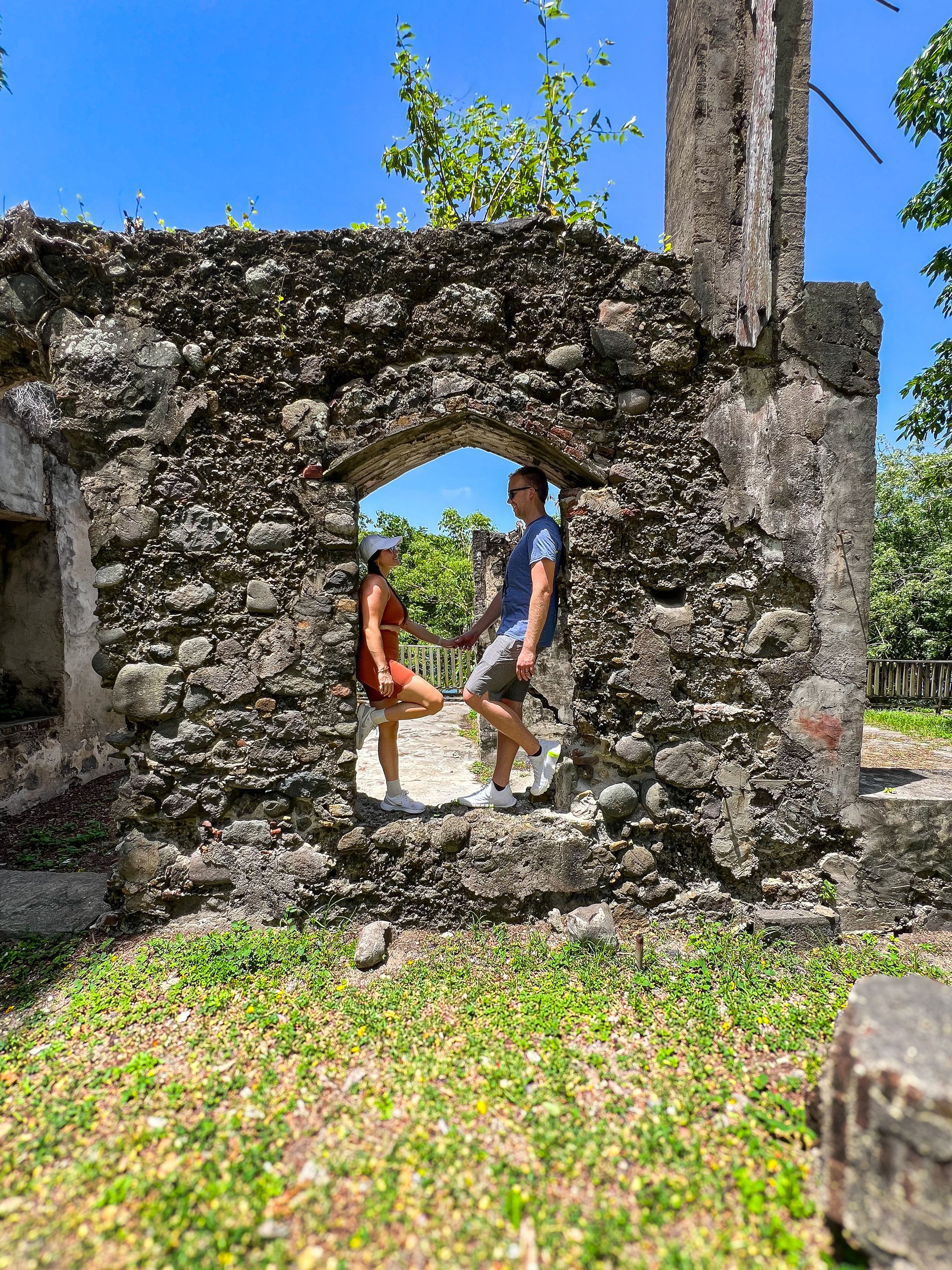
Everything else—the old barracks, kitchens, powder storage areas, workshops, lime kiln, cemetery, inclined ramp, Carib Caves, former signal station, and scattered ruins—is interesting but not essential for most visitors.
One of the best things about Pigeon Island National Park is that the beaches are right there waiting for you after your hike.
This is the main public beach and the most popular spot. It has:
Soft sand
Calm, clear water
A laid-back, local feel
Snorkeling here is surprisingly good, especially by the rocks along the shoreline. You can spot tropical fish in shallow water without swimming far out. Bring your own snorkel gear—rentals are limited.
Once you pay the park entry fee, you’ll have access to the second, more secluded beach. It’s smaller, quieter, and generally less crowded. Snorkeling along the coral formations just offshore is excellent, and it’s a great place to relax after hiking.
For more underwater spots around the island, check out my guide to the best snorkeling in St. Lucia for other easy-access locations.
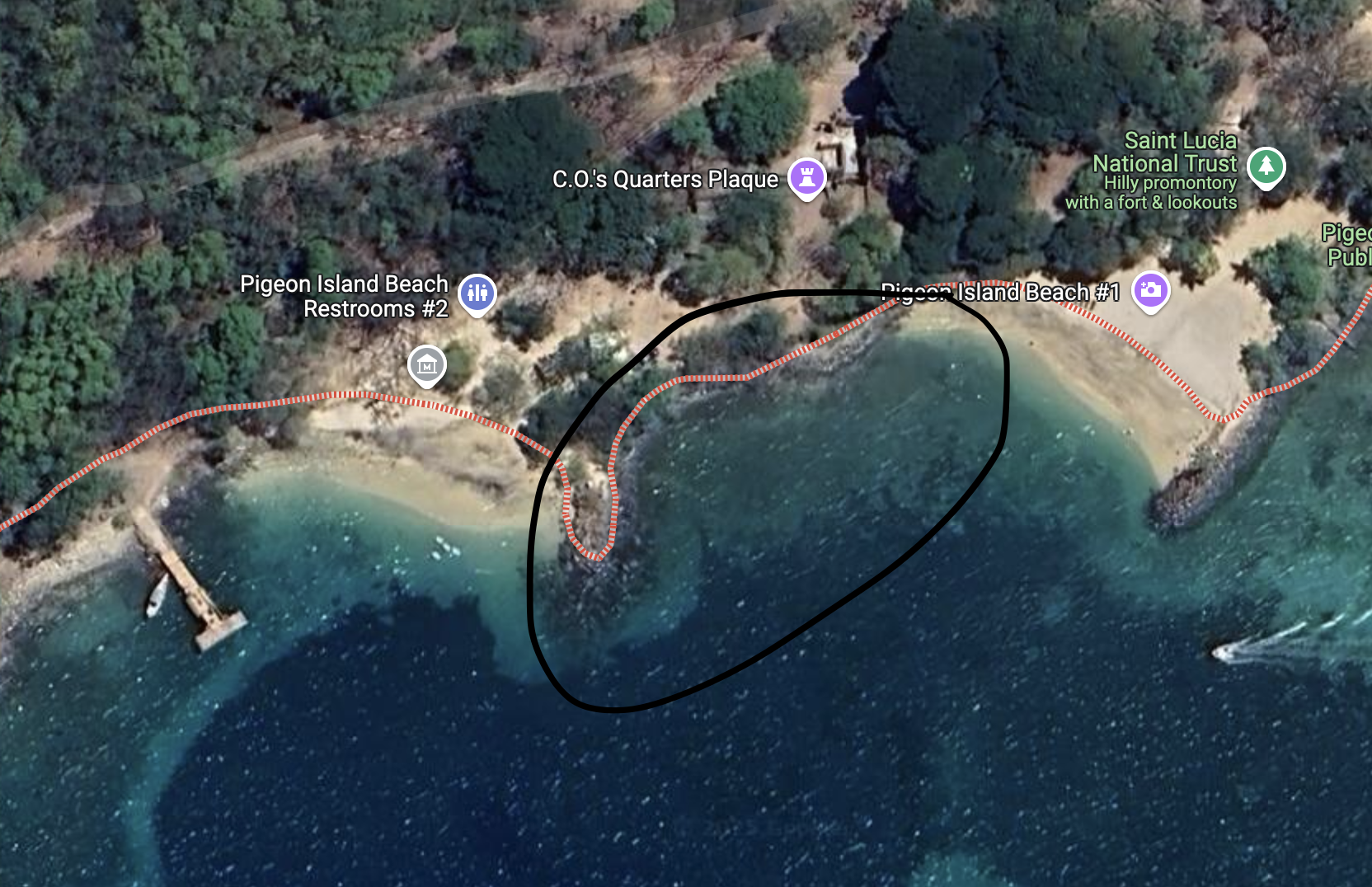
Snorkel by the rocks off of Pigeon Island Beach 1.
Down by the water, the Jetty is a calm spot for shoreline views or a quick photo break. The water here is some of the prettiest blue you’ll see on the northern end of the island.
If it’s open, the Interpretation Centre is worth a short visit. It provides helpful context on the history of Pigeon Island National Park and how all the ruins fit together. Josset’s House adds a nice slice of mid-1900s history if you want something beyond the colonial-era military sites.
On Fridays and Saturdays, Pigeon Island completely shifts gears.
Around Joe’s Chill and Grill, the area turns into a local beach party with:
Music
Dancing
Beach games
A lively mix of locals and visitors
This is one of the best places to casually experience St. Lucian culture. Grab a grilled fish plate, sip a local beer, and settle in—it’s relaxed, social, and very real. If you want to keep the night going nearby, learn more in my post about the Gros Islet Friday Night Street Party for another must-do local experience.
Here’s the simplest, most efficient plan:
Climb Fort Rodney
Continue to Signal Peak if you’re up for it
Wander through a few smaller ruins if you feel like exploring
End with beach and snorkeling time
You’ll get the views, the history, and the water without spending your entire day there.

Pigeon Island National Park is one of the most rewarding places to explore in St. Lucia because it gives you so much in one stop. Hiking, snorkeling, beaches, history, and local culture—all without complicated logistics.
It’s easy to access, budget-friendly, and flexible enough to match your energy level. Whether you’re squeezing it into a half day or lingering through sunset, it’s absolutely worth the visit.
Beach access is free
National park entry for hiking and ruins is approximately $10 USD
Navigate to Joe’s Chill and Grill for easy parking and beach access
Visit on non-cruise days for a quieter experience
Bring comfortable shoes, sun protection, water, and snorkel gear
Don’t miss the weekend beach parties for an authentic local vibe


A café, bakery, market, and wine shop all in one Phoenix stop 🍊
At La Grande Orange, order the crepes first, they’re the thing I’d go back for. The chicken salad sandwich is perfect if someone wants lunch while you’re still on breakfast, and the red velvet mini cupcake and a chai latte round it out. The sea salt chocolate chip cookie is heartier than gooey, so it’s best for dunkers. It’s counter service with easy parking, and the market has quirky gifts you won’t find elsewhere. Leave time to browse, because you’ll stay longer than planned.
Save this for your Phoenix trip ☀️

“Outside Terminal 3” is not a pickup location at PHX.
Before your driver pulls in, text them four things: your terminal, north or south side, door number, and inner or outer curb. Grab your bags first, then call them in. Drivers can wait free in the cell phone lot instead of circling. Getting through security is easy; getting picked up is the hard part.
Save this for your Phoenix trip ✈️
Come for the architecture, stay for the view.
The Chapel of the Holy Cross has been built into Sedona’s red rocks since 1956. The outside overlooks get busy, but inside is quiet, with huge windows framing the rocks. It’s free, takes 30-45 minutes, and has a paved, wheelchair-accessible ramp. Make sure to bring water in summer.
Save this for your trip planning!
Order it well done. Trust me.🍑🍕
Peach & Pancetta Pizza at Hideaway House in Sedona: roasted peaches, salty pancetta, ricotta, basil, extra-crispy crust. Split the house salad, grab a prickly pear lemonade, and get a patio table facing the red rocks. Skip the bread if you want room for another slice.
Save this for your Sedona trip✈️
Pack your bags, Denver is not just a mountain layover. RiNo alone can eat a full day between the murals, food, and bars. Skip the concert and hit Red Rocks midday instead, you’ll basically have it to yourself. Golden’s a 30-minute trip if you want a change of pace, and if food drives your travel like it does mine, Denver Central Market and BRUTØ deserve real time on the calendar. Give it three days minimum, four if you’re eating your way through it. Save this.

Follow @travelwithwendyplummer for Beautiful Beach Destinations, City Guides, Foodie Spots, and Luxury Hotel Recommendations.