
One of the things that surprised me most about exploring Athens ancient sites was just how much history you can see simply by walking around the city.
You can be exploring a neighborhood filled with restaurants, cafés, and shops, turn a corner, and suddenly find yourself standing in front of ruins that are thousands of years old. And the best part? You don’t necessarily need to purchase tickets to every archaeological site to appreciate them.
Now, I’ll be the first to admit that we’re not huge history buffs. I absolutely appreciate seeing famous historical landmarks, but I also like leaving time for shopping, exploring neighborhoods, and eating REALLY good food.
During our visit, we toured the Acropolis, went inside Panathenaic Stadium, and saw several other ancient sites from the surrounding streets. We spread our sightseeing across two days, which gave us time to explore Plaka, Anafiotika, Monastiraki, and Syntagma Square.
In this Athens ancient sites walking guide, I’m sharing what we actually visited, which sites I’d recommend paying to enter, and how to organize a walking route through the historic center.
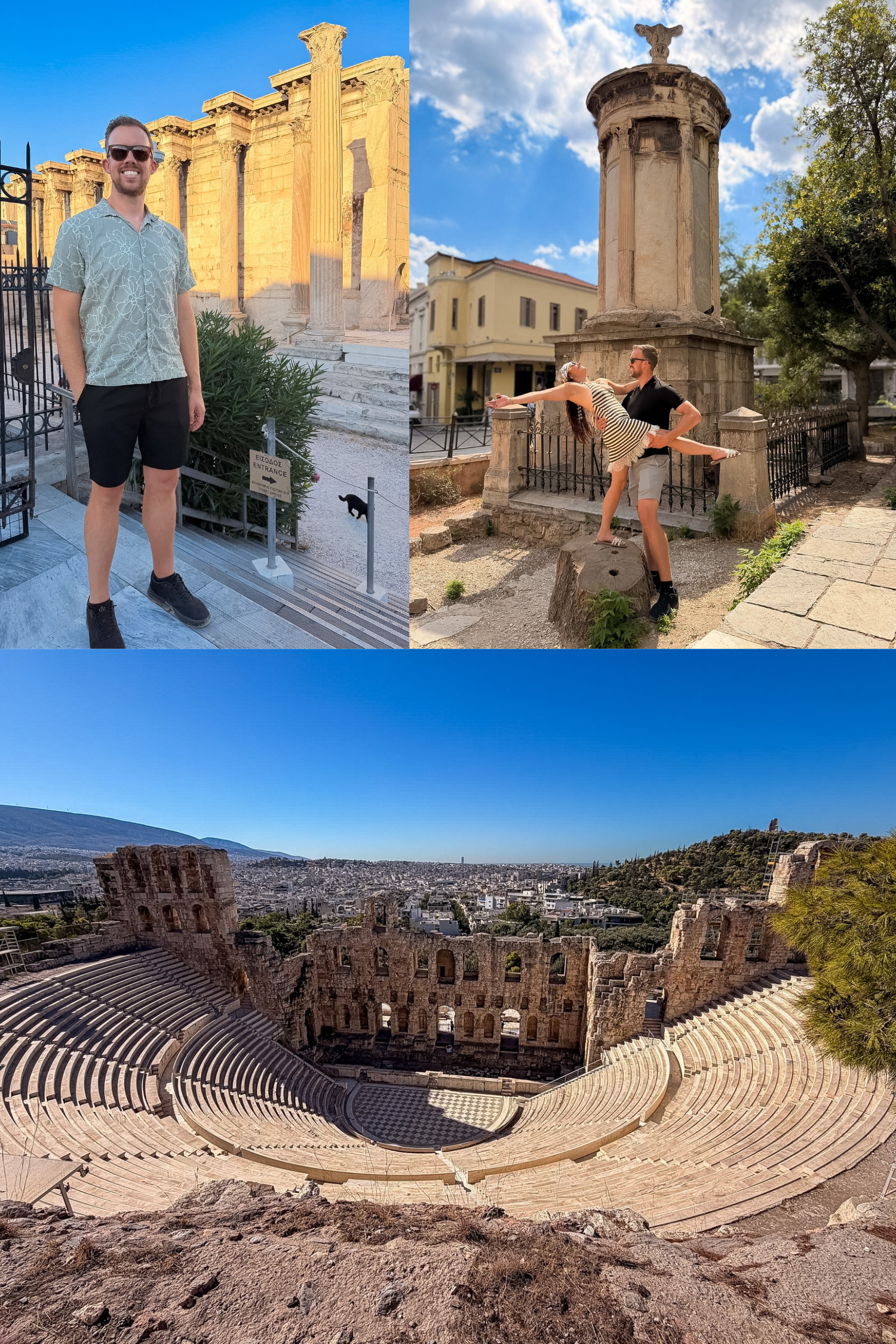
One of the things I loved about Athens was how many ancient sites were within walking distance of each other, particularly around the Acropolis, Plaka, and Monastiraki.
We spread our sightseeing across two days, but if you’re planning to see several archaeological sites in one day, here’s the walking route I’d recommend:
 WENDY’S TIP: This route makes sense if you’re finishing your Acropolis visit on the southern side. If you’re leaving through the western entrance, the Ancient Agora is closer, so you may want to start there and work toward Plaka instead.

We didn’t follow this exact route because we also included restaurant reservations, Syntagma Square, and Panathenaic Stadium in our two days of sightseeing.
If you only have one day, I’d prioritize the Acropolis, choose one additional archaeological site if you’re interested in history, and enjoy the smaller ruins from the surrounding streets.
For more ideas on combining sightseeing with other attractions, my One Day in Athens Greece: The Perfect First-Time Itinerary can help you plan your day.
 View My Athens Ancient Sites Walking Map
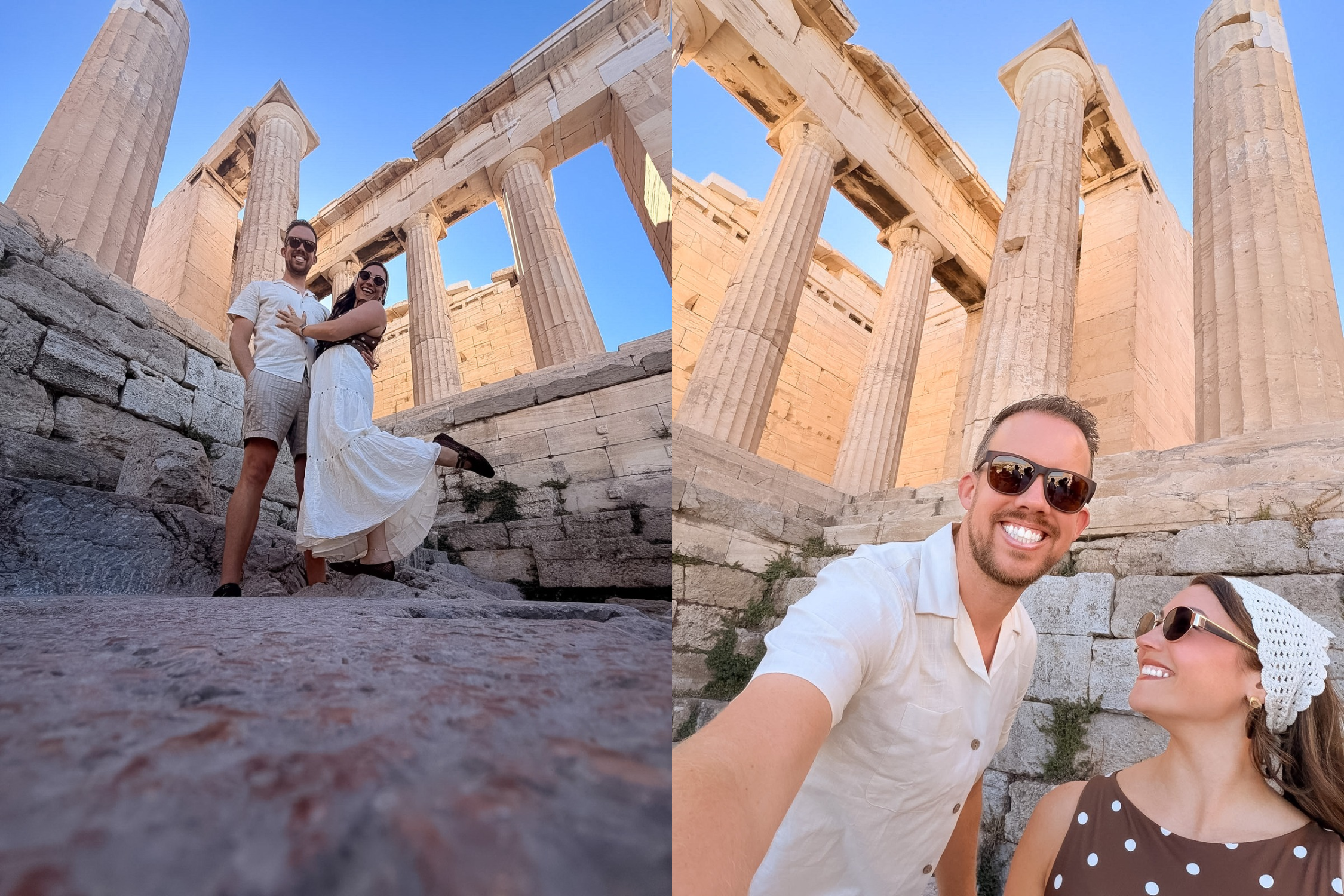
If there’s one ancient site I’d prioritize in Athens, it’s the Acropolis.
We actually had a plan to get there at 8:00 AM. And then, HELLO, night owl. We ended up arriving around 10:00 AM instead. Oops. Ha! I’d heard that visiting first thing in the morning was better for avoiding some of the crowds, and after seeing what it looked like at 10:00 AM, I understand why.
There were SOOOOO many people. The crowds were especially noticeable around the stairs and entrance to the main archaeological area. Once we made it into the larger open area, people spread out a little more, but there were still tourists everywhere.
You’re probably not going to have the Parthenon to yourself, and getting pictures without other people in them may take some patience. Even with the crowds, though, I absolutely think the Acropolis is worth visiting.
The Parthenon is obviously the monument everyone recognizes, but there’s much more to explore once you’re inside.
Some of the main highlights include:
We spent approximately two hours exploring independently, which worked well for seeing the major structures without studying every historical detail.
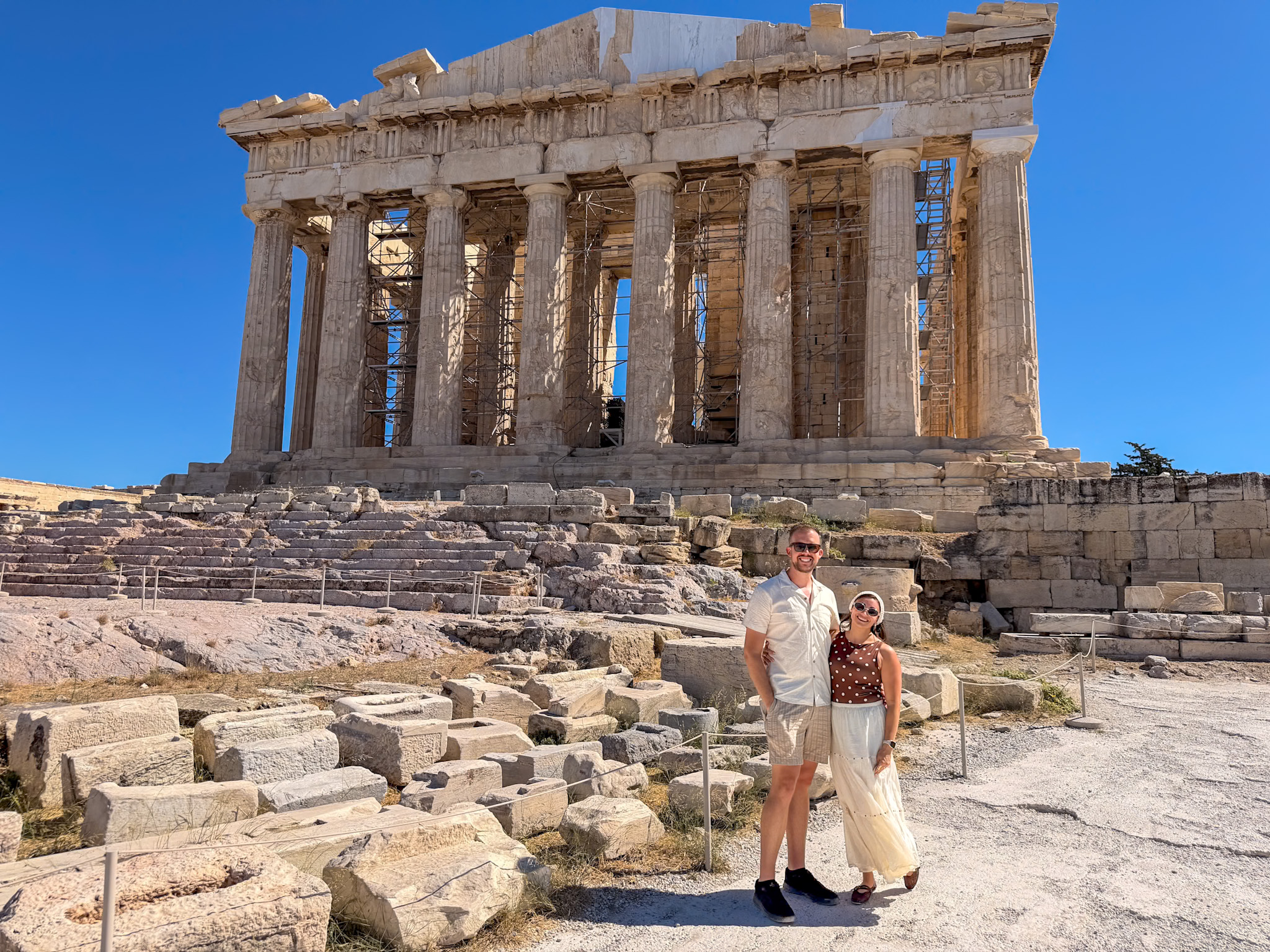
The Parthenon was definitely my favorite, but the views overlooking Athens were another highlight.
You may also notice scaffolding or restoration work around some of the monuments.
You may also notice scaffolding or restoration work around some of the monuments. These ancient structures require ongoing conservation, so you might see a little construction during your visit.
There is definitely some walking involved.
Expect hills, stairs, and uneven stone surfaces that can be slippery. There’s also limited shade, especially in the larger open areas.
I wore flats during our visit, but I’d recommend comfortable tennis shoes with good traction. The slippery stone surfaces were more of a concern than the actual distance we walked.
For visitors with mobility limitations, the Acropolis has an elevator intended for people with disabilities. We also noticed signs directing visitors toward accessible toilets and baggage or stroller check-in.
I’d check the current accessibility arrangements before your visit, since using the elevator or accessing certain areas may require advance planning.
WENDY’S TIP: Purchase your Acropolis tickets online, bring water, and allow extra time for crowds around the narrower stairs and entrances. We had a very short wait to enter, but that didn’t mean the archaeological site itself was uncrowded!
For more information about tickets, entrances, and planning your visit, read my Visiting the Acropolis in Athens: Everything You Need to Know.
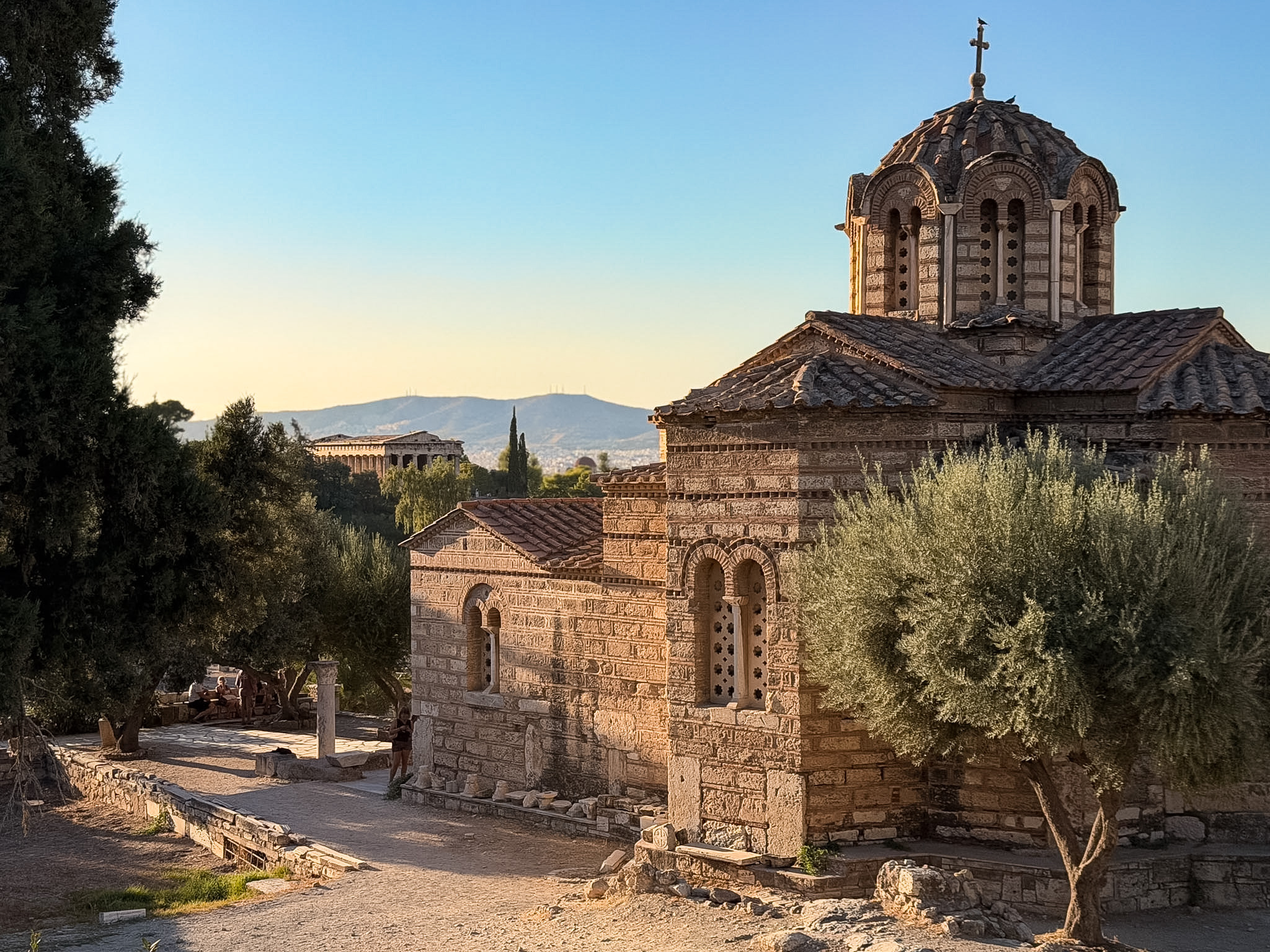
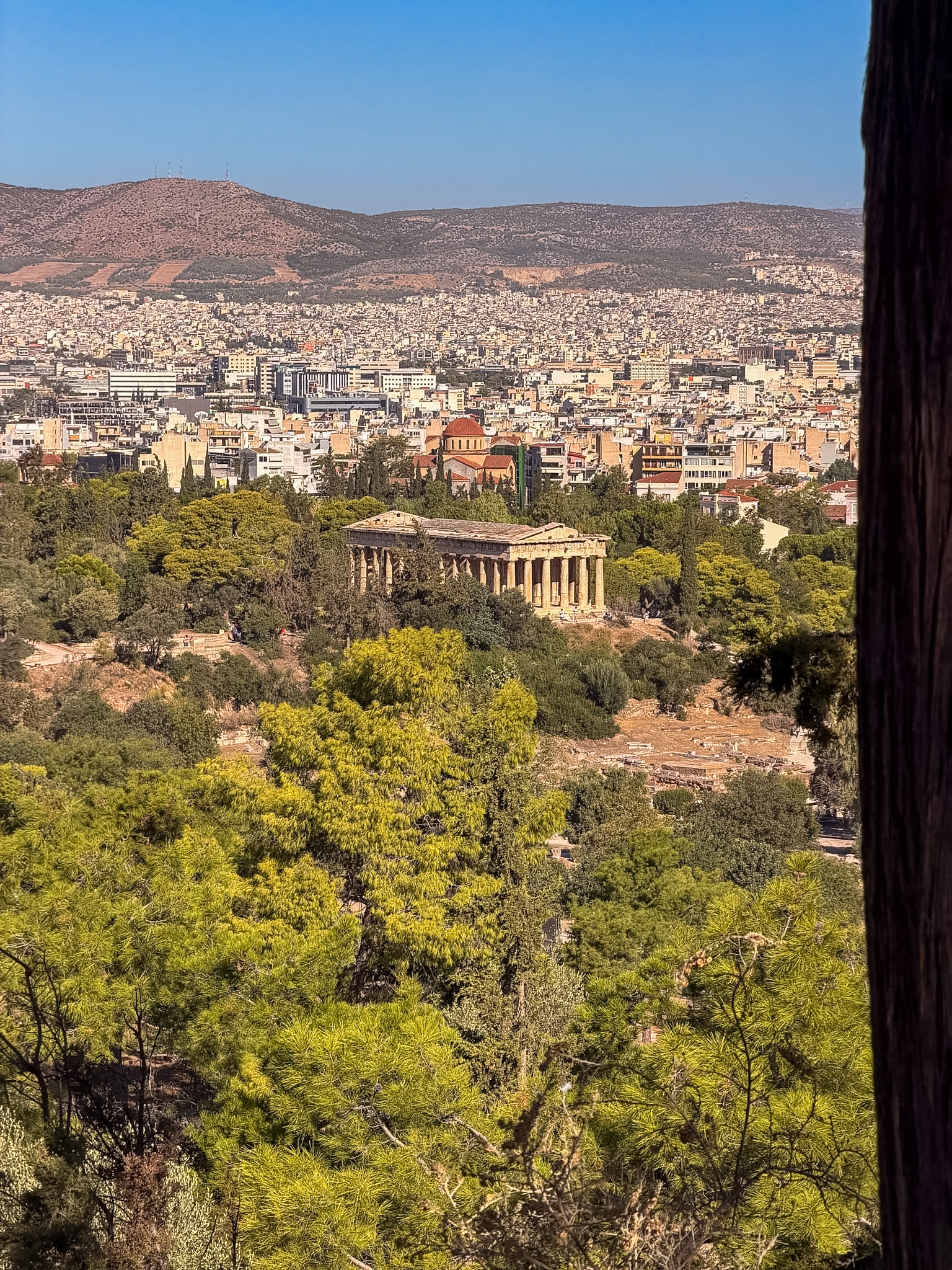
The Ancient Agora is one of Athens’ most important archaeological sites, but we enjoyed it from the surrounding viewpoints rather than purchasing admission.
If you DO love history, though, this is probably the other site I’d recommend paying to enter. The Agora was once the center of public life in ancient Athens, where people gathered for politics, business, and everyday activities.
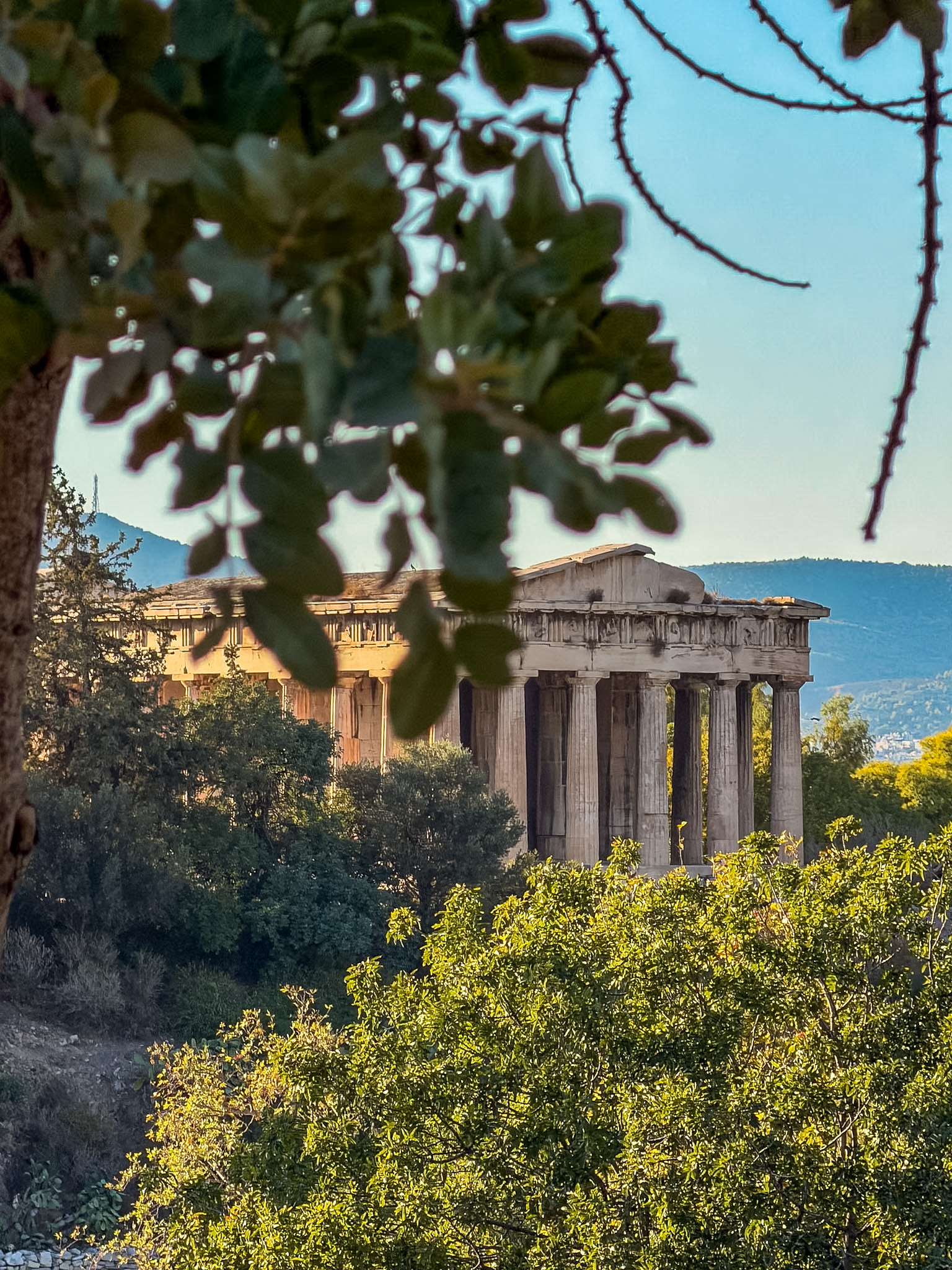
Today, the archaeological site includes ancient foundations, temples, and the reconstructed Stoa of Attalos, which houses a museum. Another major highlight is the Temple of Hephaestus, considered one of the best-preserved ancient Greek temples.
For someone who’s really interested in Greek history, I think you’d get quite a bit from exploring the site in more detail. For us, seeing the ruins while walking around the historic center was enough.
If you’re planning to enter, I’d allow approximately 1–1.5 hours, especially if you want to visit the museum.
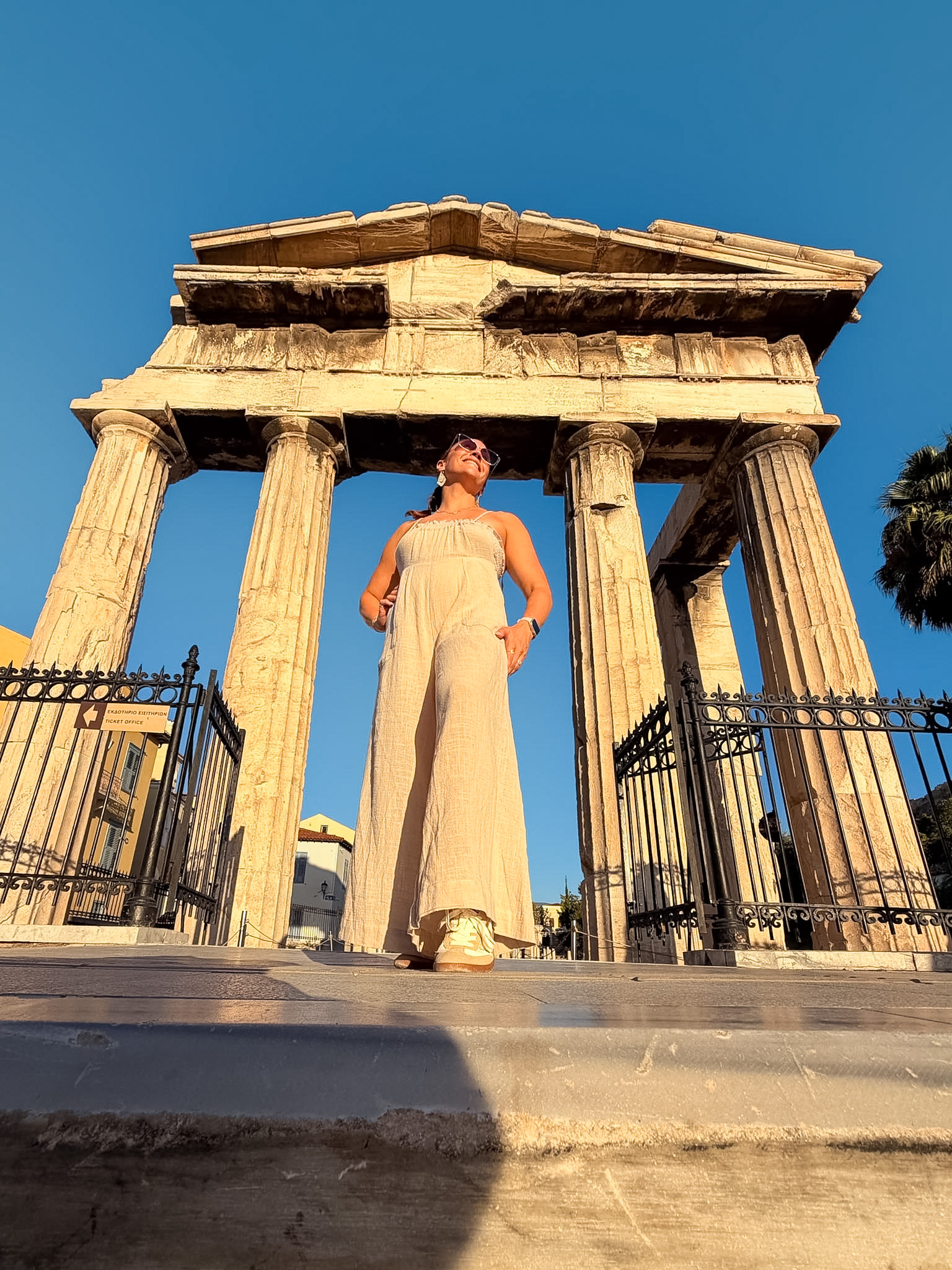
The Roman Agora is another archaeological site we saw while exploring Athens on foot. And don’t confuse it with the Ancient Agora! They’re two different sites located relatively close together.
The Roman Agora developed as a marketplace during the Roman period, and one of its most recognizable features is the Tower of the Winds, an octagonal structure that was used to measure time and weather conditions.
You’ll also see the Gate of Athena Archegetis, with its large stone columns. We didn’t purchase admission, but we could see portions of the archaeological site from the surrounding streets.
During our visit, the entrance sign listed admission at €10, with a reduced ticket priced at €5.
If you’re interested in going inside, it’s a relatively compact site, so I’d allow around 20–40 minutes. Otherwise, it’s an easy stop to include while walking between Plaka and Monastiraki.

Hadrian’s Library is incredibly easy to see while exploring central Athens because it’s right near Monastiraki Square.
The library was built during the reign of Roman Emperor Hadrian in the second century AD and once included reading rooms, lecture spaces, and a large courtyard. Today, portions of its enormous walls and columns remain.
We passed by Hadrian’s Library during both days of our sightseeing itinerary, and I felt like you could see quite a bit without actually going inside.
What I especially loved was seeing the ruins surrounded by modern Athens. There are shops, restaurants, and people going about their day with this ancient structure sitting right beside everything.
The entrance sign listed admission at €10 during our visit, but if you’re already visiting Monastiraki, I’d stop and take a look whether you plan to enter or not.
If you do purchase admission, allow approximately 15–30 minutes to explore.



The Temple of Olympian Zeus was another landmark we stopped to see while walking around Athens. And those columns are HUGE. The temple originally had 104 enormous Corinthian columns, although only 15 remain standing today.
During our visit in September 2026, much of the site was undergoing restoration work. Rather than purchasing admission, we decided to admire it from outside, and that worked perfectly well for us.
If you’re particularly interested in ancient architecture and Greek history, you may want to explore the grounds. I’d allow approximately 15–30 minutes, depending on which areas are accessible.
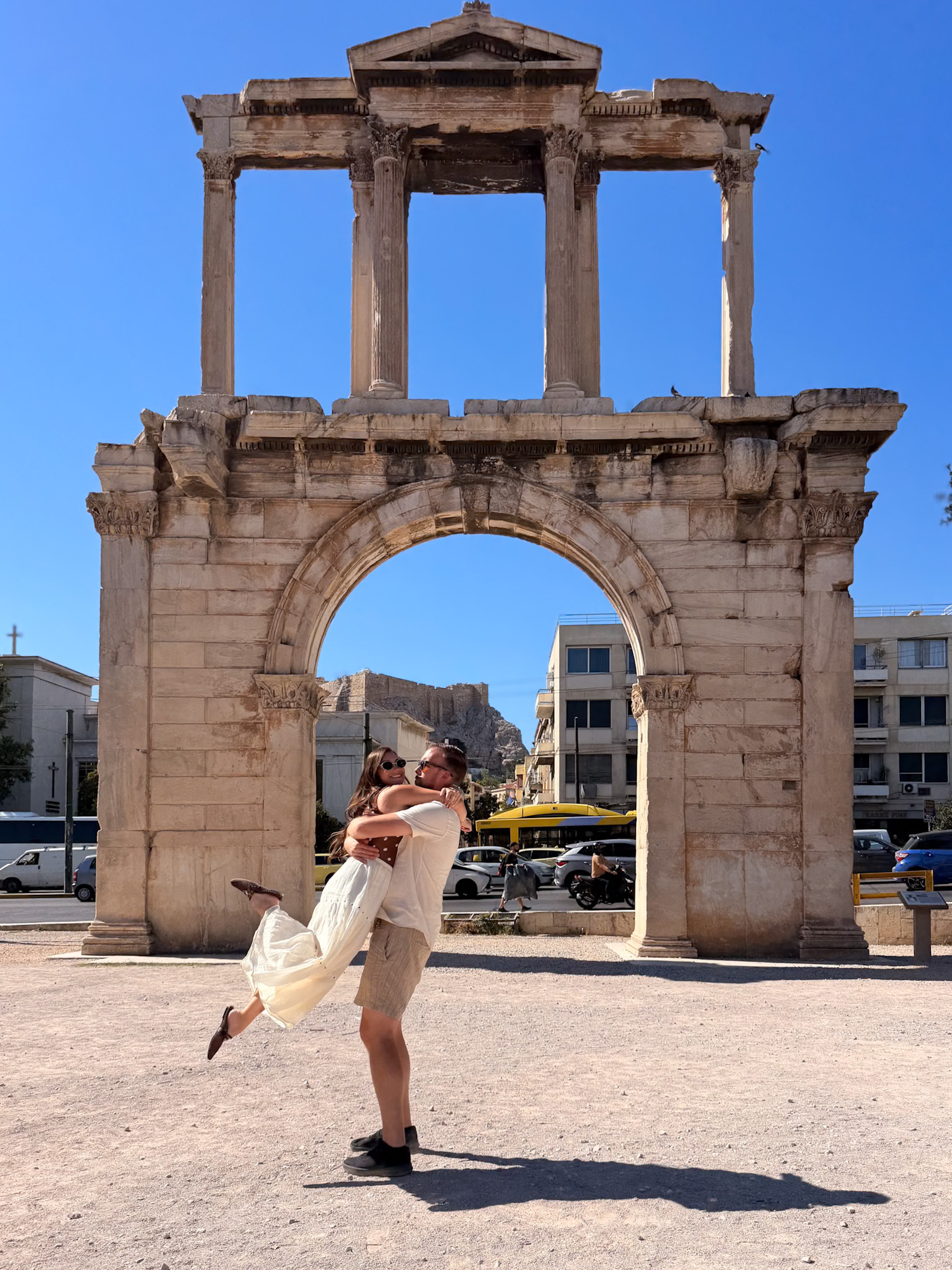
Right near the Temple of Olympian Zeus is Hadrian’s Arch. This large stone gateway was built during the Roman period and stands right beside one of Athens’ busy roads.
And the nice thing about this landmark? You don’t need a ticket.
It also makes for some great pictures, although there were plenty of tourists around during our visit. If you’re trying to take one without a bunch of strangers in the background, you may have to wait for the right moment.
We stopped here while exploring the Plaka area, and it was an easy addition to our walking route. I’d allow approximately 5–10 minutes unless you’re particularly interested in its history.
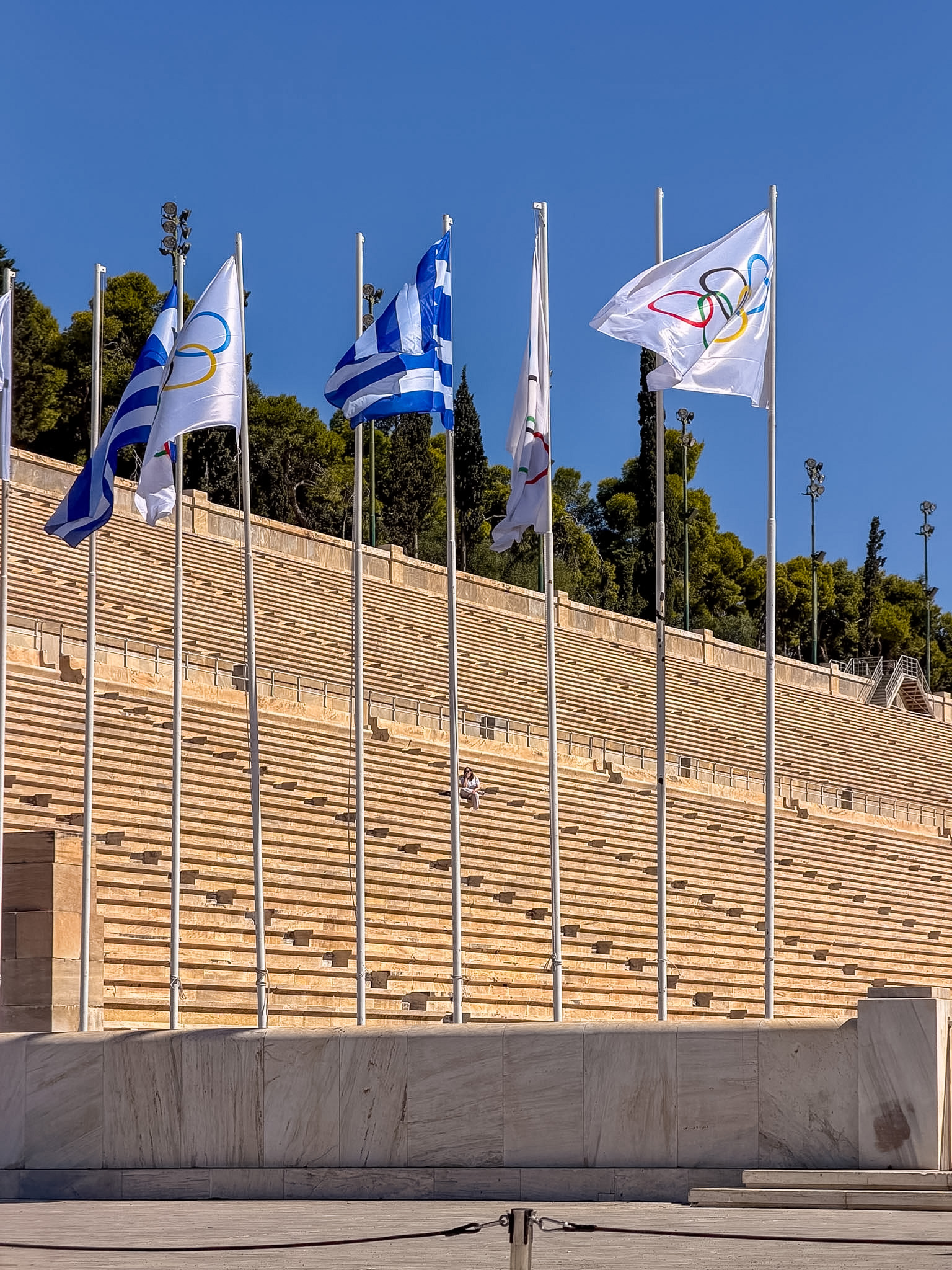
The Panathenaic Stadium was another attraction we actually went inside. Also known as Kallimarmaro, it’s famous for its marble construction and its connection to the first modern Olympic Games in 1896.
Unlike the temples and archaeological ruins around the Acropolis, this is a historic athletic venue that you can explore. We had approximately 30 minutes allocated for our stop. Unfortunately, they were setting up for an event when we visited, so the preparations affected how much time we wanted to spend there.
I think it’s worth considering, especially if you’re interested in Olympic history or want to see something different from ancient temples.
The stadium is also farther from the main cluster of archaeological sites, so I’d consider visiting it separately or using transportation if your feet are already DONE from sightseeing.
We incorporated it into our day while using the Big Bus Athens hop-on hop-off tour, which made it easy to reach without adding another long walk to our day.
For more details about the route and our experience, read my Athens Hop-On Hop-Off Bus Review: Is It Worth It?
We didn’t visit the Acropolis Museum during this trip, so I can’t give you a firsthand review.
The museum displays ancient sculptures and artifacts discovered at the Acropolis and nearby excavations. There’s also an archaeological excavation beneath the building that visitors can explore.
If you love Greek history, I’d allow approximately 1.5–2 hours for a visit.
Just keep in mind that the museum requires a separate admission ticket from the Acropolis archaeological site.
For our itinerary, we chose to spend that time exploring Athens’ neighborhoods instead.
You don’t necessarily need to do everything.
If you’re looking for other sightseeing ideas beyond ancient ruins, my Best Things to Do in Athens Greece: 25+ Attractions for First-Time Visitors includes more places to consider.
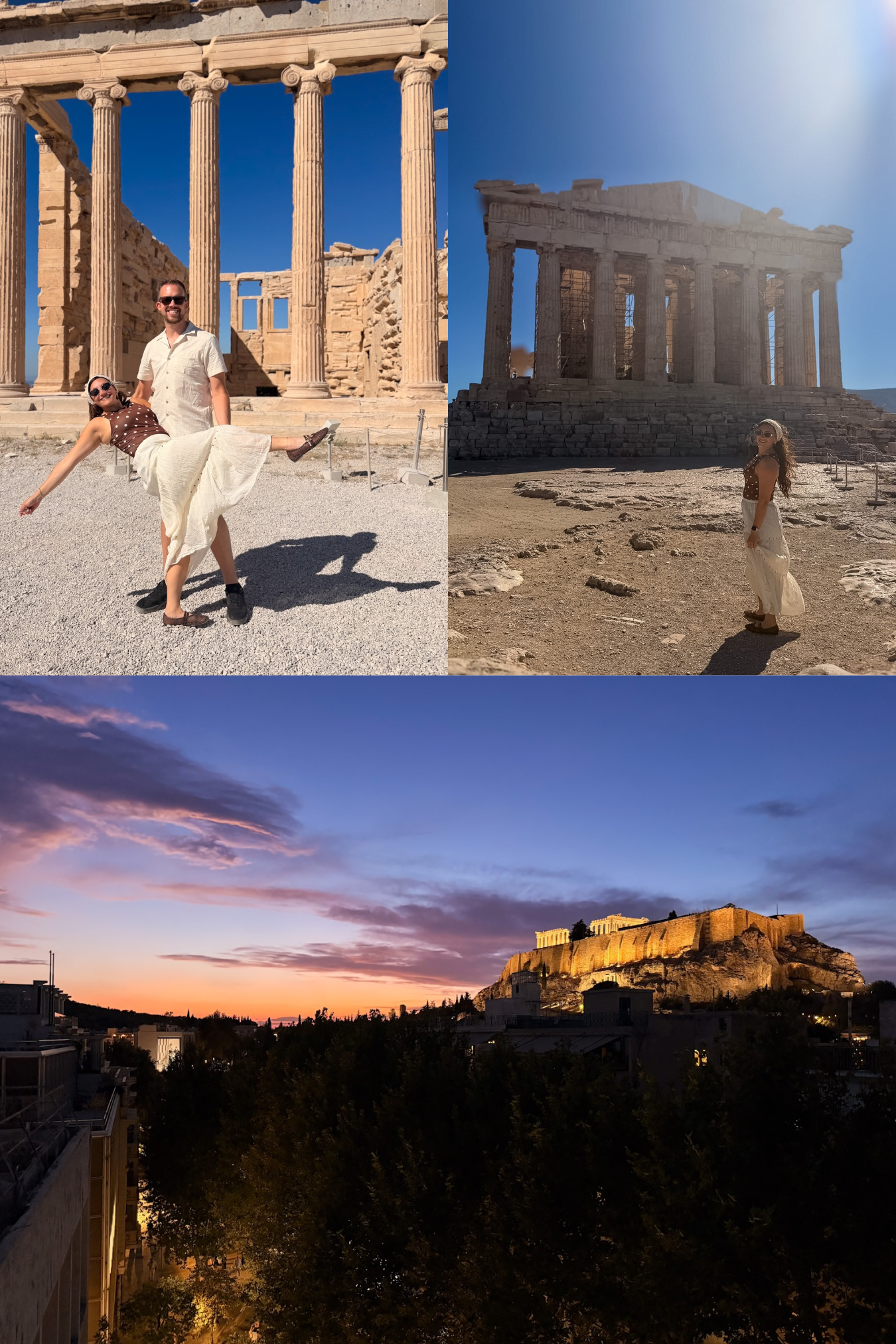
We explored most of Athens’ ancient sites independently, which worked well for us since we wanted to explore at our own pace.
If you’re interested in learning more about the history behind the ruins, a guided Acropolis walking tour would be worth considering. Just make sure the tour includes admission if you’re planning to go inside.
Another option is the free digital guide we saw advertised at the Acropolis. Hellenic Heritage had a QR code displayed at the site with several language options available.
The former official Athens archaeological-sites combination ticket was discontinued in April 2025, so the major sites generally require separate admission tickets.
These were the standard adult admission prices listed for 2026:
| Archaeological Site | Standard Adult Admission |
|---|---|
| Acropolis | €30 |
| Ancient Agora | €20 |
| Roman Agora | €10 |
| Hadrian’s Library | €10 |
| Temple of Olympian Zeus | €20 |
The Acropolis Museum requires a separate ticket. Third-party sightseeing packages may combine multiple attractions, but they’re different from the former official combination ticket.
If you’re mainly interested in the Acropolis and seeing the smaller ruins from outside, purchasing individual tickets may be more economical.
Check the official Hellenic Heritage website for current prices, opening hours, and admission requirements.
A few things I’d recommend for a day of sightseeing:

Absolutely. And you certainly don’t have to be a huge history buff to appreciate them.
What I loved most was how the ancient ruins were woven into everyday life in Athens. We could pass a Roman-era structure on our way to lunch, explore streets filled with shops and cafés, and then suddenly find ourselves looking over the remains of an ancient marketplace.
I’d prioritize the Acropolis and choose the other archaeological sites based on what interests you. We saw an incredible amount of history over two days and still had time for shopping, restaurants, and exploring the neighborhoods.
If you end up booking anything for your trip, using my affiliate links helps support my blog at no extra cost to you. I spend a lot of time researching and writing these guides, so I really appreciate the support.
If you’re organizing your first visit, start with my The Perfect 3 Days in Athens Greece: A First-Time Itinerary or see how Athens fits into a longer Greece vacation in The Perfect 10 Days in Greece: Athens Santorini and Hydra Itinerary.
For help choosing a neighborhood near the major attractions, read my Where to Stay in Athens Greece: Best Areas for First-Time Visitors.
You can also compare Athens hotels and accommodations before booking.
If you’d rather have someone explain the historical significance of the ancient sites, you can browse guided Athens tours.
For more ideas on comfortable sightseeing outfits and practical travel essentials, see my Greece Packing List: Everything You Need for Athens and the Greek Islands.

The part of European travel nobody puts in the highlight reel.
The blisters, the 20,000 steps before lunch, the train you almost missed, and somehow still saying “this is the best trip ever.” 😂
Thanks for following along on my travels! If you’re planning your own European getaway, you’ll find all my destination guides and itineraries on the blog. Link in bio!

If I could go back to one of the beaches in Hydra, Greece, it would be Avlaki. 🇬🇷
Of the two swimming spots I visited, this one was my favorite because it felt quieter, more private, and had the perfect spot for cliff jumping. It was a little rockier getting into the water, so water shoes are worth bringing, but it was such a fun way to spend part of the day.
If you’re visiting Hydra, add Avlaki Beach to your list!
I don’t even like seafood but @sunsethydra surprised me!
The panko-crusted feta with prickly pear chutney and pistachios was one of my favorites, and the Sunset Salad with fresh oranges and homemade orange-ginger dressing was so good. Even the bread and olive oil stood out!
Brad ordered the fresh catch of the day, sea bass, and loved it. And yes, even I enjoyed a bite!
Comment whether or not you’re a big seafood fan! 👇
Taking a day trip from Athens to Hydra? Here are 3 things to know before you book!
Book a high-speed ferry from Piraeus. Our ride took just 1 hour and 15 minutes each way, giving us almost 7 hours to explore.
Check your ferry options. We took Alpha Lines to Hydra and Magic Sea Ferries back. I personally preferred Alpha Lines for its open outdoor deck!
Plan to explore on foot. Hydra is car-free, and the ferry drops you right at the heart of town, making it easy to explore the harbor, shops, and waterfront restaurants as soon as you arrive.
Hydra ended up being one of my favorite days in Greece! Head to the blog for my full ferry guide, booking tips, and everything I wish I’d known before going.
I had less than 7 hours to spend in Hydra, Greece, and here is how I made the most of it.
From waterfront lunch to swimming at two beautiful beaches, this day trip was one of my favorite parts of Greece.
Read my full Hydra itinerary on the blog and save this for your trip!

Follow @travelwithwendyplummer for Beautiful Beach Destinations, City Guides, Foodie Spots, and Luxury Hotel Recommendations.