Driving the Seven Mile Bridge is one of the most memorable parts of a Florida Keys road trip, especially if it is your first time driving from Miami to Key West or exploring the Middle and Lower Keys.
It is not a long stop. It is not a complicated experience. You simply drive across it.
But it feels much bigger in person than it looks in photos.
For several miles, you are surrounded by open water on both sides, with shades of blue and turquoise stretching out around you. It feels less like driving over a bridge and more like driving straight across the ocean.
If you are planning a Florida Keys road trip, the Seven Mile Bridge is worth building into your route, especially if you also plan to stop nearby at Pigeon Key, Bahia Honda State Park, Fred the Tree, Big Pine Key, or one of the restaurants in Marathon.
If you are still deciding whether the full drive is worth your time, I would read Is the Florida Keys Drive Worth It next because the bridge is only one part of the bigger road trip experience.
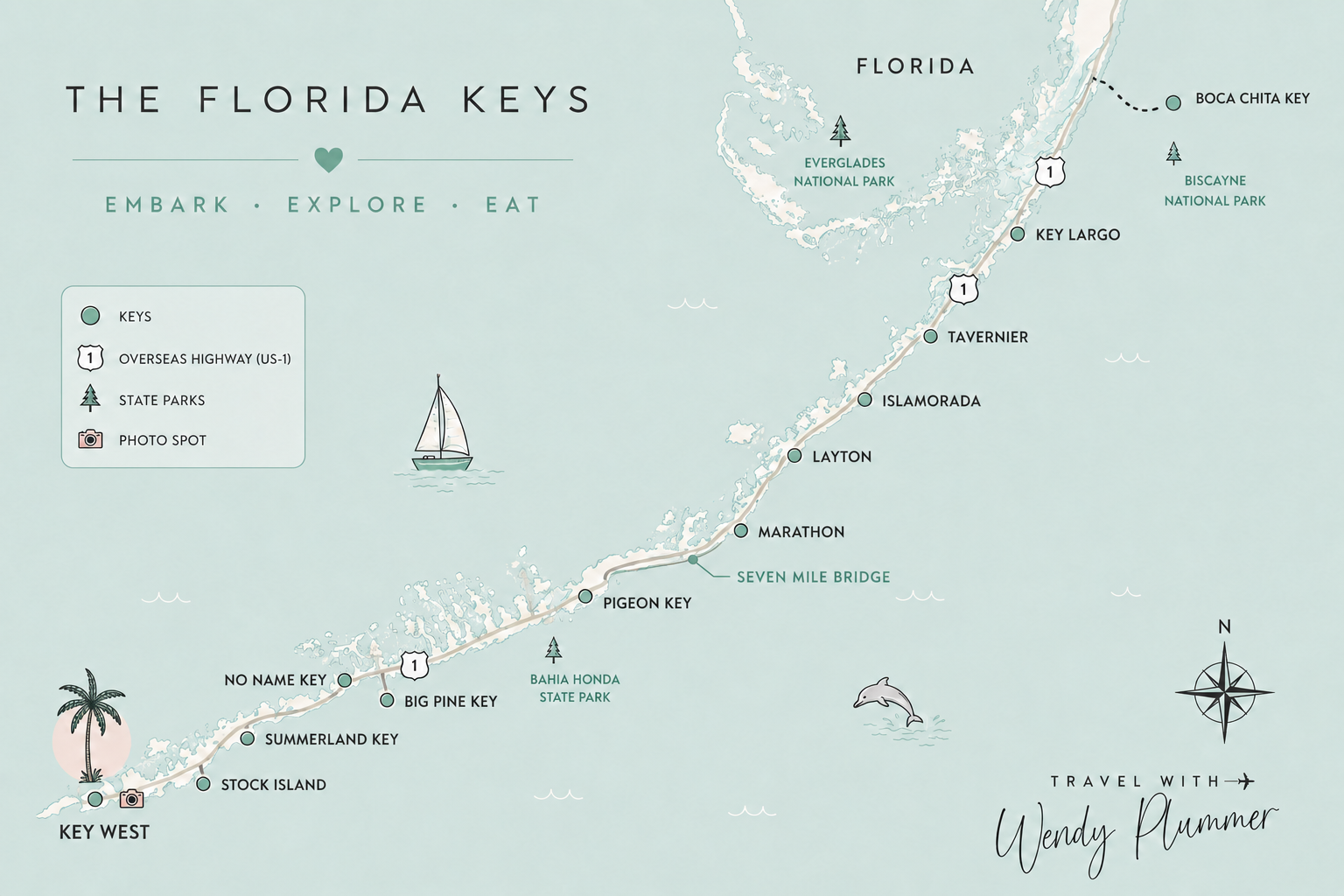
The Seven Mile Bridge is in the Florida Keys, connecting Marathon in the Middle Keys to the Lower Keys.
If you are driving from Miami to Key West, you will cross it on the Overseas Highway. It is one of the most recognizable parts of the drive and probably the section people picture when they think about a Florida Keys road trip.
The bridge itself does not take long to drive, but the surrounding area is what makes it easy to turn this into more of a half-day adventure.
If you are flying into South Florida and renting a car for the drive, I would compare prices through Discover Cars before booking. This is absolutely a drive where having your own car is necessary, especially if you want to stop at multiple places instead of relying on tours or transfers.
Not at all.
Before visiting, I expected the Seven Mile Bridge to feel much higher, narrower, or more intimidating than it actually did. I thought it might feel a little nerve-wracking being surrounded by water for that long.
It did not.
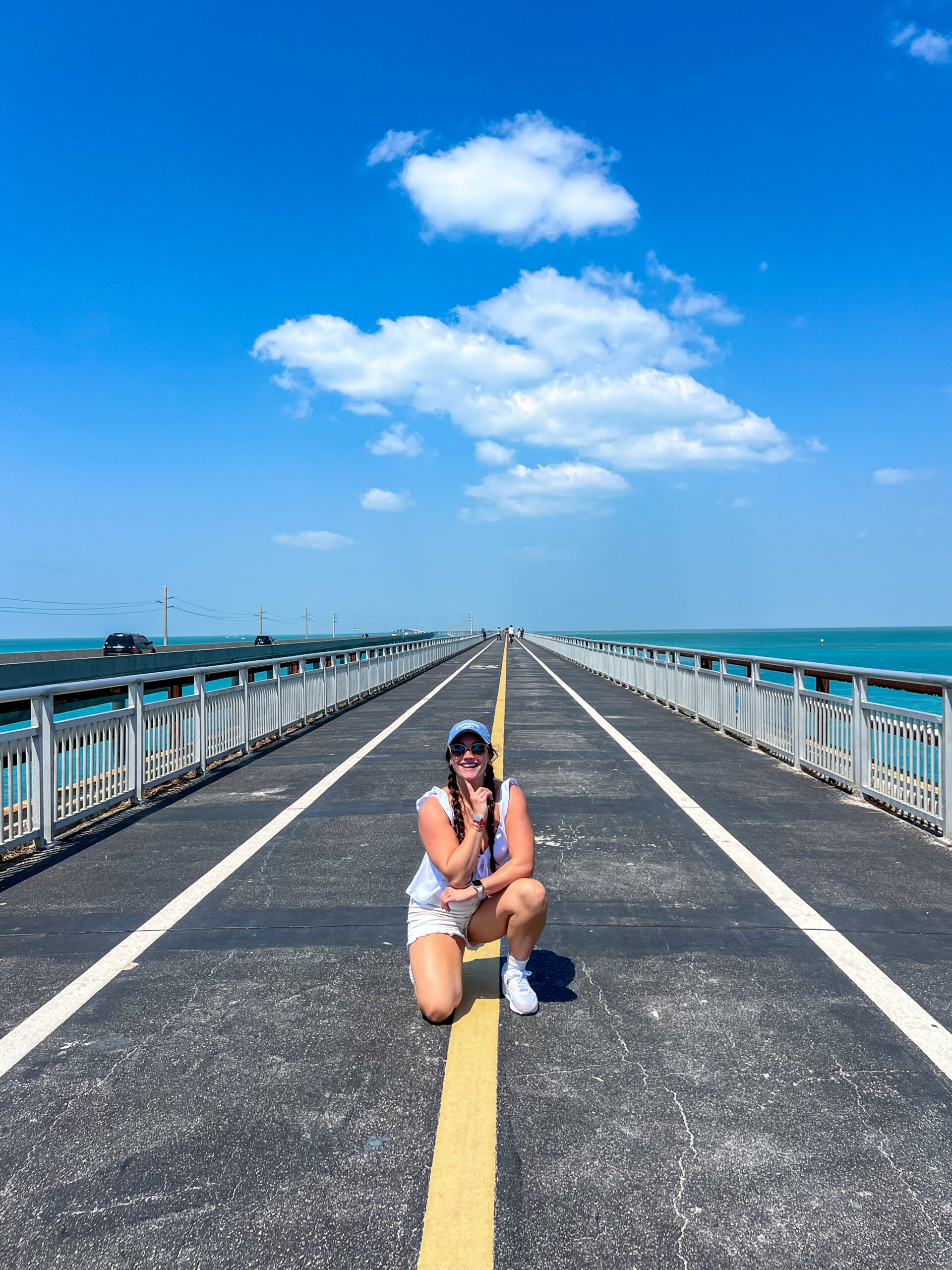
The bridge felt wide, well-maintained, and easy to drive, while still feeling bright, open, and very exposed in the best way. On a sunny day, the water around the Seven Mile Bridge has those classic Florida Keys shades of blue and turquoise, and the view seems to go on forever.
Unless you are extremely nervous about bridges, I think most people will find it much less intimidating than expected.
You are aware that you are surrounded by water, obviously. That is the whole point. But it did not feel scary to me. It felt more impressive than anything.
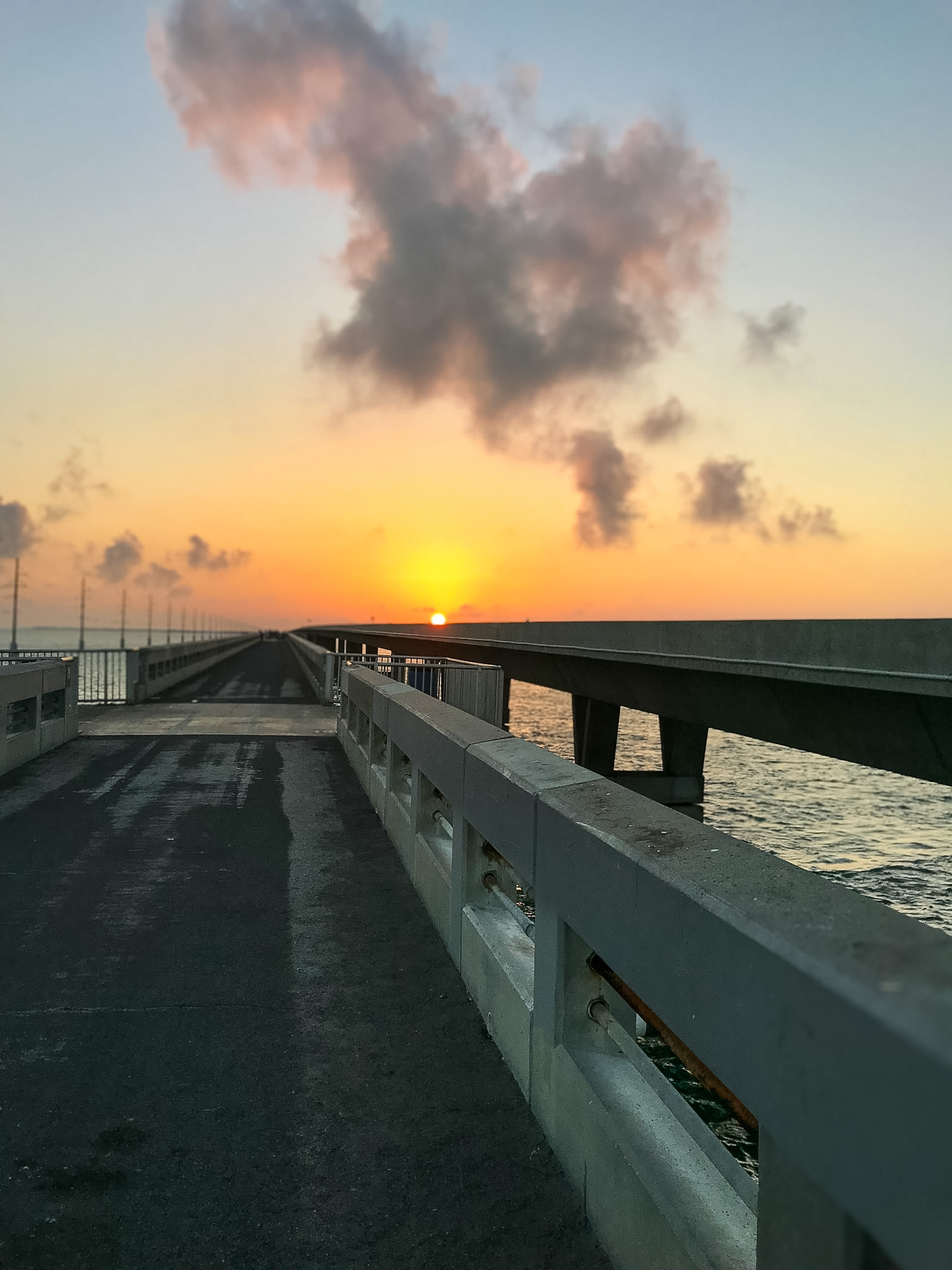
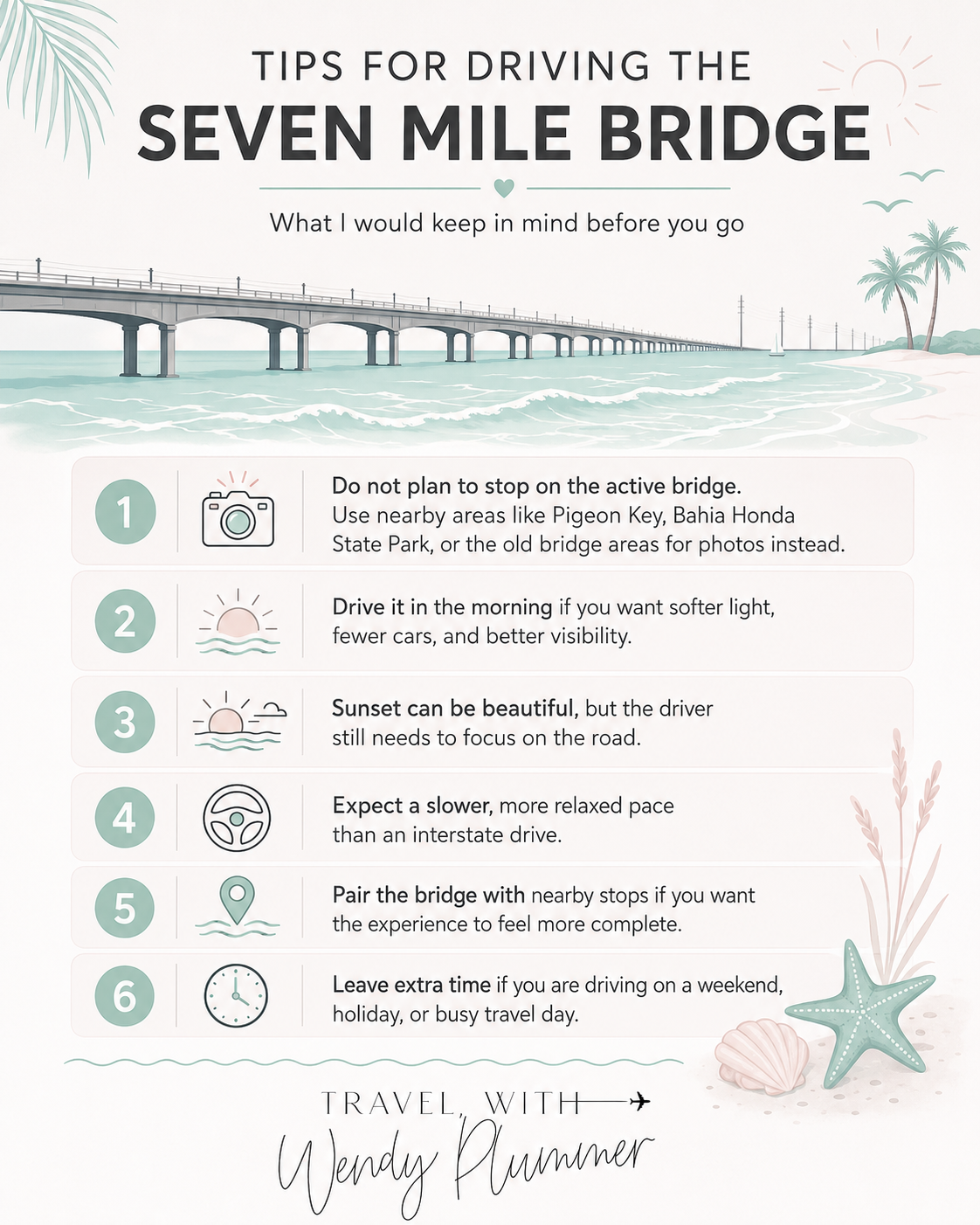
If I could choose the best time to drive the Seven Mile Bridge, I would pick either early morning or around sunset.
Morning is probably the easiest option.
You usually get softer light, fewer cars, and clearer views. It also gives you more flexibility if you want to make nearby stops afterward, like Pigeon Key, Bahia Honda State Park, or Big Pine Key.
If photography matters to you, morning light can also be easier to work with than harsh midday sun.
Sunset can be beautiful if the timing works out, especially because there are pull-offs nearby where you can stop and actually watch it instead of trying to enjoy the view while driving.
That is the better plan.
If sunset is your goal, I would get to the Seven Mile Bridge area a little early, find a safe pull-off or nearby viewing spot, and enjoy it from outside the car.
Save this for later on Pinterest so you don’t forget it.
Traffic was not bad when I visited.
It moved steadily, but this is not the type of drive where you should expect interstate speeds. The pace felt slower and more relaxed than a typical highway, which honestly fits the Florida Keys in general.
That slower pace also makes it easier to enjoy the scenery without feeling rushed.
That said, traffic can vary depending on the time of day, weekends, holidays, and overall Florida Keys travel volume. If you are driving to Key West on a busy travel day, I would leave extra time and not plan your schedule too tightly around the bridge crossing.
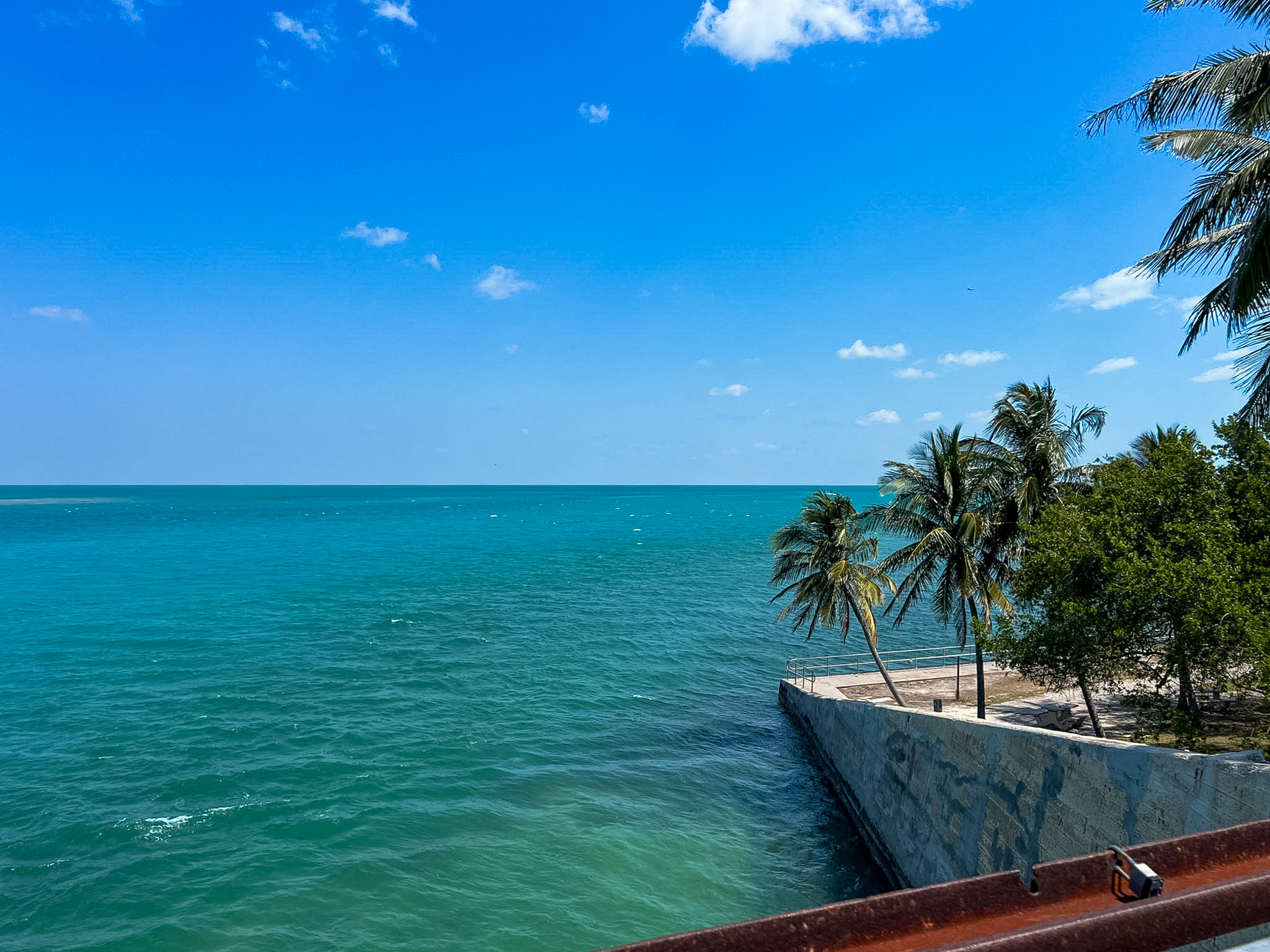
The best views are the open-water views where it feels like the ocean stretches forever.
On a sunny day, the water surrounding the Seven Mile Bridge is the main event. You get blue, turquoise, and deeper ocean tones depending on the light and the direction you are looking.
Looking toward the old Seven Mile Bridge and Pigeon Key is also pretty impressive. That view gives you a better sense of the history of the area and how dramatic this stretch of the Florida Keys really is.
The bridge itself is cool, but the surrounding water is what makes the drive memorable.
No, do not plan on pulling over on the active Seven Mile Bridge for photos.
There are not safe places to stop on the bridge itself, and it is not the type of road where you should slow down suddenly or try to grab a quick picture from the driver’s seat.
For photos, you are much better off stopping nearby before or after the bridge.
Some of the best Seven Mile Bridge photo spots are around:
If you are continuing down to Key West after this drive, I also have a full guide to Best Photo Spots in Key West for when you are ready for less highway and more walking around Old Town with your camera out.
For road trip photos, I would also bring something like an iPhone Tripod or GoPro, especially if you want quick videos from safe stopping areas nearby. The bridge itself is not the time for chaotic passenger-seat photography. I say this as someone who fully understands the urge.
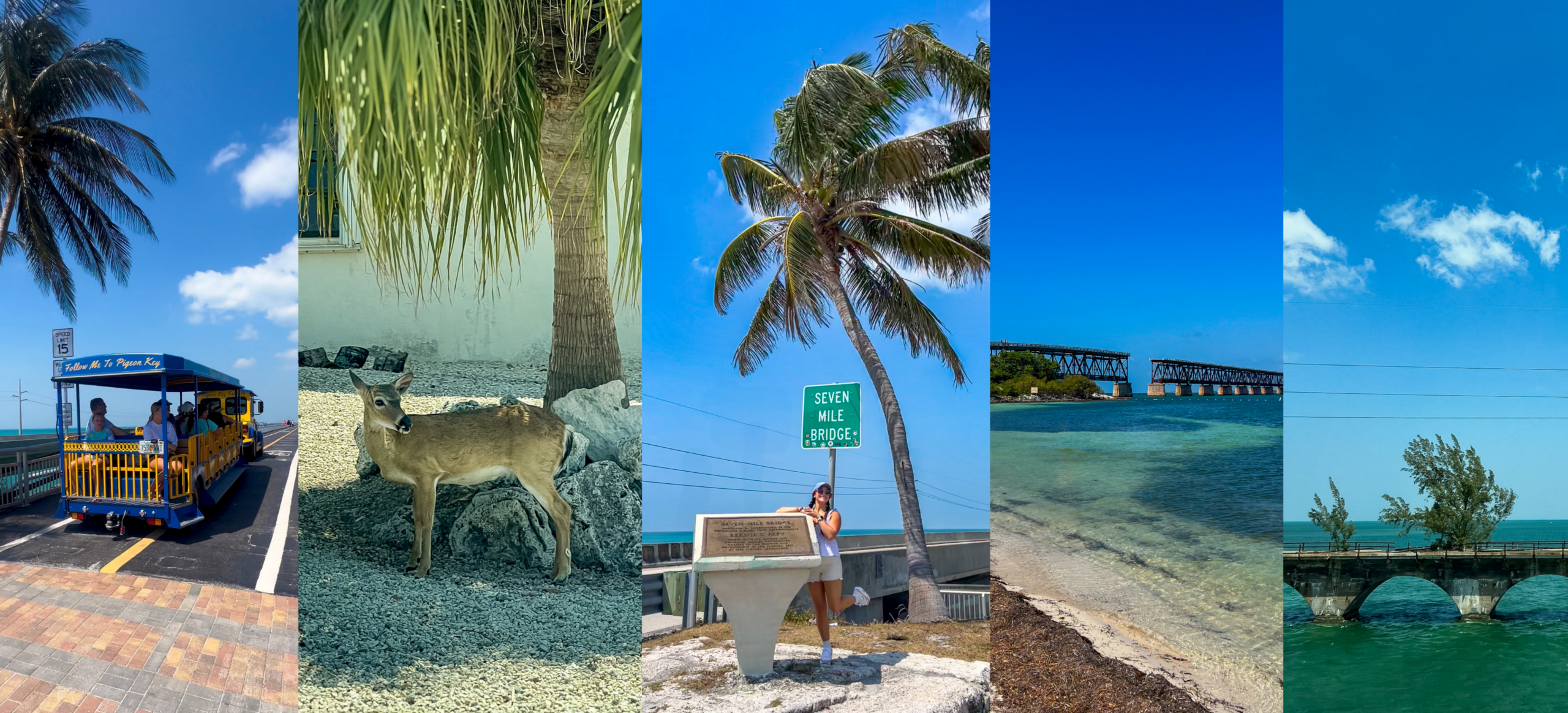
The Seven Mile Bridge is not really a stop by itself unless you are visiting the surrounding viewpoints or nearby attractions.
But there are several great Seven Mile Bridge stops that make the drive more interesting.
If you are planning the whole route from Miami to Key West, my guide to Best Stops on the Drive from Miami to Key West goes into the bigger road trip route and how to make the drive feel more like part of the trip instead of just a long transfer day.
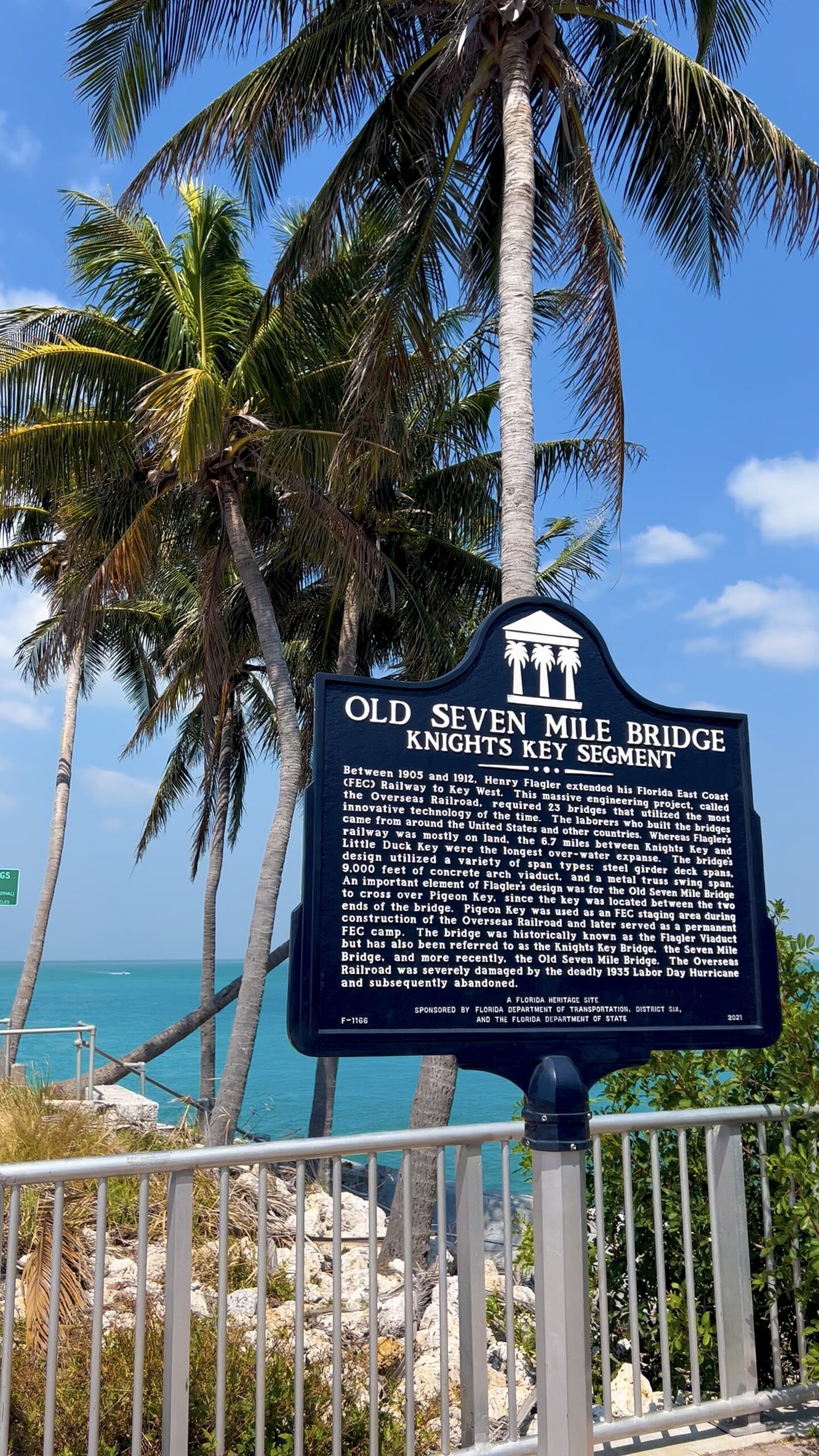
Pigeon Key is one of the best nearby stops if you want to learn more about the history of the Seven Mile Bridge and the Florida Keys Overseas Railroad.
You can visit Pigeon Key and take the Seven Mile Bridge train tour, which is a good option if you want more context instead of just driving across and moving on.
This is especially useful if you like historic sites, old Florida Keys stories, or anything that makes a scenic drive feel more connected to the place you are visiting.
Bahia Honda State Park is another strong stop near the Seven Mile Bridge.
This is one of the most popular state parks in the Florida Keys, and it gives you a chance to actually get out near the water instead of only seeing it from the car.
It is a good stop if you want beach time, photos, or a break from driving. If your road trip has been mostly car, snacks, and asking “how much longer,” this is where you can reset a little.
If you plan to stop here for beach time, I would bring reef-safe spray sunscreen, face sunscreen, and a quick-dry towel. A dry bag is also helpful if you are mixing beach stops, car stops, and camera gear in one day.
Fred the Tree is a quirky Florida Keys sight near the Seven Mile Bridge, but it is not a normal roadside stop.
You cannot walk up to Fred or stop and touch him because he grows on a remote, crumbling section of the historic Old Seven Mile Bridge. Fred can only be legally and safely accessed by boat or helicopter.
For most travelers, the easiest way to see Fred is from the car while driving the modern Overseas Highway. A passenger can usually get a photo as you pass by, but this is not a pull-over-and-pose situation.
I would not plan an entire day around Fred the Tree, obviously. But if you are already driving this stretch, he is a fun little Florida Keys landmark to look for.
Big Pine Key is one of the best places to look for Key deer.
If you are continuing south after the Seven Mile Bridge, this is an easy area to add to your route. Just drive carefully, follow posted speed limits, and keep your distance if you do see them.
The Key deer are small, protected, and honestly very cute, so let’s keep them safe by not bothering them.
Marathon is a good place to eat before or after driving the Seven Mile Bridge.
If you are turning the bridge crossing into a longer day, this is where I would look for restaurants, seafood stops, or a casual meal before continuing farther south.
Even if you are not staying in Marathon, it makes sense as a practical food stop because it is close to the bridge and has more options than some of the smaller Keys nearby.
Once you make it to Key West, I have a full guide to Best Restaurants in Key West if you want to keep the food decisions organized. Food is usually the most important part of the plan anyway, priorities.

If you are only driving across the Seven Mile Bridge, it does not take long. But for me, the bridge felt more memorable because we paired it with nearby stops instead of treating it like a quick stretch of road.
You could drive through Marathon, cross the Seven Mile Bridge, stop for photos nearby, visit Bahia Honda State Park, look for Key deer on Big Pine Key, and then continue toward Key West.
That makes the drive feel more like part of the trip instead of just the road between two places.
I do not think you need to build an entire day around the Seven Mile Bridge, but I am glad we gave the area some time. It was one of the most enjoyable parts of driving through the Florida Keys, mostly because it felt so much bigger in person than it looks in photos.
I also expected it to feel more intimidating than it did. But the bridge felt wide, well-maintained, and easy to drive, while still feeling bright, open, and very exposed in the best way.
If you are using the Seven Mile Bridge as part of a longer first trip, Key West 3 Day Itinerary for First Time Visitors is a helpful next step for figuring out what to do once you actually arrive in Key West.
If you end up booking anything for your trip, using my affiliate links helps support my blog at no extra cost to you. I spend a lot of time researching and writing these guides, so I really appreciate the support.
Driving the Seven Mile Bridge was much easier, less intimidating, and more memorable than I expected.
It is not complicated to visit. You do not need a big plan to experience it. But if you are driving through the Florida Keys, it is worth giving yourself enough time to actually enjoy the area around it.
For me, the best part was the scale. It felt bigger in person, more impressive than the photos, and much more like driving across the ocean than simply crossing a bridge.
I would absolutely include it on a Florida Keys road trip again, especially with stops at Pigeon Key, Bahia Honda State Park, Marathon, and Big Pine Key worked into the same day.

Pack your bags: Bryson City is your next fall trip. Save this now. ✈️
Ride the Great Smoky Mountains Railroad through peak color, eat your way down Main Street, and end the day in a luxury yurt. Three days here and you won’t want to leave.

Haywood Smokehouse is the BBQ spot that ruins you for every other BBQ spot. Lean brisket so tender it doesn’t need the fat, fried pork ribs you won’t find anywhere else, and don’t sleep on the banana pudding for dessert.
Save this before your next Waynesville or Dillsboro trip 🍖🔥
Booked this Bryson City yurt for the ‘ber months and it’s already my top fall pick this year. 🍂
The Junaluska Yurt sleeps six but feels more like a stylish cabin than a yurt, two real queen bedrooms with actual doors, a full kitchen, and a private bathroom with a walk-in shower. Check-in is just a door code texted to your phone, no lobby, no waiting.
The real win is outside: wraparound porch, private fire pit, free firewood, a gas grill, and Smoky Mountain sunsets that stop you mid-sentence, picture all of that with October color on the ridgeline. Heads up, the last stretch in is a gravel road, so skip the low-profile rental, and there’s no restaurant onsite, you’re minutes from Bryson City, Dillsboro, and Sylva for dinner.
Two to three nights is the sweet spot. (We actually stayed in the dead of winter and it was still stunning, fall just takes it up a notch.) Full review linked in bio.
Italian food felt like the last thing I expected to find in the middle of the Appalachian Mountains... until I sat down at Ilda in Sylva.🍝
They call it Italian-Appalachian, and that’s not just a tagline. Homemade pasta, craft cocktails, local ingredients pulled straight from the mountains around it, this is the kind of meal that makes you forget you’re two hours from the nearest city. It’s cozy, it’s a little upscale, and it is not a walk-in kind of place, call ahead, because tables go fast on weekends.
It’s not cheap, and it’s not trying to be. But if you’re already making the trip out to Sylva, this is the one reservation worth planning your day around.
Full write-up, including what to order, link in bio.
Booked my fall cabin before September even started, and I’m not sorry about it. 🍂
These are the stays that make you actually want the cold to hurry up fireplaces, mountain views, the kind of porch you don’t leave. Not every one of these is going to fit every trip, but if a cozy fall getaway is on your radar, this is the roundup to start with.

Follow @travelwithwendyplummer for Beautiful Beach Destinations, City Guides, Foodie Spots, and Luxury Hotel Recommendations.