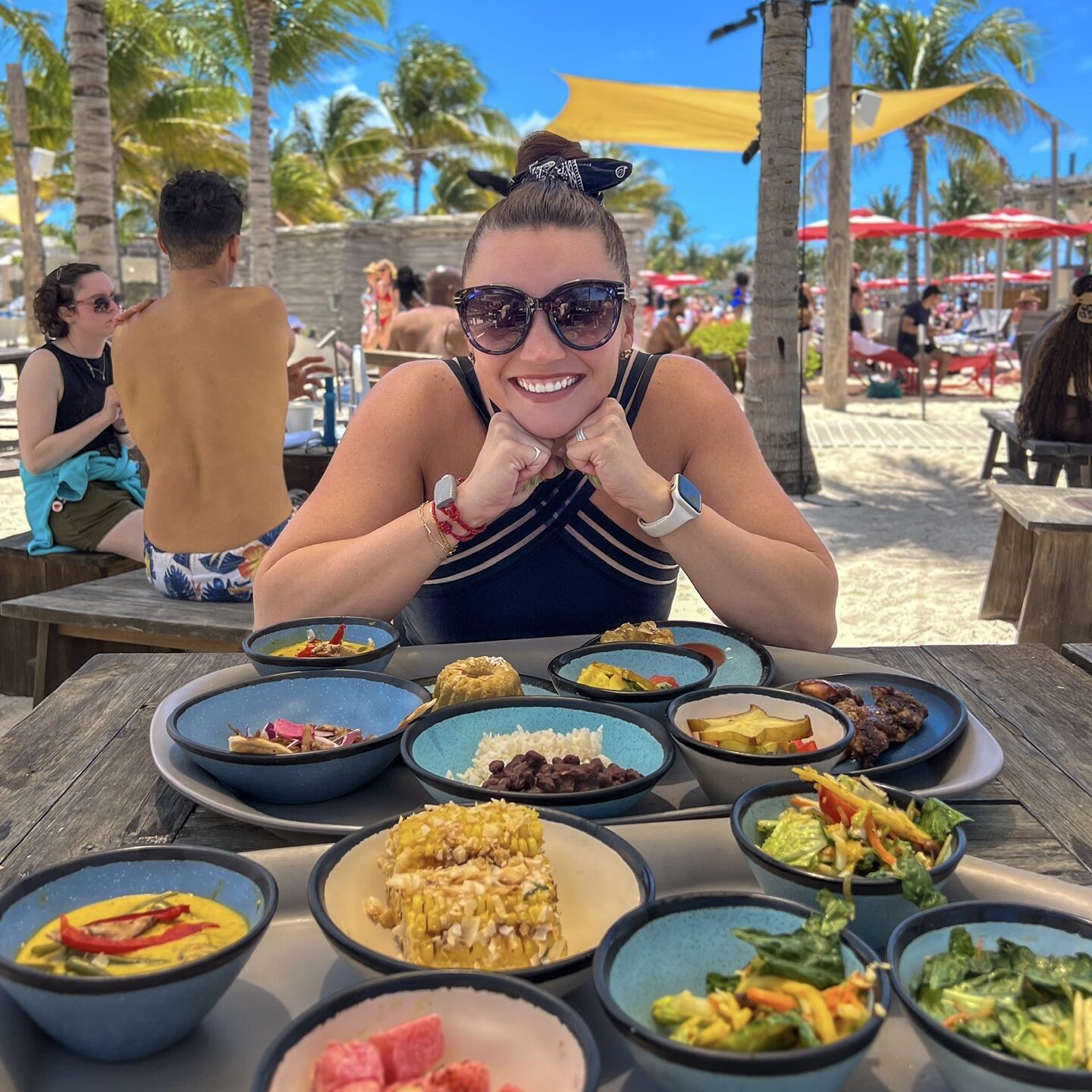
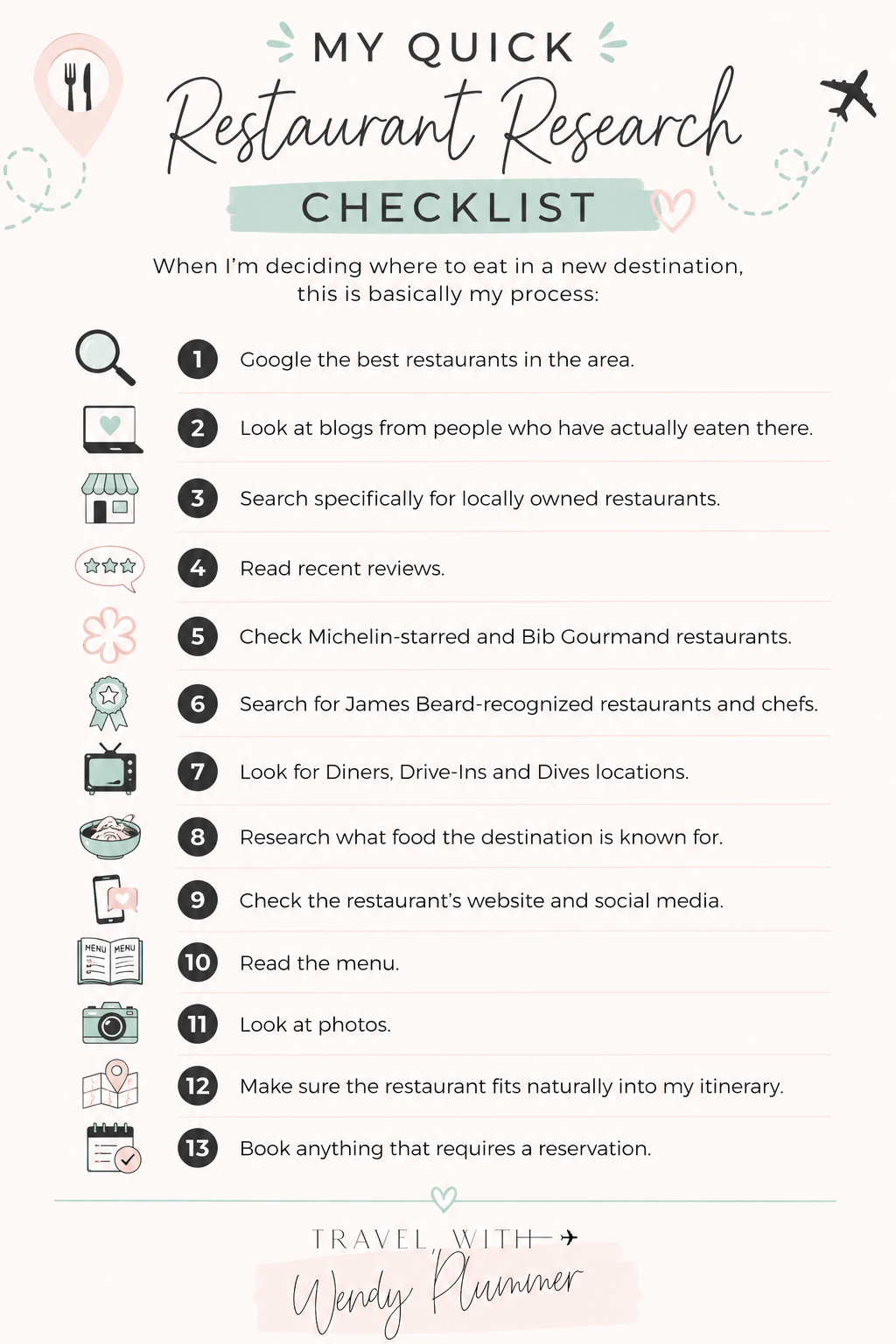
Food is a huge part of traveling for me. If you’re trying to figure out how to find restaurants when traveling, this is basically the process I use for every trip. I am absolutely the person researching restaurants before I’ve figured out half the other things I’m doing on the trip.
I don’t like wasting a meal on vacation.
That sounds dramatic, but if I only have three days somewhere, that might mean I only have three dinners. I do not want one of those dinners to be something mediocre that I could have eaten at home.
So I put a lot of research into where I eat when I travel. I’m usually looking for a mix of locally owned restaurants, food the destination is known for, casual places, bakeries, and at least one really good dinner.
If you’re still deciding where you want to go next, my 40 Favorite Travel Destinations Around the World: My Unforgettable Top Picks at 40 has plenty of ideas.
Here’s exactly how I find restaurants when I travel.
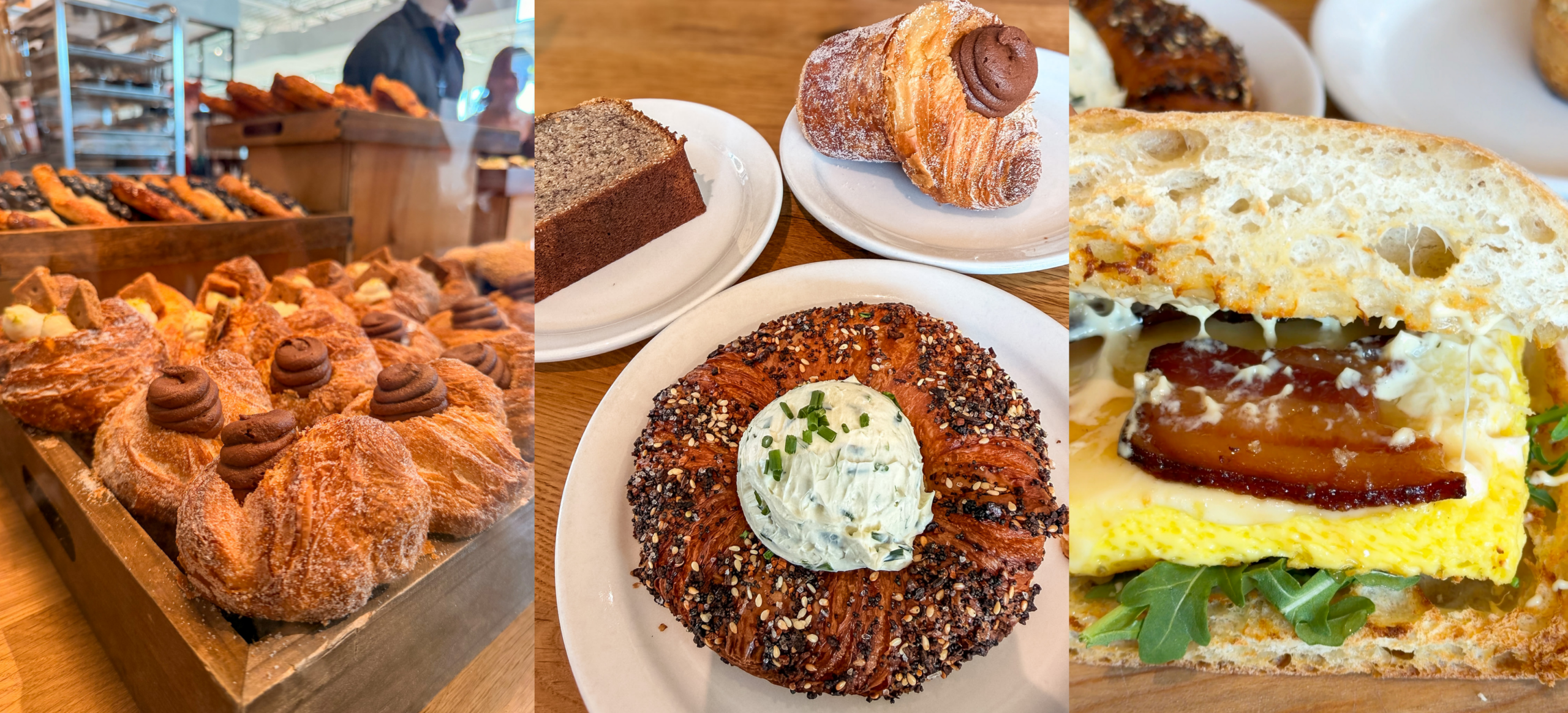
This is usually where I start.
I’ll search things like:
I normally open way too many tabs and start making a list of anything that looks interesting.
At this point, I’m not necessarily deciding where I’m eating. I’m just figuring out what restaurants keep showing up and which ones catch my attention.
If I see the same restaurant mentioned over and over again, I’ll start looking into it more.
After Google gives me a starting point, I like to look at other travel and food blogs too.
I prefer reading recommendations from people who have actually been to the restaurant because it gives me a lot more context than a generic list of places to eat.
I want to know what they ordered, what they liked, what the restaurant actually felt like, and whether they thought it was worth going.
It also helps me make sure I’m getting credible information from someone who has actually experienced the place instead of just repeating a list of restaurants they found online.
If I start seeing the same restaurant recommended by multiple people who have actually eaten there, it usually moves higher on my list.
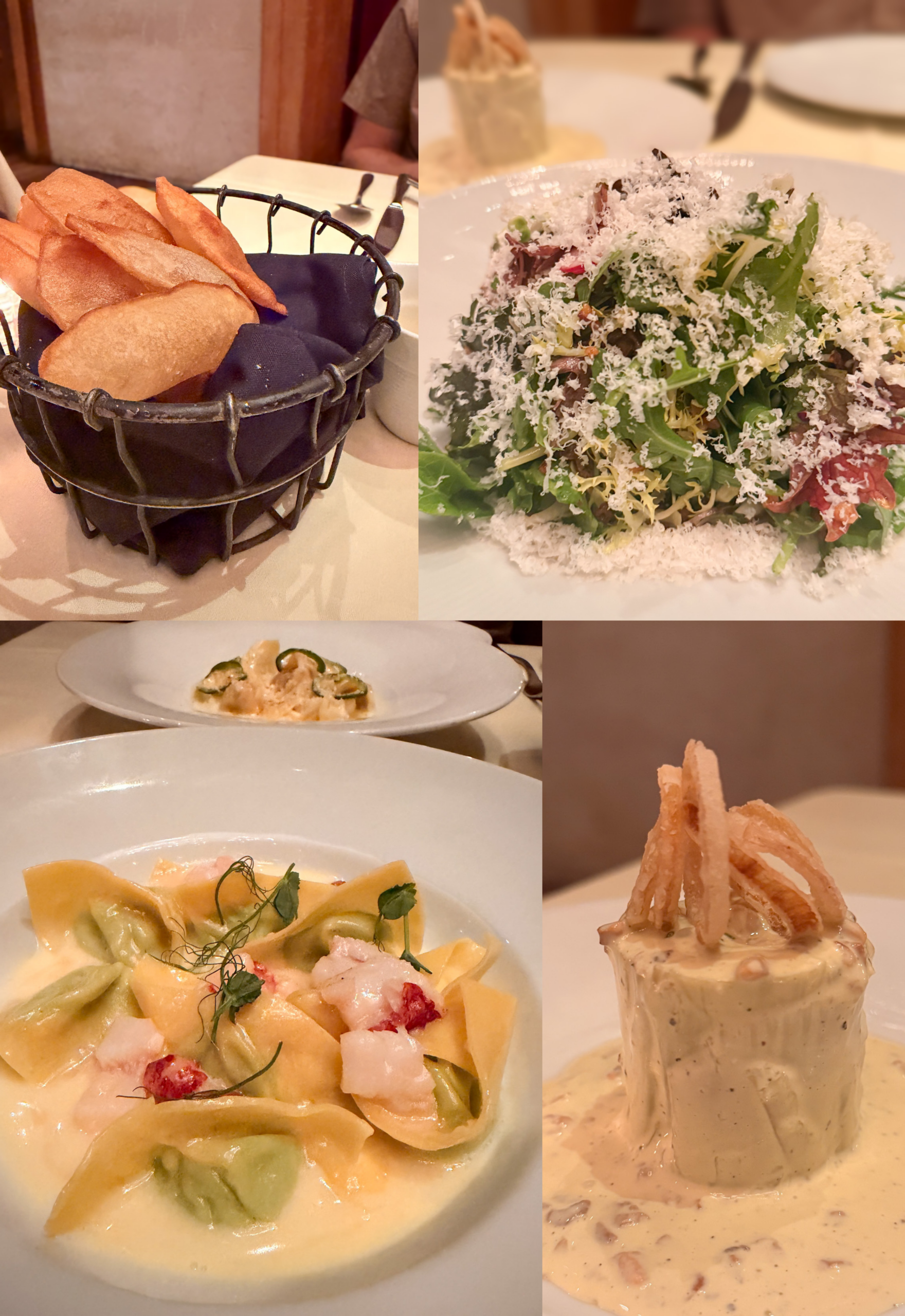
This is a big one for me.
When I’m traveling, I want to eat somewhere that feels connected to the place I’m visiting. I would much rather try a locally owned restaurant, neighborhood favorite, or restaurant that I can’t visit anywhere else.
There’s nothing wrong with chain restaurants, but I can eat at those at home.
If I’m in Cincinnati, I want something that feels like Cincinnati. If I’m in New Mexico, I want New Mexican food. If I’m in Key West, I’m probably searching for the best Key lime pie before I’ve even found my hotel.
I’ll specifically Google things like:
Some of my favorite restaurants while traveling have come from searches like this rather than a generic “top 10 restaurants” list.
If you like the idea of trying several local restaurants in one trip, Secret Food Tours is also an easy way to sample multiple spots without researching every stop yourself.
Once a restaurant makes my initial list, I start reading reviews.
I look at the overall rating, but I care more about what people are actually saying.
If 50 people mention the same dish, I’m probably ordering that dish.
I also look for patterns.
One person complaining about slow service doesn’t bother me much. If the last 15 reviews all mention slow service, now I’m paying attention.
I usually look for comments about:
I also pay attention to recent reviews because restaurants change. A place that was amazing three years ago may not necessarily be the same restaurant today.
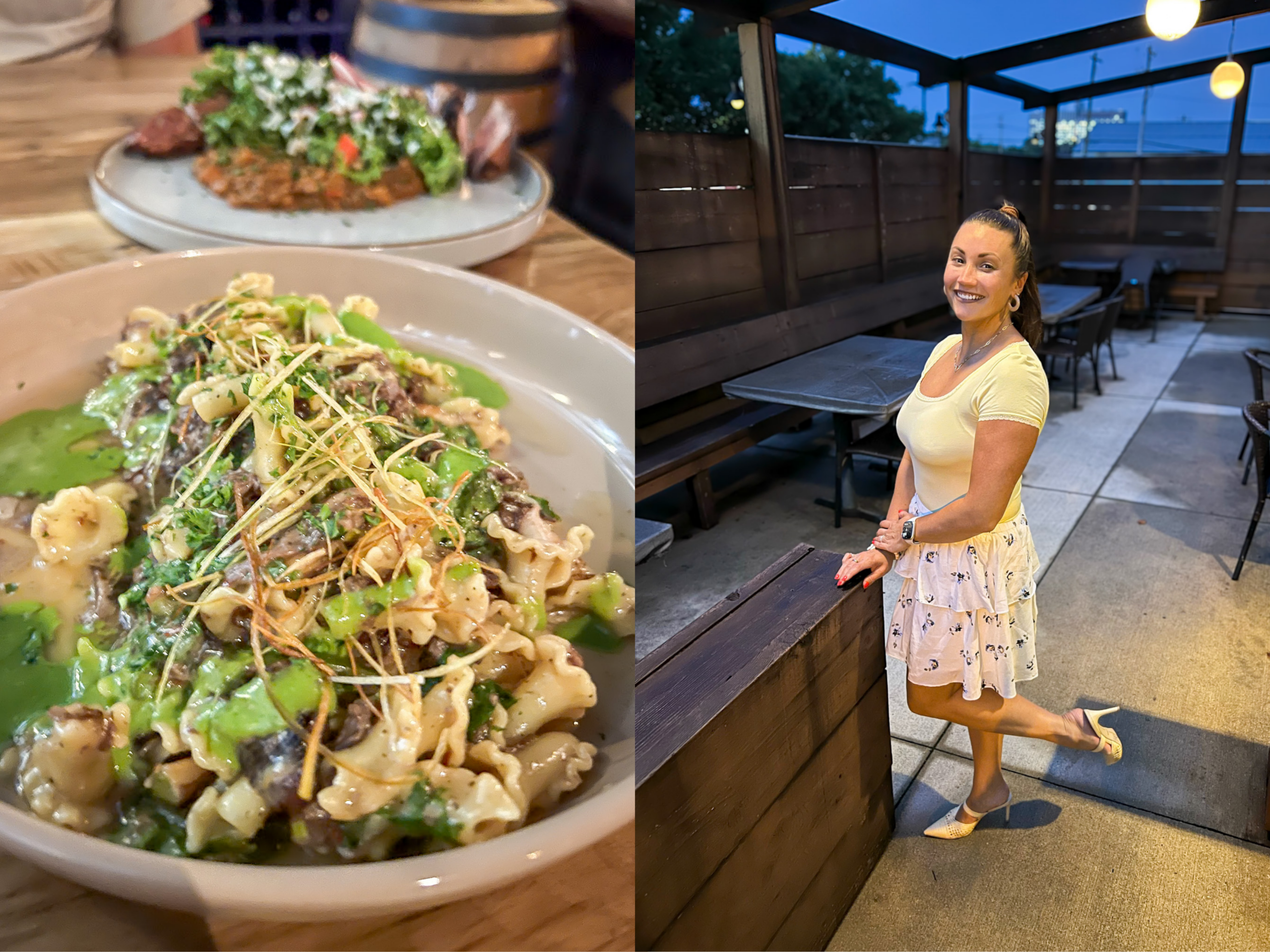
After my general restaurant search, I usually check to see if the destination has any restaurants in the Michelin Guide.
Obviously, Michelin-starred restaurants get my attention, especially if I’m looking for a special dinner.
But I also really like looking at Bib Gourmand restaurants.
Those can be especially interesting because they often highlight really good food without automatically meaning a huge tasting menu and an equally huge bill.
Depending on the city, I might end up booking a Michelin-starred restaurant for one night and then eating somewhere completely casual the next.
That mix is usually more fun anyway.
I also search to see whether there are any James Beard Award winners, finalists, semifinalists, or recognized chefs in the area.
This has led me to some really interesting restaurants that I probably wouldn’t have found otherwise.
Sometimes the restaurant itself isn’t the big name. It’s the chef behind it.
So I’ll search:
James Beard restaurants in ___
or
James Beard chefs in ___
Then I start going down another restaurant research rabbit hole.
This happens frequently.
Save this for later on Pinterest so you don’t forget it.
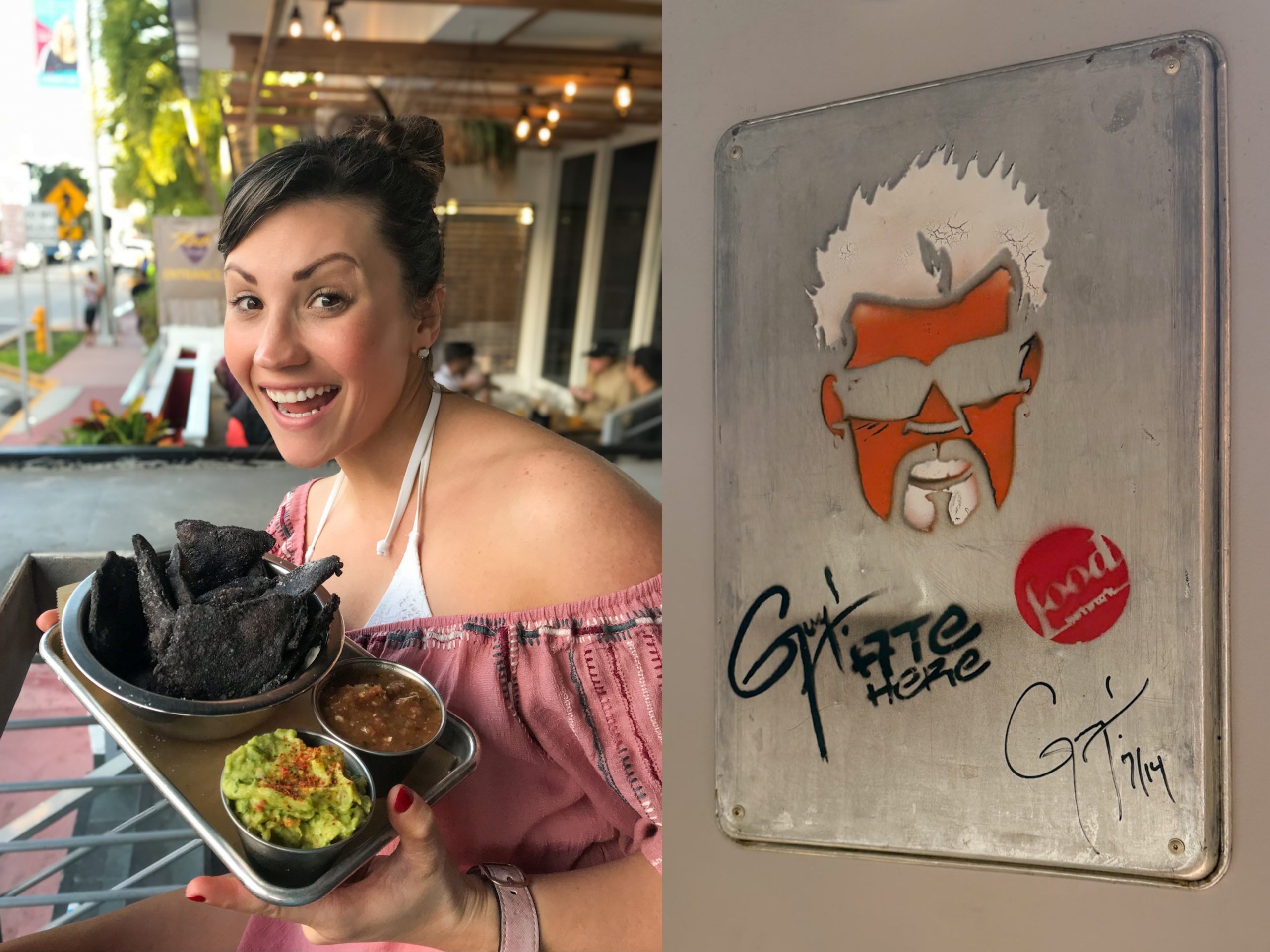
My restaurant research is not all Michelin stars and fancy tasting menus.
I also love searching for restaurants that have been featured on Diners, Drive-Ins and Dives.
These are often exactly the type of places I want to find while traveling: casual, local, a little quirky, and known for one or two things they do really well.
I’ll usually search:
Diners Drive Ins and Dives restaurants in ___
Even if I don’t end up eating at one, it gives me another group of local restaurants to research.
Before I finalize my restaurant list, I always look up what I should actually be eating there.
Every destination has something.
Sometimes it is an entire style of food. Sometimes it is one oddly specific dessert that everyone insists you need to try.
I’ll Google:
What food is ___ known for?
Then I start looking for where to try those specific foods.
I don’t necessarily need to eat every famous local dish, but I do want at least a few meals that actually feel connected to where I am.
Otherwise, what is the point of flying somewhere new just to eat the exact same things I eat at home?
Once a restaurant catches my attention, I usually go straight to its website and social media.
I want to see what the restaurant is showing me directly.
I’ll look through the menu, photos, recent posts, specials, and anything else that gives me a better feel for the place.
Sometimes a restaurant sounds great in an article, and then I look at its website or Instagram and immediately know it isn’t for me.
Other times, I see one dish on Instagram and suddenly the restaurant has moved to the top of the list.
This is also a good way to see whether the restaurant is still active, whether the menu has changed, and what the atmosphere actually looks like right now.

This sounds obvious, but I never book a restaurant just because everyone says it is amazing. I look at the menu first. A restaurant can have five stars, a Michelin recommendation, and thousands of glowing reviews, but if I look at the menu and nothing sounds good to me, I’m not going.
I want to be excited about what I’m ordering. I’ll normally look at the menu and immediately identify at least two or three things I would actually want to eat before adding the restaurant to my itinerary.
That said, sometimes at a really fancy restaurant I’ll look at the menu and barely understand what half of it means, which can make me think I probably won’t like it. Then I actually eat there and realize it was incredible. So I do give a little more grace to tasting menus and higher-end restaurants, especially if the reviews are consistently strong.
And yes, sometimes I basically know my order two months before I arrive.
Restaurant photos tell me a lot. I look at Google photos, the restaurant’s website, and sometimes Instagram. I want to see the actual food people are getting, not just the restaurant’s professionally photographed hero shot.
This is especially helpful for figuring out:
Occasionally the photos immediately move a restaurant to the top of my list. Occasionally they do the exact opposite. Both are useful.
I don’t want every meal on a trip to feel the same.
Usually I try to find a combination of:
If I’m somewhere for several days, I want the food to feel like part of the trip instead of eating at five versions of the same restaurant. And I definitely do not want five fancy dinners in a row. By dinner number three, I’d probably just want pizza.

Finding a great restaurant is only half of it. It also has to make sense geographically. Once I have my shortlist, I start looking at where everything is located and pair restaurants with whatever I’m doing nearby.
If I’m spending the afternoon in one neighborhood, I’d rather eat dinner there than drive 30 minutes across town because Google told me another restaurant was technically ranked two spots higher.
This is especially important in bigger cities.
I have absolutely planned entire afternoons around where I wanted to eat dinner. I see no problem with this ha.
Restaurant planning is also part of my overall trip budget. If you’re trying to leave more room in the budget for really good meals, I explain one way I save on the travel itself in How I Fly for Free with Credit Card Points on a Big International Trip.
Once I know there is somewhere I really want to eat, I check reservations. Popular restaurants can book weeks or even months ahead, especially on Friday and Saturday nights.
If there is one restaurant I would genuinely be disappointed to miss, I book it first and build the rest of that day around it. I will put a reminder in my calendar so the moment the reservations open up I can grab one.
The more casual places stay flexible. That gives me a few meals I know are happening without turning the entire vacation into a spreadsheet of restaurant reservations. Although, admittedly, my trip planning is already dangerously close to that.
If you’re fitting a reservation around a flight or connection day, How Tight Is Too Tight for a Layover? can help you decide how much time you realistically have before committing to dinner plans.
For me, absolutely. Some of my favorite travel memories involve food, and I would rather spend a little extra time researching before a trip than end up eating somewhere forgettable just because it happened to be nearby.
That doesn’t mean every restaurant I pick is amazing. I’ve definitely done all this research and still ended up wondering how a plate of pasta could cost that much and taste that boring.
It happens.
But overall, this process has helped me find everything from tiny local restaurants to incredible special-occasion dinners that ended up being some of the highlights of the trip.
And if I’m only getting a handful of meals in a destination, I want to make them count.
If you end up booking anything for your trip, using my affiliate links helps support my blog at no extra cost to you. I spend a lot of time researching and writing these guides, so I really appreciate the support.
If food is a major part of your trip too, browse Secret Food Tours or search Viator for food tours and local culinary experiences.
If you’re still working on the rest of the trip, these can help:

YES is always the answer... ✈️
I’m Wendy, and yes, I travel for a living (still pinching myself). After 15 years teaching middle school math, I traded the whiteboard for a passport and never looked back. Knoxville is home base, but Arizona sunsets are on another level, and if it’s been sitting on your list, this is your sign to finally say yes and book it. City guides, hotel reviews, and foodie spots are all on the blog. So glad you’re here 🌵☀️

A café, bakery, market, and wine shop all in one Phoenix stop 🍊
At La Grande Orange, order the crepes first, they’re the thing I’d go back for. The chicken salad sandwich is perfect if someone wants lunch while you’re still on breakfast, and the red velvet mini cupcake and a chai latte round it out. The sea salt chocolate chip cookie is heartier than gooey, so it’s best for dunkers. It’s counter service with easy parking, and the market has quirky gifts you won’t find elsewhere. Leave time to browse, because you’ll stay longer than planned.
Save this for your Phoenix trip ☀️
“Outside Terminal 3” is not a pickup location at PHX.
Before your driver pulls in, text them four things: your terminal, north or south side, door number, and inner or outer curb. Grab your bags first, then call them in. Drivers can wait free in the cell phone lot instead of circling. Getting through security is easy; getting picked up is the hard part.
Save this for your Phoenix trip ✈️
Come for the architecture, stay for the view.
The Chapel of the Holy Cross has been built into Sedona’s red rocks since 1956. The outside overlooks get busy, but inside is quiet, with huge windows framing the rocks. It’s free, takes 30-45 minutes, and has a paved, wheelchair-accessible ramp. Make sure to bring water in summer.
Save this for your trip planning!
Order it well done. Trust me.🍑🍕
Peach & Pancetta Pizza at Hideaway House in Sedona: roasted peaches, salty pancetta, ricotta, basil, extra-crispy crust. Split the house salad, grab a prickly pear lemonade, and get a patio table facing the red rocks. Skip the bread if you want room for another slice.
Save this for your Sedona trip✈️

Follow @travelwithwendyplummer for Beautiful Beach Destinations, City Guides, Foodie Spots, and Luxury Hotel Recommendations.