
Layover time sounds easy to plan until you’re running through an airport hoping your gate isn’t across the terminal. There’s no perfect layover time, but there is a point where it stops being worth the stress. I’ve booked tight connections and longer ones, and I know exactly which one I’ll choose now.
There are two types of people when it comes to layovers. The ones who book 45 minutes and say, “We’ll be fine.” And the ones who build in enough time so they’re not turning their layover into a cardio workout.
I was flying from Knoxville to California, and this is when I realized tight layovers are not for me. We had dinner reservations that night, so in an attempt to not overpack (which I’m very guilty of), I wore my dinner outfit on the plane… including heels.
We originally had about a 1.5-hour layover, but after delays that quickly turned into 30 minutes. We landed, looked at the time, and immediately started sprinting through the airport. And not a casual jog either—I’m talking full sprint, through Dallas, in heels. It was a long enough run that I can confidently say that was my first and last 5k in heels.
But realistically, that was the moment it clicked for me. Since then, unless it’s completely unavoidable, I aim for a 2–3 hour layover every time. I’m not trying to PR my airport sprint time ever again.
If you’re newer to flying or still figuring things out, check out my guide to First Time Flying? Essential Tips for Your First Flight (Step-by-Step Guide) because this ties directly into planning your flights the right way.

This is where everyone wants a simple rule. Give me a number. Tell me what to book. Done.
But layover time doesn’t work like that.
You can build in extra time, pick a good airline, fly early in the day, and still get delayed because something random happens that you couldn’t control. At a certain point, you’re not guaranteeing anything—you’re just lowering your chances of things falling apart.
If you need a baseline for layover time, this is what I’d use.
For domestic flights, I aim for about one and a half hours to two hours. For international to domestic, I’m more comfortable with two hours to three hours. And for international to international connections, I stick closer to three hours.
Could you go shorter than that? Yes.
Would I recommend it? Not really.
On paper, a one-hour layover looks fine. In reality, that hour disappears fast.
You land and end up sitting on the runway longer than expected, then you wait for everyone in front of you to grab their bags and get off the plane. If you’re international, you’re standing in an immigration line that barely moves.
By the time you finally start walking through the airport, it’s not a normal walk anymore—it turns into a fast-paced power walk.
Then you’re checking the time every few seconds, doing mental math, and hoping your next gate isn’t on the opposite side of the airport.

Honestly, not often.
The only time I’d even consider a shorter layover time is if there were no other options and I had to make it work.
Not all airports are the same, and this is where your layover time really matters.
Some are easy to get through, and others take way longer than expected. Airports like London Heathrow Airport, Paris Charles de Gaulle Airport, Frankfurt Airport, and John F. Kennedy International Airport are the ones where I always build in extra time, and I’d add places like Hartsfield-Jackson Atlanta International Airport and Chicago O’Hare International Airport to that list too.
If I see one of those in my itinerary, I’m already adding more time before I even book the flight.
There are a few situations where I won’t even try to cut it close on layover time.
If I’m going through a larger airport like the ones above or traveling during peak seasons when everything is busier and slower, I’m automatically adding more time.
That’s when delays stack, lines get longer, and everything takes longer than you expect.

This is one of the biggest factors when planning layover time.
If you book everything on one ticket, the airline is responsible if something goes wrong. If your first flight is delayed and you miss your connection, they’ll rebook you and usually transfer your bags automatically.
If you’re booking flights, I usually search through Skyscanner because it makes it easier to compare options and see which routes give you a better layover time.
Separate tickets are a completely different situation. If you miss your connection, it’s on you to fix it, and that can mean buying a last-minute flight.
I don’t risk tight layover time with separate tickets. If I’m doing that, I build in a long gap or turn it into an overnight. I’ve done this before and it ended up saving money and making the trip more fun—I break it down in How I Fly for Free with Credit Card Points on a Big International Trip.
Honestly, I’ve done that before and booked a quick stay here, grabbed a good meal, and treated it like a mini stop instead of a stressful connection.
If you just want the simple version of layover time, here it is.
For domestic flights, stick to around one and a half hours. For international flights, aim for two to three hours. If you’re booking separate tickets, treat them like completely separate trips. And if you’re going through a large or busy airport, always add extra time.
Save this for later on Pinterest so you don’t forget it.
A few small things make a big difference when you’re dealing with layover time.
Sitting closer to the front of the plane helps you get off faster, and traveling with only a carry-on saves time since you don’t have to deal with bags (not that I can ever narrow it down to just a carry-on, but it would save time). I also always check my next gate before landing and move quickly as soon as I get off the plane.
One small thing that helps more than you’d think is having everything ready on your phone. I always screenshot my boarding pass and gate ahead of time so I’m not relying on WiFi while moving through the airport.
On longer travel days, I always keep a portable charger with me because the last thing you want during a tight layover time is a dead phone.
If you’re packing for trips like this, see my full list in International Flight Essentials I Never Fly Without (Long-Haul Tested) because it makes travel days way easier.
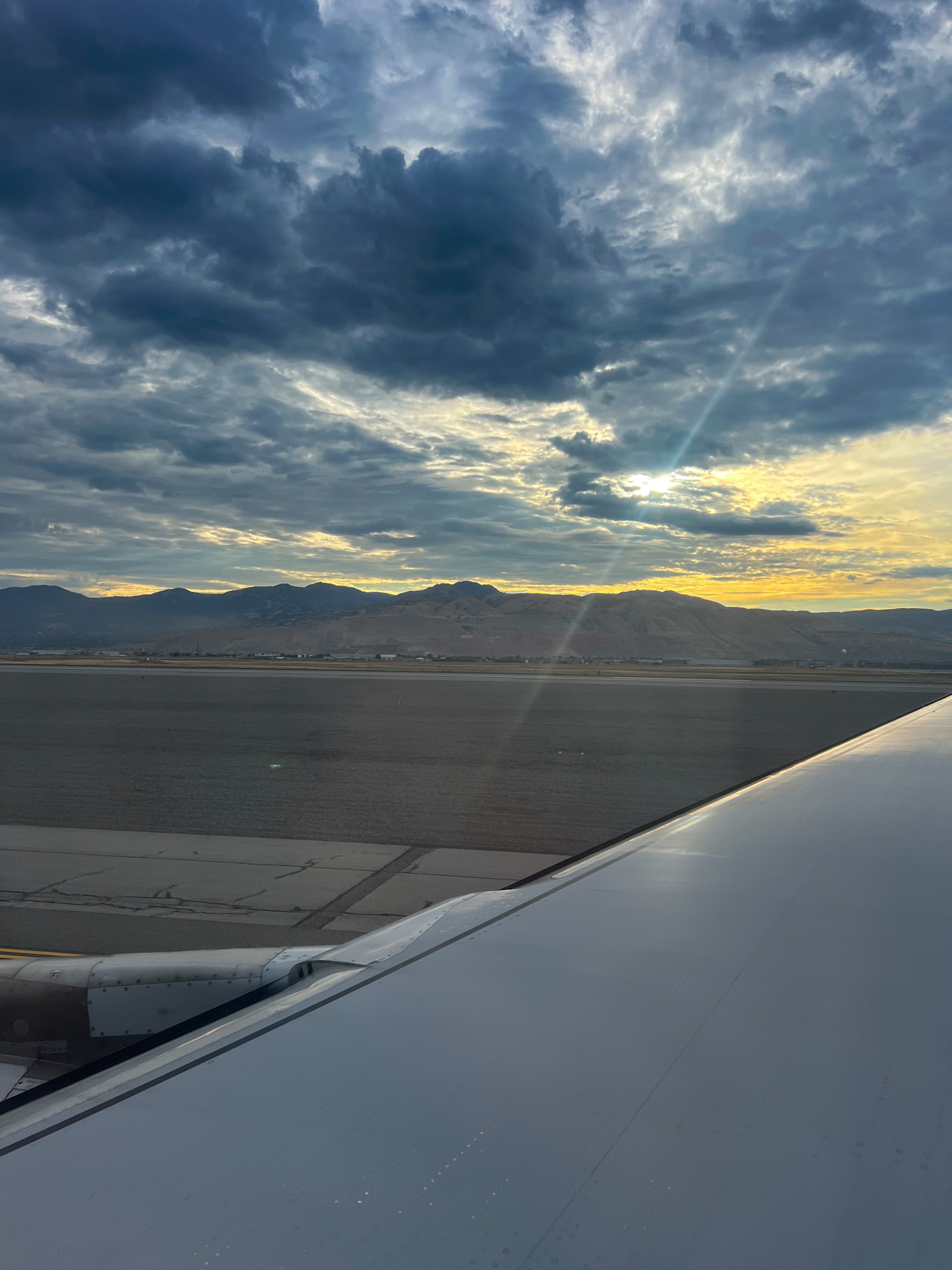
I don’t try to push it when it comes to layover time.
I’m not interested in seeing how tight I can make it or hoping everything goes perfectly.
I’d rather have extra time and sit at my gate than risk missing a flight.
There’s no perfect layover time that guarantees everything will go smoothly.
But adding more time than you think you need usually means less stress before your trip, less rushing during your trip, and a much lower chance of things falling apart.
I’d rather sit at my gate early than gamble my entire trip on 15 minutes.
If you’re planning more trips, learn more here in The Ultimate Packing List for Perfect Vacations because getting the logistics right upfront makes everything smoother.


YES is always the answer... ✈️
I’m Wendy, and yes, I travel for a living (still pinching myself). After 15 years teaching middle school math, I traded the whiteboard for a passport and never looked back. Knoxville is home base, but Arizona sunsets are on another level, and if it’s been sitting on your list, this is your sign to finally say yes and book it. City guides, hotel reviews, and foodie spots are all on the blog. So glad you’re here 🌵☀️

A café, bakery, market, and wine shop all in one Phoenix stop 🍊
At La Grande Orange, order the crepes first, they’re the thing I’d go back for. The chicken salad sandwich is perfect if someone wants lunch while you’re still on breakfast, and the red velvet mini cupcake and a chai latte round it out. The sea salt chocolate chip cookie is heartier than gooey, so it’s best for dunkers. It’s counter service with easy parking, and the market has quirky gifts you won’t find elsewhere. Leave time to browse, because you’ll stay longer than planned.
Save this for your Phoenix trip ☀️
“Outside Terminal 3” is not a pickup location at PHX.
Before your driver pulls in, text them four things: your terminal, north or south side, door number, and inner or outer curb. Grab your bags first, then call them in. Drivers can wait free in the cell phone lot instead of circling. Getting through security is easy; getting picked up is the hard part.
Save this for your Phoenix trip ✈️
Come for the architecture, stay for the view.
The Chapel of the Holy Cross has been built into Sedona’s red rocks since 1956. The outside overlooks get busy, but inside is quiet, with huge windows framing the rocks. It’s free, takes 30-45 minutes, and has a paved, wheelchair-accessible ramp. Make sure to bring water in summer.
Save this for your trip planning!
Order it well done. Trust me.🍑🍕
Peach & Pancetta Pizza at Hideaway House in Sedona: roasted peaches, salty pancetta, ricotta, basil, extra-crispy crust. Split the house salad, grab a prickly pear lemonade, and get a patio table facing the red rocks. Skip the bread if you want room for another slice.
Save this for your Sedona trip✈️

Follow @travelwithwendyplummer for Beautiful Beach Destinations, City Guides, Foodie Spots, and Luxury Hotel Recommendations.