
Montezuma Castle Arizona is an easy historical stop in the Verde Valley, especially when driving between Phoenix, Sedona, and Flagstaff. The main attraction at Montezuma Castle National Monument is a remarkably preserved five-story cliff dwelling built into a limestone alcove above Beaver Creek.
Most people only need about an hour, parking is free, and the main trail is short and paved. It works especially well for families, travelers with limited mobility, and anyone who wants to add some Arizona history to a Sedona itinerary without committing most of the day.
Despite the name, Montezuma Castle was not a castle and had no connection to the Aztec emperor Montezuma. The name was given to the site by European American settlers who mistakenly associated the ruins with the Aztecs.
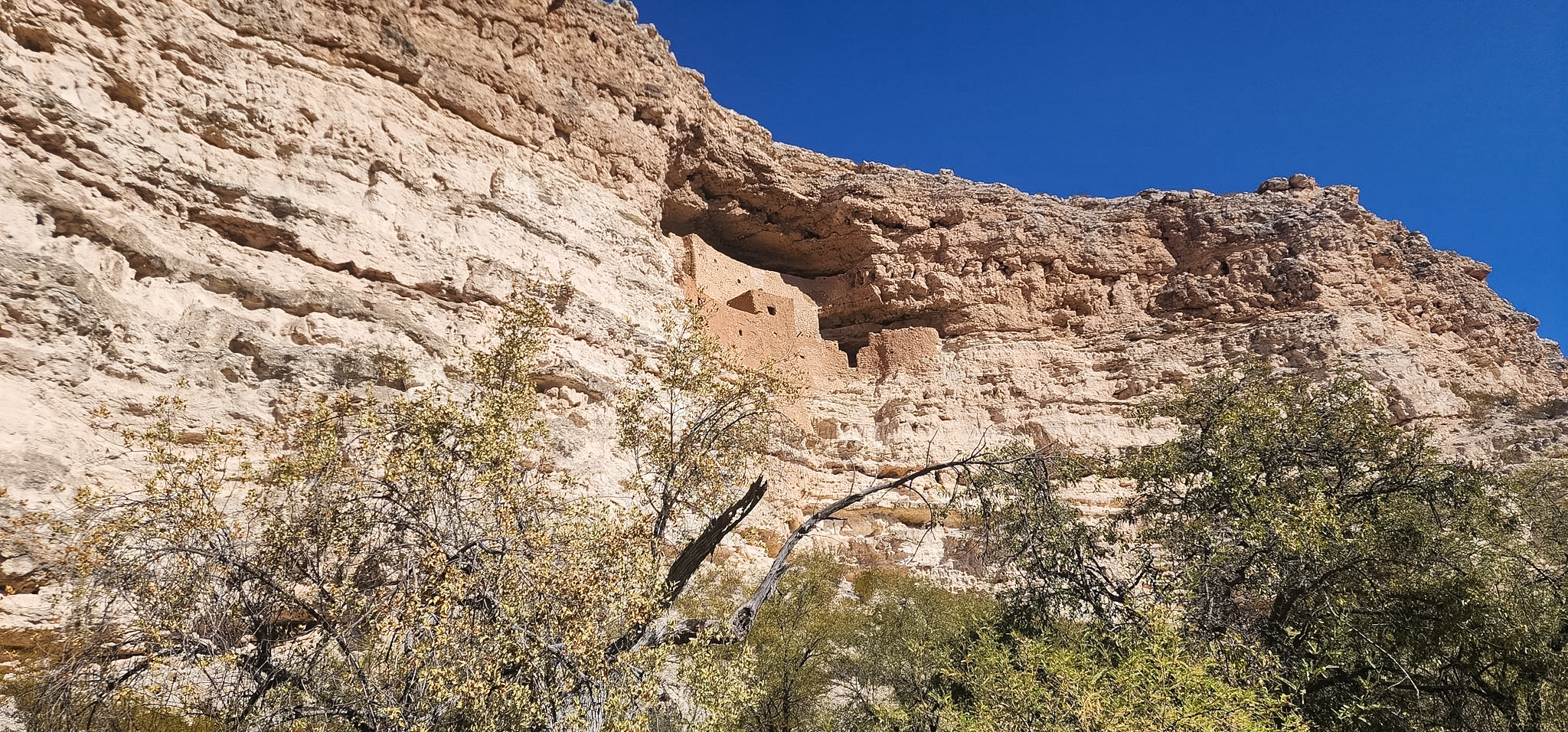
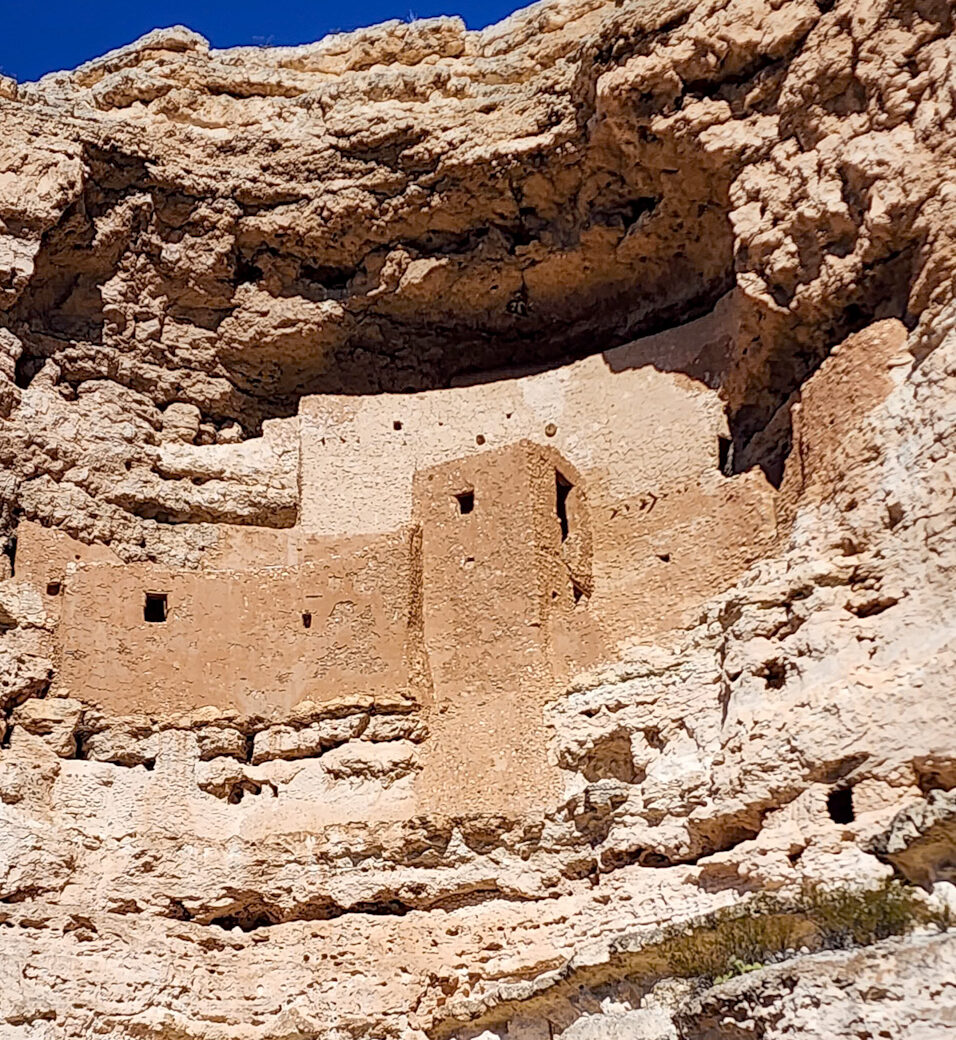
The cliff dwelling was constructed by the Sinagua people roughly 900 years ago. It contains multiple stories and about 20 rooms tucked high into a natural limestone alcove. More than 95 percent of the main structure visible today is original, although stabilization work has been completed over the years to protect it.
Seeing the dwelling from below makes its location even more impressive. It sits well above the valley floor, protected inside the cliff while still overlooking the surrounding landscape.
Montezuma Castle National Monument is located near Camp Verde, just off Interstate 17.
You do not have to drive deep into a remote area or add a complicated detour. You can stop while traveling between Phoenix, Sedona, and Flagstaff and still continue with the rest of your plans that day.
It is approximately:
Traffic and your starting location can affect those times, particularly around Sedona.
A rental car is the easiest way to include Montezuma Castle in a broader Arizona road trip. I use Discover Cars to compare rental options and prices from different companies.
Most visitors should plan to spend 30 to 60 minutes at Montezuma Castle.
The main trail is a paved 0.3-mile loop. The cliff dwelling is approximately 100 yards from the visitor center, with Castle A located farther along the loop.
You could walk the trail fairly quickly, but I would allow closer to an hour if you want to:
The visitor center offers a five-minute virtual tour showing what the interior of Montezuma Castle looks like, which is helpful since visitors are no longer permitted to enter the dwelling.
If you are also visiting Montezuma Well, allow another 30 to 45 minutes at the site, plus approximately 20 minutes to drive between the two locations.
The main attraction is the five-story cliff dwelling, but the visit includes more than standing at a single viewpoint.
Montezuma Castle is built into a limestone alcove above the valley floor. You view it from the paved trail below, where there are several angles for seeing and photographing the structure.
Older photographs show people accessing the dwelling by ladder, but public entry ended decades ago to protect it from further damage.
Even from below, you are close enough to see individual walls, openings, and different levels of the dwelling.
The trail also passes Castle A, another dwelling that once stood near the base of the cliff. It was much larger than what remains today but was badly damaged by fire during the late 1300s.
It is less visually dramatic than the main cliff dwelling, but it helps show that this was a larger community rather than a single isolated structure.
The paved trail runs through a grove of Arizona sycamore trees near Beaver Creek. The trees provide partial shade and make the short walk more comfortable than you might expect from an exposed Arizona archaeological site.
There are also native plants and opportunities to see wildlife throughout the monument.
The visitor center includes museum exhibits about the site’s archaeology, history, and the people who lived in the Verde Valley.
If you enjoy history, I would not skip this part. Looking at the dwelling is interesting on its own, but the exhibits provide the context needed to understand what you are actually seeing.
There is also a bookstore where you can find additional information about Montezuma Castle and other cultural sites in the area.
For more stops you can combine with Montezuma Castle, see my Best Things to Do in Sedona for First-Time Visitors (14 Can't-Miss Experiences).
No. Visitors cannot enter or climb into Montezuma Castle.
The dwelling is viewed entirely from the trail below. Photos of the interior and a virtual tour are available through the National Park Service and inside the visitor center.
I do think it is important to know this before visiting. If you arrive expecting to walk through the rooms, the experience will be different from what you pictured. The visit is primarily about viewing the dwelling, learning its history, and understanding how the community lived in this landscape.
Admission is currently $10 per adult ages 16 and older. Children ages 15 and younger are free.
Your entrance pass is valid for seven days and includes admission to both Montezuma Castle and Tuzigoot National Monuments. Montezuma Well does not charge an entrance fee.
This is a slight correction to information you may see elsewhere online: Montezuma Well is part of the monument, but it is already free rather than requiring the Montezuma Castle ticket.
Admission is also covered by qualifying federal recreation passes, including the America the Beautiful Pass.
Montezuma Castle and Tuzigoot use a cashless fee system, so bring a credit card or another accepted form of electronic payment rather than relying on cash.
Save this for later on Pinterest so you don’t forget it.
Montezuma Castle is currently open daily from 9:00 a.m. until 4:45 p.m.
The entrance gate is about one mile from the visitor center and closes at 4:45 p.m. Parking along the road or outside the closed gate is not permitted. The monument is closed on Thanksgiving, Christmas Day, and New Year’s Day.
Hours can change, so check the National Park Service website before your trip, particularly when visiting around a holiday or during extreme weather.
Yes. Montezuma Castle has a free parking lot near the visitor center.
From the parking area, you walk through the visitor center before continuing to the main trail. The cliff dwelling is only about 100 yards away, so you do not have a long walk before reaching the primary view.
Parking is generally straightforward, but the lot can become busier on weekends, holidays, and during the spring and fall travel seasons. Arriving near opening gives you a better chance of finding a convenient space before larger groups arrive.
The main loop is flat, paved, and approximately one-third of a mile long. It is more of an easy walking path than a hike.
The trail is mostly shaded and wheelchair accessible. It also works well for strollers and visitors who cannot comfortably manage rough or steep trails.
Benches and shaded areas are available along the route. The short spur leading toward Castle A has a steeper grade and may not be suitable for wheelchair users, but the main loop provides access to the primary cliff-dwelling views.
Wear comfortable walking shoes, but you do not need hiking boots for this stop.
If you want to balance this easy historical walk with more accessible trails around Sedona, my Best Easy Hikes in Sedona for Beginners covers several options that do not require advanced hiking experience.
Spring and fall generally provide the most comfortable temperatures for visiting Montezuma Castle Arizona.
Summer visits are still possible, but Arizona afternoons can become extremely hot. The sycamore trees provide welcome shade along sections of the trail, although you will still be outside for much of the experience.
During warmer months, I would visit as close to the 9:00 a.m. opening as possible. You will have cooler temperatures, easier parking, and usually fewer people on the trail.
Bring water even though the trail is short. A reusable Brita Water Bottle is useful for keeping water with you during Arizona road trips without buying another plastic bottle at every stop.
Winter can also be a good time to visit, but mornings may be colder than expected. Check the forecast and bring a light layer rather than assuming every Arizona stop will be warm.
Crowds depend heavily on the day and time.
Because Montezuma Castle is close to Interstate 17 and only requires a relatively short visit, it attracts tour groups, families, and road-trippers traveling through the Verde Valley. Weekends, holidays, and peak spring and fall travel periods tend to be busiest.
The trail is short, so even a moderate number of people can make the main viewing areas feel crowded. The good news is that people move through fairly quickly. Even when a group gathers near the main dwelling, the area often clears within a few minutes.
Yes. Montezuma Castle is a practical stop for families because the trail is short, paved, and easy to walk.
Children can see the cliff dwelling without completing a difficult hike, and the site gives them something tangible to connect with the history. Imagining how people reached the dwelling and lived inside the cliff tends to be more engaging than simply reading about it in a museum.
Since most visits take less than an hour, it also works well for children who may not have the patience for a long archaeological tour.
Pets are allowed on the trails and in areas where vehicles are permitted. Dogs must remain on a leash no longer than six feet, and owners are required to clean up after them. Visitors and pets must stay on marked trails.
Arizona temperatures are an important consideration when traveling with a dog. The trail has shade, but pavement and parked vehicles can still become dangerously hot.
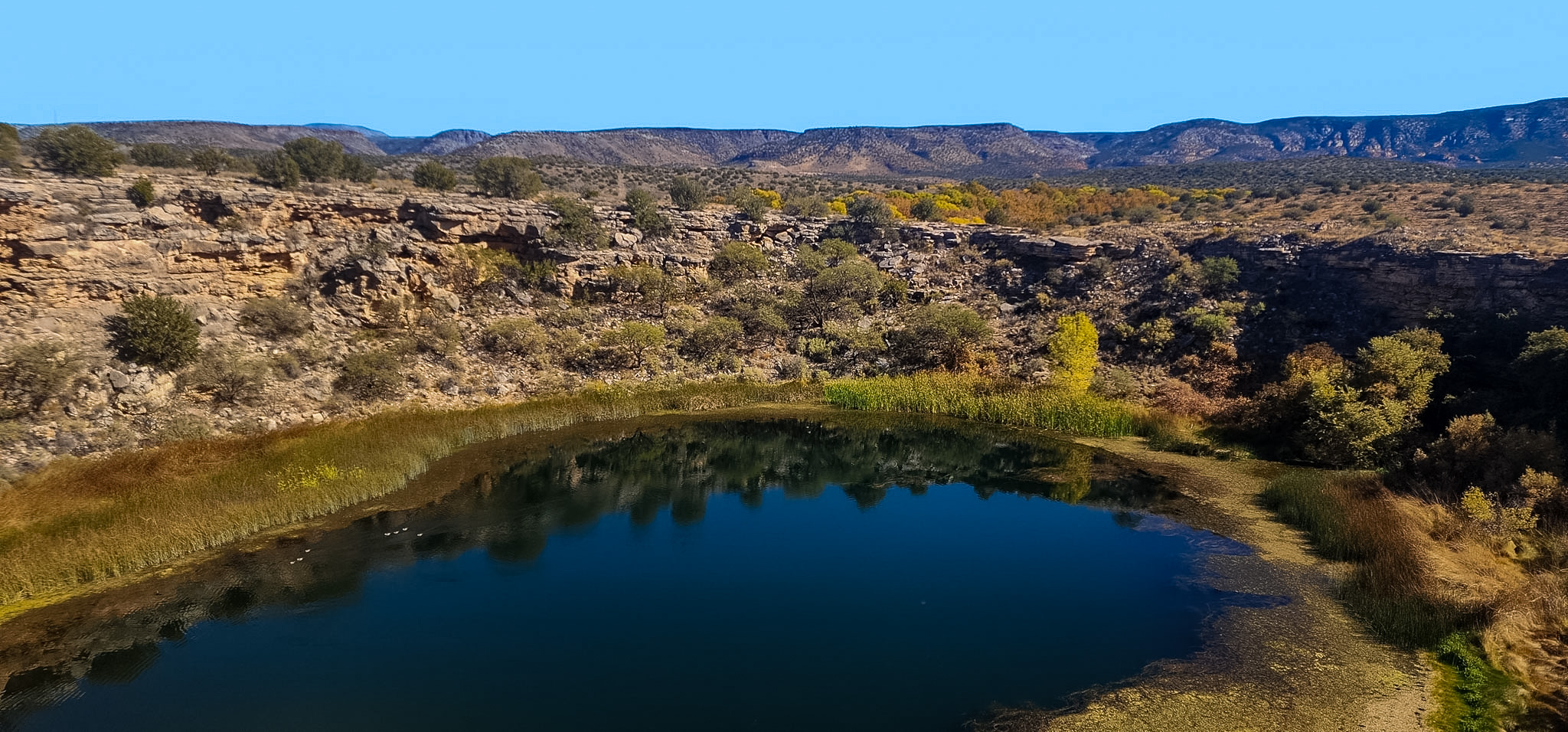
Montezuma Well is worth adding if you have another 45 minutes to an hour available, including the drive.
It is a separate section of Montezuma Castle National Monument located approximately 20 minutes from the main site. Admission to Montezuma Well is free.
The main feature is a limestone sinkhole filled with water. Visitors can also see cliff dwellings, ancient irrigation channels, and archaeological remains along another short trail.
Montezuma Castle and Montezuma Well are related, but the scenery and experience are different enough that visiting both does not feel repetitive. Montezuma Castle has the more impressive cliff dwelling, while Montezuma Well adds natural history and a better look at how water was managed in the area.
Yes. Visiting Montezuma Castle and Tuzigoot National Monument on the same day makes sense, especially because the same $10 entrance pass covers both sites for seven days.
Tuzigoot is located near Clarkdale and features the remains of a hilltop pueblo. It requires more walking and includes some steeper sections, so it feels different from the flat Montezuma Castle trail.
You could combine:
That would create a full Verde Valley day trip from Sedona. You could also add the Verde Canyon Railroad Review: Tips, Cost & What to Expect to your planning if you want to turn this section of the Verde Valley into a longer day.
Montezuma Castle is especially useful when you want to break up the drive between Phoenix, Sedona, or Flagstaff with something more interesting than another gas station or roadside restaurant.
It is close to Interstate 17, does not require reservations, and can fit into your itinerary without taking up the entire day.
Montezuma Castle is not an activity I would normally go far out of my way for, but if it is already along your route, it makes a really easy and interesting road trip stop.
The five-story cliff dwelling is impressive in person, and the visitor center gives you enough history to understand what you are looking at without turning it into a long visit. I would especially recommend it if you enjoy historical sites, are traveling with kids, or want to break up the drive between Phoenix, Sedona, and Flagstaff.
If you have more time, you can also pair it with Montezuma Well or Tuzigoot and turn it into a fuller Verde Valley day.
If you end up booking anything for your trip, using my affiliate links helps support my blog at no extra cost to you. I spend a lot of time researching and writing these guides, so I really appreciate the support.

Booked this Bryson City yurt for the ‘ber months and it’s already my top fall pick this year. 🍂
The Junaluska Yurt sleeps six but feels more like a stylish cabin than a yurt, two real queen bedrooms with actual doors, a full kitchen, and a private bathroom with a walk-in shower. Check-in is just a door code texted to your phone, no lobby, no waiting.
The real win is outside: wraparound porch, private fire pit, free firewood, a gas grill, and Smoky Mountain sunsets that stop you mid-sentence, picture all of that with October color on the ridgeline. Heads up, the last stretch in is a gravel road, so skip the low-profile rental, and there’s no restaurant onsite, you’re minutes from Bryson City, Dillsboro, and Sylva for dinner.
Two to three nights is the sweet spot. (We actually stayed in the dead of winter and it was still stunning, fall just takes it up a notch.) Full review linked in bio.

Italian food felt like the last thing I expected to find in the middle of the Appalachian Mountains... until I sat down at Ilda in Sylva.🍝
They call it Italian-Appalachian, and that’s not just a tagline. Homemade pasta, craft cocktails, local ingredients pulled straight from the mountains around it, this is the kind of meal that makes you forget you’re two hours from the nearest city. It’s cozy, it’s a little upscale, and it is not a walk-in kind of place, call ahead, because tables go fast on weekends.
It’s not cheap, and it’s not trying to be. But if you’re already making the trip out to Sylva, this is the one reservation worth planning your day around.
Full write-up, including what to order, link in bio.
Booked my fall cabin before September even started, and I’m not sorry about it. 🍂
These are the stays that make you actually want the cold to hurry up fireplaces, mountain views, the kind of porch you don’t leave. Not every one of these is going to fit every trip, but if a cozy fall getaway is on your radar, this is the roundup to start with.
One of my favorite travel seasons is almost here, and I have zero chill about it. 🍁✈️
There’s just something about fall trips cooler air, apple orchards, that first flannel of the season, food that actually makes sense with the weather again. I’m already mentally packing for it before September even starts.
If fall is your favorite time to travel too, tell me where you’re headed... I’m taking notes for the list.
Pack your bags... ✈️🧳My hiking and road trip gear shop just got a refresh, and this is everything that actually earns a spot in my bag. The dry bag pulls double duty for beach days and trail days, the Osprey backpack is the one I grab for anything motorcycle or day-hike related, and the GoPro comes with me literally everywhere at this point.
Nothing on this list is filler it’s all stuff I’ve used, packed, and repacked more times than I can count. Full shop linked in my bio if you want to build out your own kit before your next trip.

Follow @travelwithwendyplummer for Beautiful Beach Destinations, City Guides, Foodie Spots, and Luxury Hotel Recommendations.