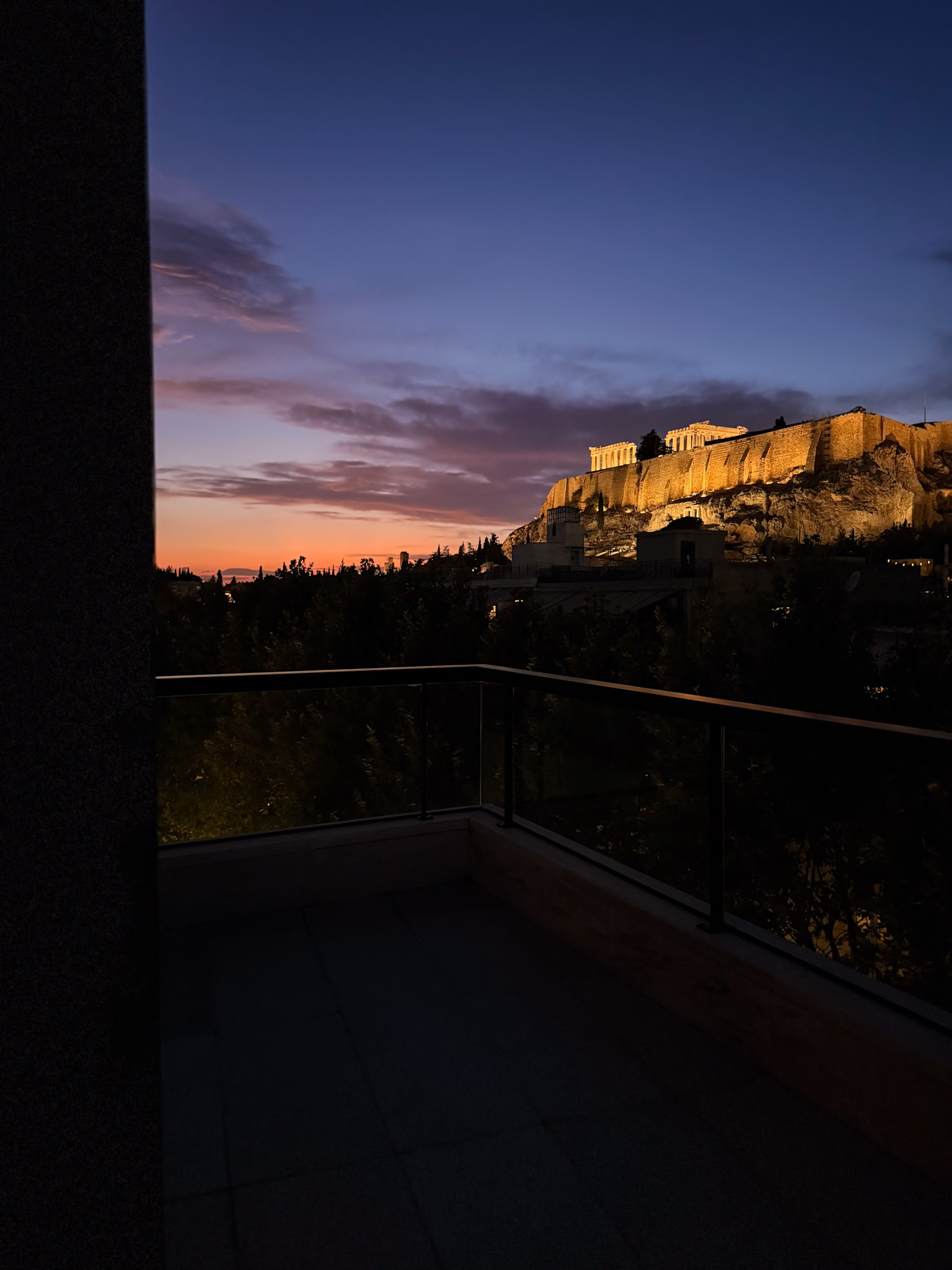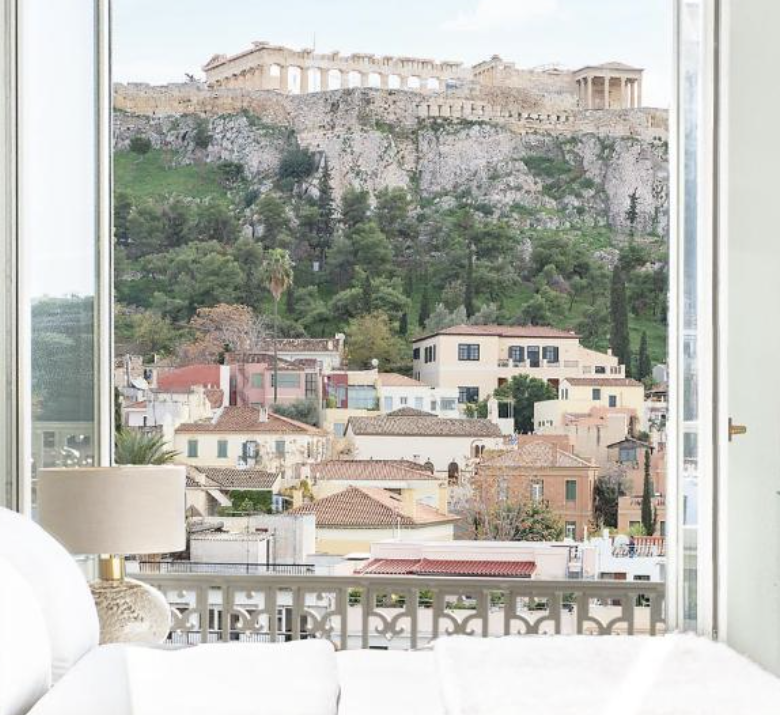
Looking for the best things to do in Athens, Greece? The Acropolis and ancient ruins are obvious starting points, but there’s much more to explore, especially if you enjoy good food, shopping, and wandering through interesting neighborhoods.
I expected to enjoy the historical attractions, but I didn’t anticipate how much I’d love the restaurants, lively squares, and Acropolis views scattered throughout the city.
Here are 30 things to do in Athens for first-time visitors, including our personal favorites, practical tips, and a few additional attractions I’d consider for a return trip.
Not coming to Athens just for the ancient ruins? Me either. Ha!
Use these links to jump straight to the part of Athens that interests you most:
History & Ancient Sites | Neighborhoods & Shopping | Food & Dining | Views & Outdoor Activities | Unique Athens Experiences | Day Trips From Athens
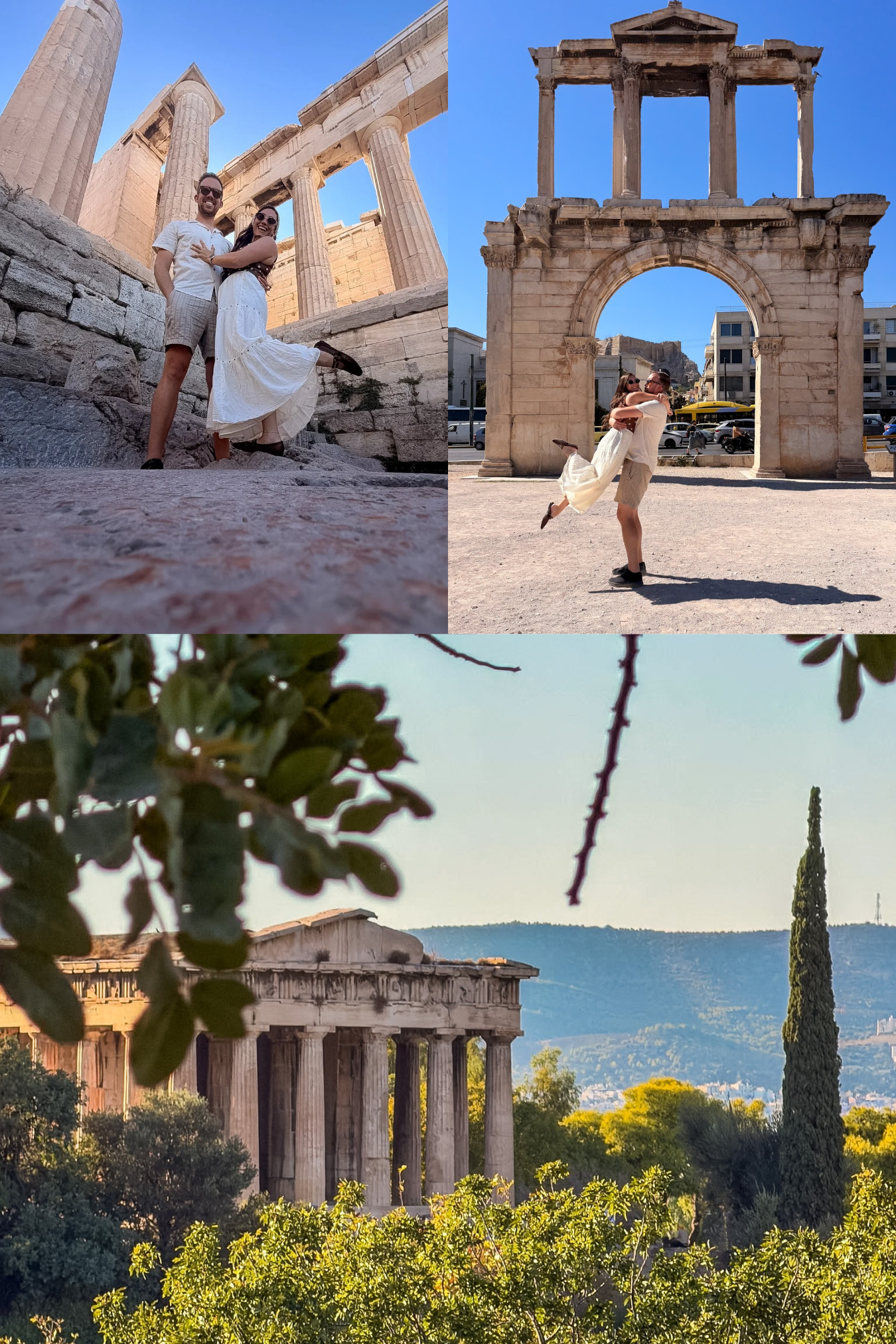
You don’t have to be a huge history person to appreciate Athens’ ancient landmarks. I’m certainly not, but seeing these places in person was really cool.
If there’s one attraction I’d recommend prioritizing on your first trip to Athens, it’s the Acropolis.
We spent approximately two hours exploring independently, and the Parthenon was easily my favorite monument. Those enormous ancient columns are impressive up close, and you get some excellent views overlooking Athens.
The crowds, however, were absolutely bonkers.
We originally planned to arrive at 8:00 AM but didn’t make it until around 10:00 AM. If I visited again, I’d make a much bigger effort to arrive when it opens, especially during warmer months.

WENDY’S TIP: Wear shoes with grippy soles. Some of the marble and stone walkways are surprisingly slippery, and there’s very little shade.

For tickets, entrances, walking difficulty, and everything else we learned, read my Visiting the Acropolis in Athens: Everything You Need to Know.
Located near the southeastern entrance to the Acropolis, the Acropolis Museum houses sculptures and archaeological discoveries from the ancient site. One of its most famous exhibits features five original Caryatids from the Erechtheion. The sculptures you’ll see on the Acropolis itself are replicas.
We didn’t visit the museum, but I’d consider it for anyone interested in learning more about the monuments. It’s also a good indoor option during the hottest part of the day.
The museum requires a separate admission ticket. Check the official Acropolis Museum website for visiting information.
The Ancient Agora was once the center of public life in Athens, where people gathered for commerce, politics, and everyday activities.
Today, you can explore the archaeological remains, including the remarkably well-preserved Temple of Hephaestus and the Stoa of Attalos, which houses a museum.
We viewed the Ancient Agora from outside rather than purchasing admission. If I were choosing another paid archaeological site after the Acropolis, this would probably be my first choice, particularly for history lovers.
The Roman Agora is a separate archaeological site from the Ancient Agora, located near Plaka and Monastiraki.
Its most recognizable features include the Gate of Athena Archegetis and the Tower of the Winds, an ancient structure associated with timekeeping and weather observation.
We viewed the Roman Agora from outside, and you can appreciate quite a bit of it without entering. It’s an easy stop while walking between Plaka and Monastiraki.

Hadrian’s Library sits near Monastiraki Square, surrounded by the modern streets of Athens. Built during the Roman period, it once housed books and spaces for study and cultural activities.
We passed this site multiple times, and I loved how ancient ruins sit right in the middle of everyday city life. You can see some of the remains from outside, so it’s an easy addition to your sightseeing without purchasing another ticket.
The Temple of Olympian Zeus was once one of the largest temples in ancient Greece, with enormous Corinthian columns dedicated to Zeus. Only a portion of the original temple remains standing, but the scale is still impressive.
We viewed it from outside during our visit, when significant restoration work was underway. It’s located near Hadrian’s Arch, making the two easy to visit together.
Hadrian’s Arch is a quick historical stop near the Temple of Olympian Zeus. The marble arch was constructed during the Roman period and stands beside a public roadway, so there’s no admission fee.
We stopped for photos while exploring the area. You don’t need to dedicate much time to it, although you might have to wait for other visitors taking pictures, too.
The Panathenaic Stadium, also called Kallimarmaro, is famous for hosting the first modern Olympic Games in 1896. It’s built almost entirely of marble, which makes it especially impressive in person.
We visited while exploring Athens on a hop-on hop-off sightseeing bus and spent approximately 30 minutes looking around.
For anyone particularly interested in ancient Greek history, the National Archaeological Museum is another attraction to consider. Its extensive collections include ancient sculptures, pottery, jewelry, and archaeological discoveries from different periods of Greek history.
We didn’t visit during our trip, but I’d consider it if you want to see more historical artifacts beyond the Acropolis. You can find visiting information on the official National Archaeological Museum website.
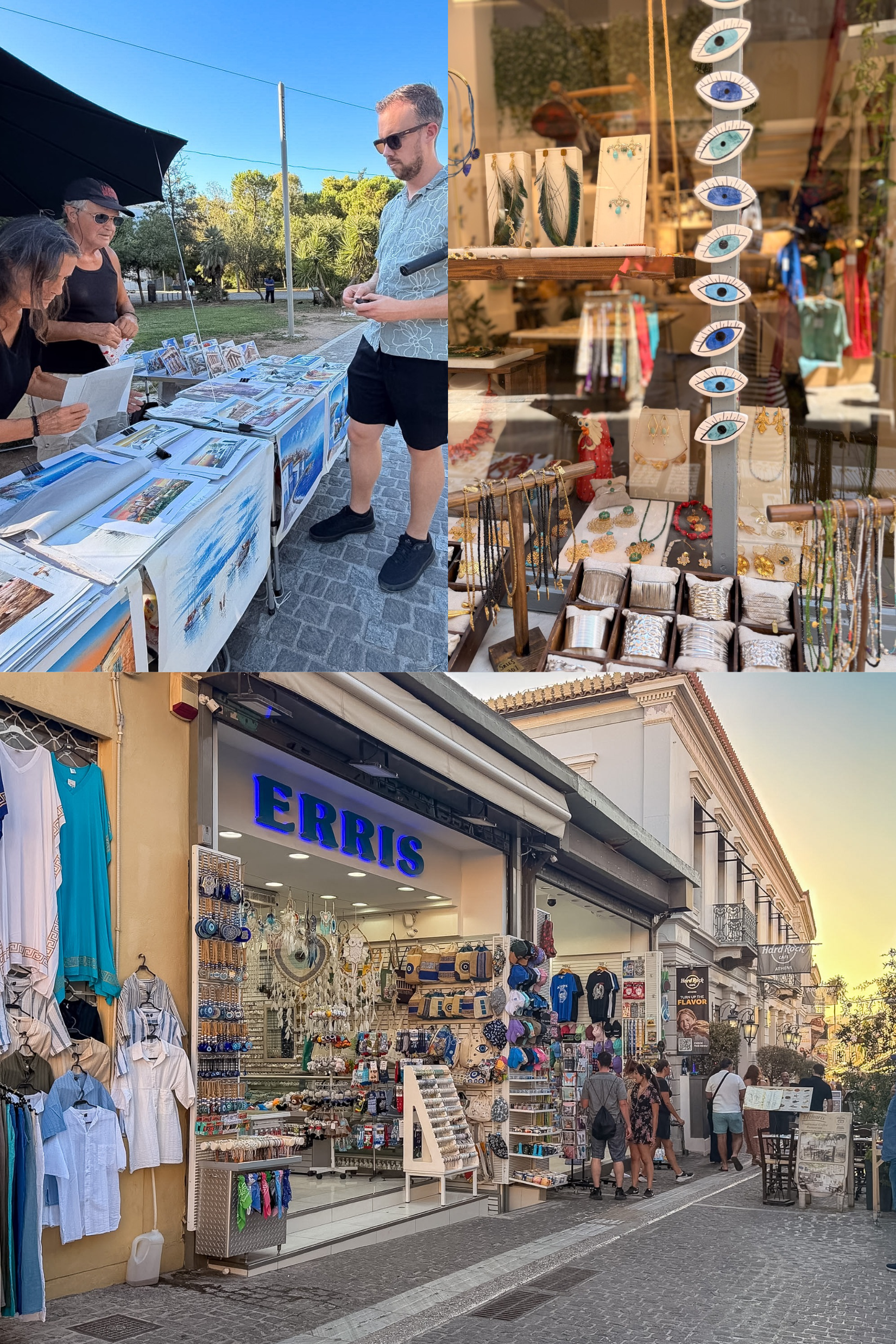
Some of my favorite time in Athens was spent simply wandering around. The neighborhoods feel surprisingly different from one another, and exploring them on foot was one of the best ways to experience the city.
Plaka is one of Athens’ most popular historic neighborhoods, located beneath the Acropolis. Its narrow streets are filled with shops, traditional restaurants, and interesting buildings. It’s also a good area for browsing Greek souvenirs, jewelry, and artwork.
We spent time walking through Plaka while sightseeing and liked how easily it connected with nearby attractions. Yes, it’s touristy, but I’d still recommend exploring it on your first visit.
I LOVED Monastiraki Square and the surrounding streets. This is one of the busiest parts of Athens, with shops, restaurants, street vendors, and historic buildings all mixed together.
The nearby Monastiraki Flea Market is particularly popular for souvenirs, jewelry, clothing, and leather goods. Despite its name, much of the shopping area consists of permanent stores rather than traditional flea-market stalls.
If you’re looking for clothing, shoes, accessories, and familiar retail brands, Ermou Street is one of Athens’ main shopping destinations. We loved shopping here, and I was genuinely surprised by how many cute stores we found throughout the city.
The pedestrianized shopping section connects Syntagma with the historic center, making it convenient to visit while sightseeing.
I’ve put together a separate Best Shopping in Athens Greece: Streets Squares and Markets to Explore with our favorite shopping streets, neighborhoods, and what we found.
Apostolou Pavlou is a pedestrian promenade near Thissio, along the western side of the Acropolis area. This was one of my favorite shopping discoveries because we found more handmade items and artwork than in some of the busier souvenir areas.
We loved browsing the vendors and looking at the different pieces available. The street is also a beautiful walking route, with Acropolis views and easy access to Thissio and the Ancient Agora.
If you enjoy finding unique artwork to bring home from your travels, I’d make time for this area.
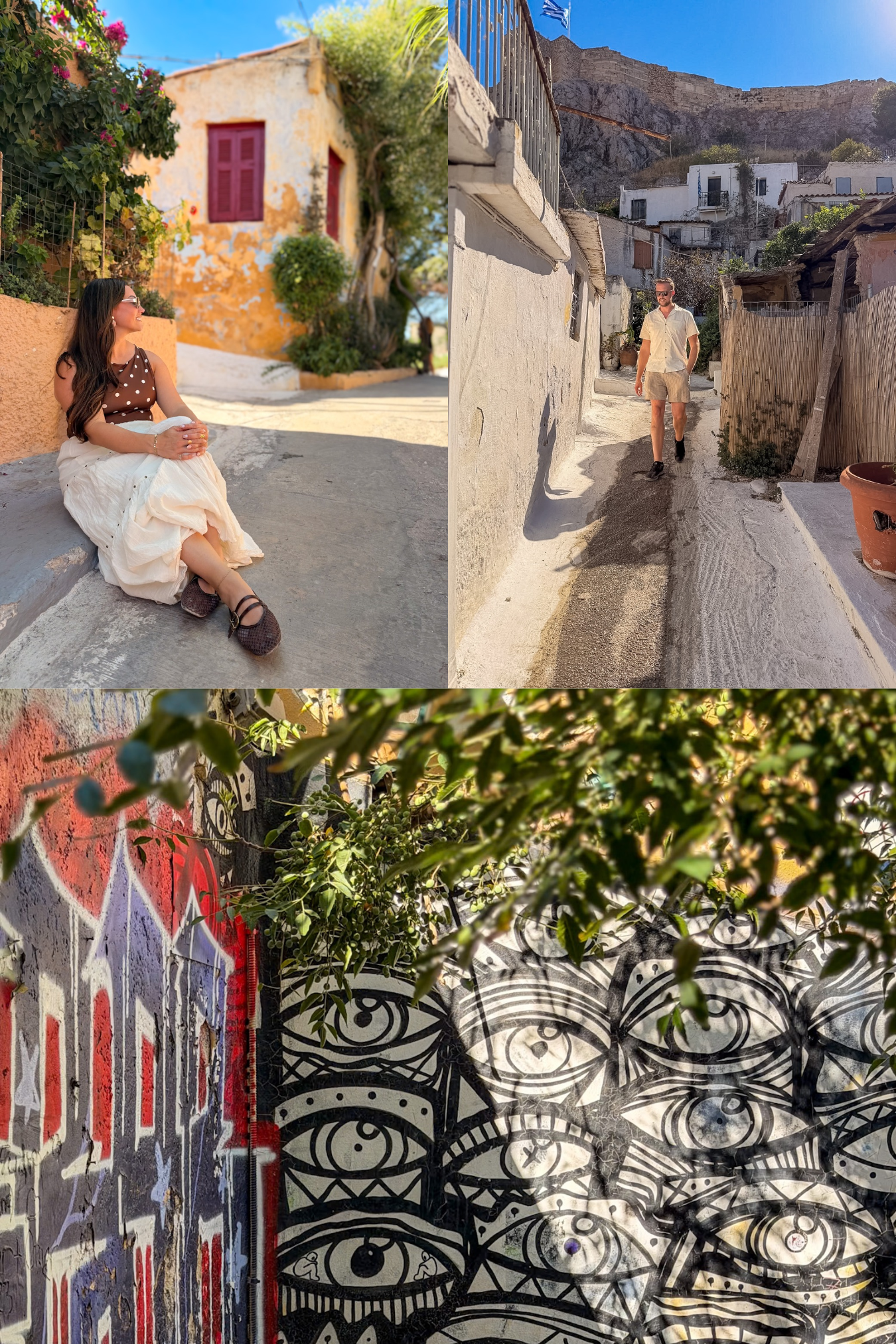
This was one of my favorite discoveries in Athens.
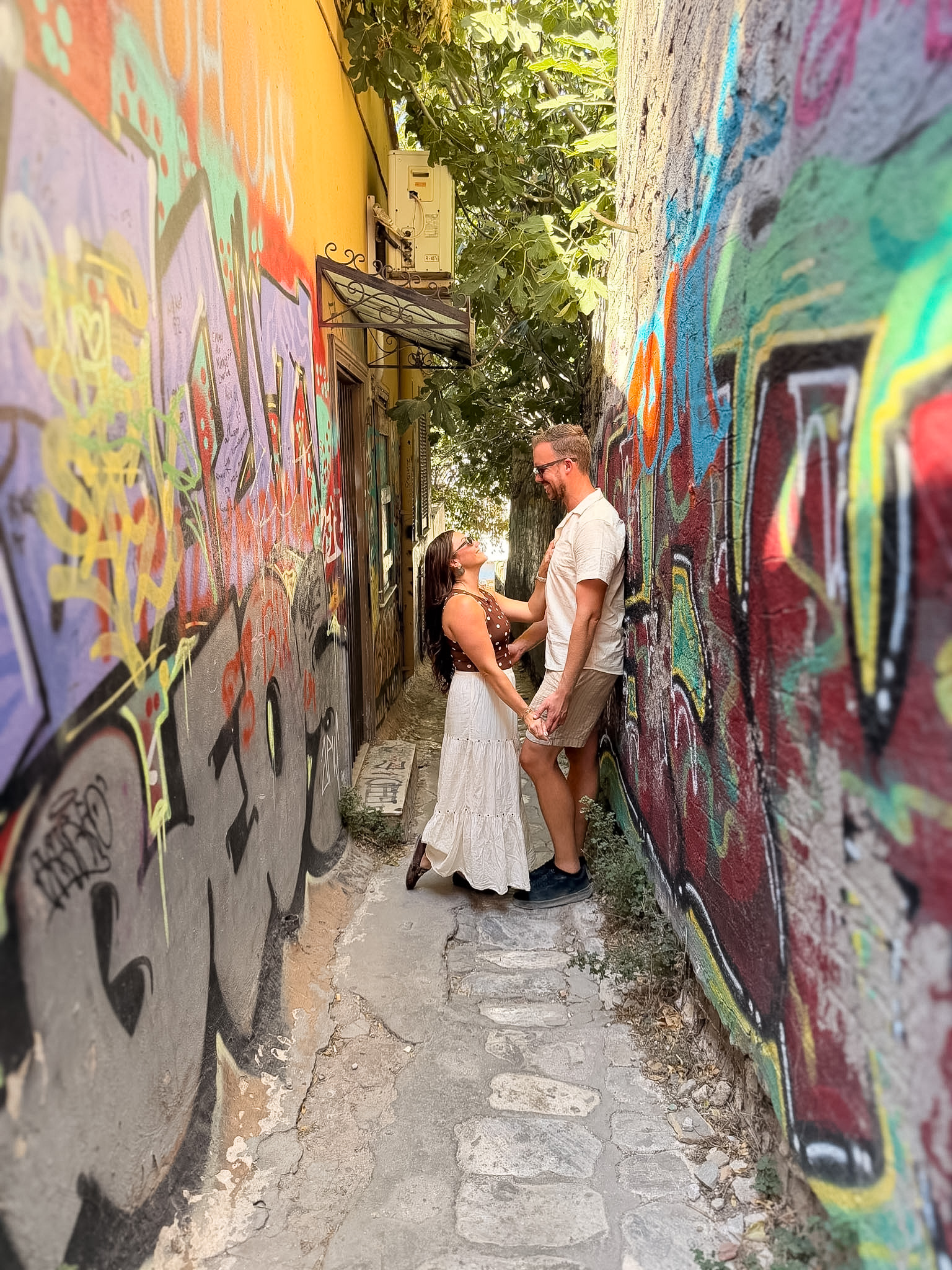
Anafiotika is a tiny residential neighborhood tucked into the slopes beneath the Acropolis. With its whitewashed houses, narrow pathways, and Cycladic-style architecture, it almost feels like you’ve stepped onto a Greek island.
The neighborhood was established by workers from the Greek island of Anafi during the 19th century, which explains why its architecture looks so different from the surrounding city.
I loved exploring the little pathways, taking photos, and seeing this quieter side of Athens. There are also some beautiful views from the surrounding paths.
Psyrri, also spelled Psirri, is a lively neighborhood near Monastiraki known for restaurants, cafés, bars, street art, and independent businesses. It’s especially popular in the evenings when the outdoor dining areas and streets become busy.
Although it wasn’t one of our main sightseeing stops, I’d consider spending more time here if you enjoy creative neighborhoods, vintage shops, and nightlife. It’s close enough to Monastiraki that you can easily explore both during the same outing.
Syntagma Square is one of Athens’ main public squares, located directly in front of the Greek Parliament. Its most famous attraction is the Changing of the Guard at the Tomb of the Unknown Soldier, performed by the Evzones in their traditional uniforms.
We explored Syntagma during our trip. The guards change every hour, while a more elaborate ceremonial change generally takes place on Sunday mornings. You can easily combine Syntagma Square with shopping along Ermou Street or visiting the nearby National Garden.
We stayed in two different areas of central Athens, first at Perianth Hotel near Monastiraki and then at AthensWas near the Acropolis.
Both locations worked extremely well for sightseeing on foot. Perianth was convenient for shopping and restaurants, although the surrounding area was noisy at night. AthensWas was quieter and particularly convenient for visiting the Acropolis.
For a first trip, I’d prioritize staying somewhere central rather than spending additional time commuting to the attractions.

Athens had a fantastic food scene, and I’d give dining just as much consideration as sightseeing when planning your trip.
If you’re visiting Athens for the first time, a food tour can help introduce you to traditional Greek dishes and local ingredients.Depending on the tour, you might visit bakeries, food shops, markets, and restaurants while sampling different specialties.
I’d personally choose a late-morning tour that continues through lunchtime. You can enjoy several foods while avoiding some of the afternoon heat, then save your evening for a rooftop dinner.

An Athens food tour with Secret Food Tours is a great way to sample traditional Greek dishes and discover foods you might not think to order on your own. I’ve taken several tours with this company, and they’re my favorite!
The Athens Central Market, also called Varvakios Agora, is another option for exploring the city’s food culture. It’s known for its meat and fish sections, with surrounding shops selling produce, olives, cheeses, herbs, and other Greek ingredients.
We didn’t visit the market ourselves, but I’d consider it if you enjoy exploring local food markets. Some Athens food tours also include the market, which could be helpful if you’d prefer someone to explain the vendors and products.
You cannot visit Greece without trying some of the food. Okay, technically you can, but WHY would you? Ha!
Throughout our trip, we ate everything from Greek cheeses and fresh bread to dips, tomato-based dishes, and incredible desserts. If you’re unfamiliar with Greek cuisine, I’d start with a selection of appetizers so you can sample several things at once.
Some popular dishes to try include tzatziki, fried feta, Greek salad, moussaka, spanakopita, and baklava.
I’ve also written a separate guide about 25 Greek foods to try, including more details about the dishes we enjoyed and what I’d order again. For more about the restaurants I’d recommend, read my Where to Eat in Athens Greece: Restaurants We Actually Tried.
If you enjoy creative food experiences, Athens has some excellent restaurants offering tasting menus and more contemporary cooking styles. We tried several during our visit, including Fine Mess Smokehouse, Akra, SENSE, and Tudor Hall.
Some focus on modern interpretations of Greek dishes, while others use local ingredients in unexpected ways. I think tasting menus are a great way to experience Greek food beyond the traditional dishes you might already know.
If you’re planning one special dinner in Athens, I’d highly recommend booking a rooftop restaurant overlooking the Acropolis. I’d make your reservation around sunset so you can enjoy the views during daylight and again after the Acropolis is illuminated.
And I’d book in advance, especially if you’re hoping for a particular restaurant or a table with a view. Waiting until the day of your visit could mean missing out entirely.
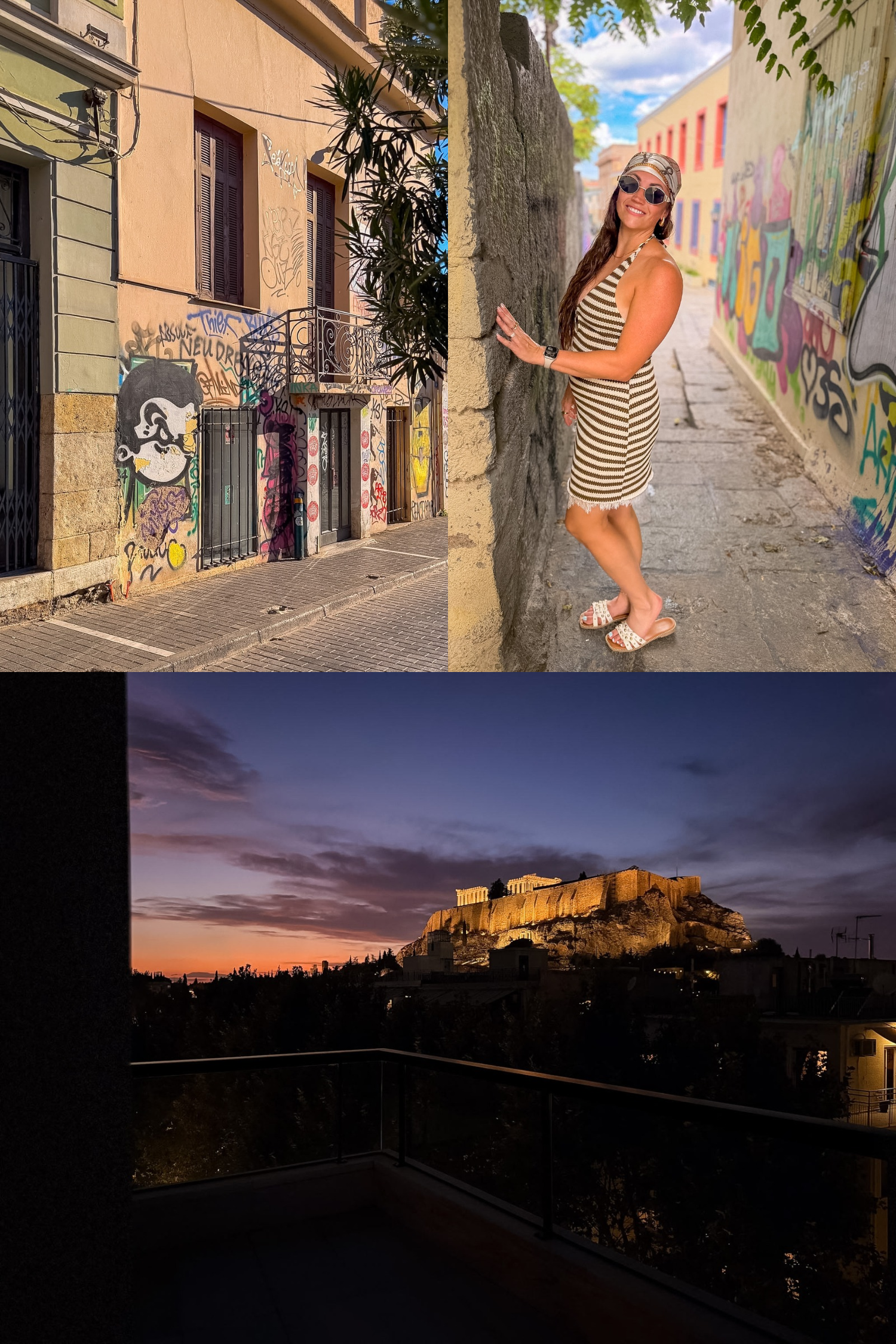


One thing I loved about Athens was how often we’d turn a corner and suddenly have another incredible view of the Acropolis, no ticket necessary.
Seeing the Acropolis during the day is impressive, but I think it might be even more beautiful at night. Once the monuments are illuminated, the entire hill stands out above the surrounding city.
We were fortunate to have Acropolis views from both of our hotels, so I loved seeing how it changed throughout the day.
You can also enjoy nighttime views from public viewpoints and rooftop restaurants throughout central Athens. You certainly don’t need to book an expensive dinner just to see it lit up.
Lycabettus Hill is one of the highest viewpoints in central Athens, offering panoramic views across the city toward the Acropolis, surrounding mountains, and the sea in the distance.
It’s particularly popular around sunset, although the views are impressive throughout the day. You can reach the summit on foot or take the Lycabettus funicular for part of the ascent.
WENDY’S TIP: You can walk to the top of Lycabettus Hill, but it is an uphill climb. For an easier option, take the funicular. Just keep in mind that it travels through a tunnel, so you’ll enjoy the views once you reach the top rather than during the ride.
Philopappos Hill, also called the Hill of the Muses, sits southwest of the Acropolis. It’s known for walking paths, the Philopappos Monument, and views toward the Parthenon.
We didn’t visit ourselves, but I’d consider it for travelers interested in sunset photography who don’t want to book a rooftop restaurant. If you plan to stay until sunset, allow enough time to walk back down safely.
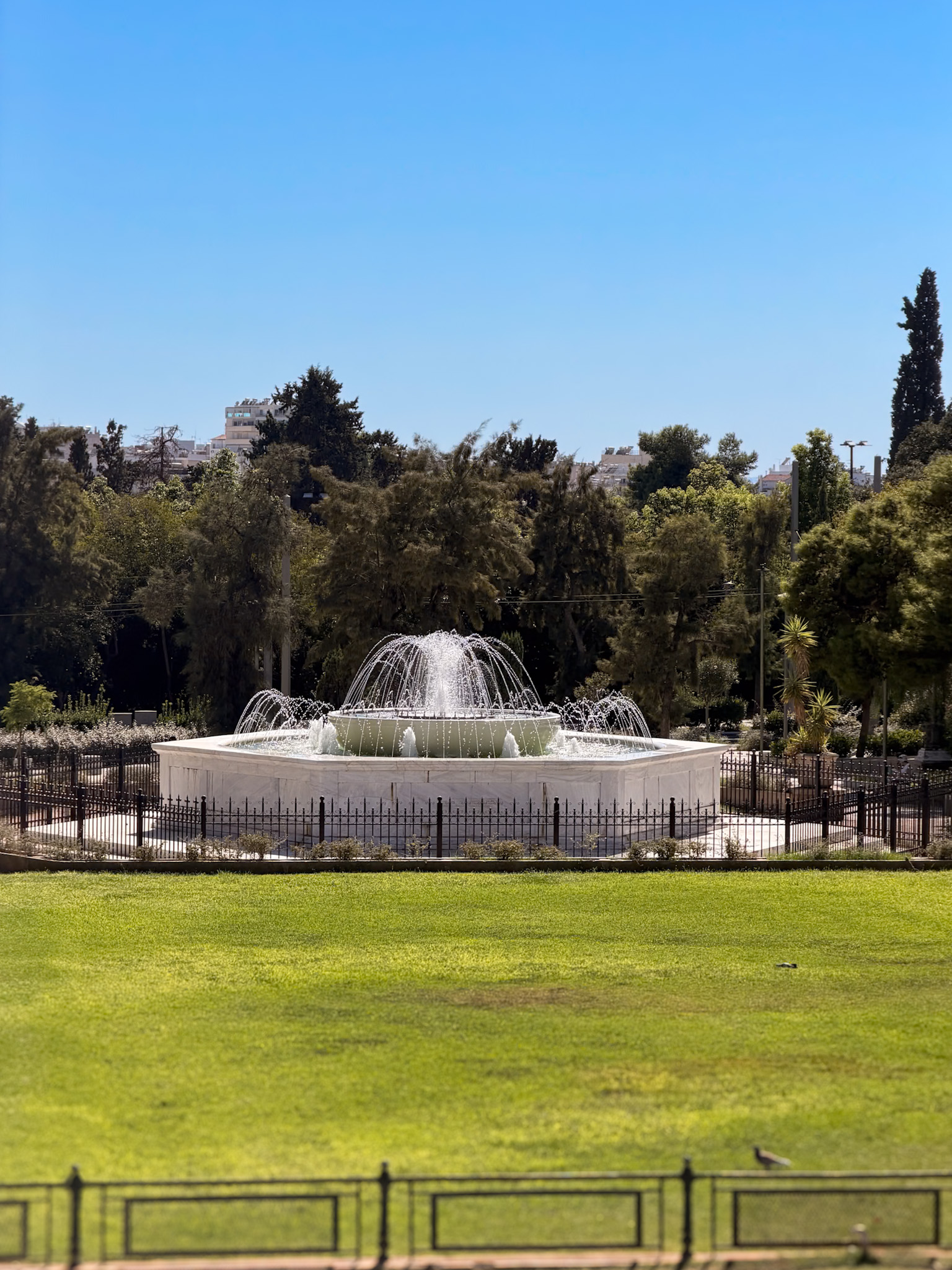
If you need a break from Athens’ busy streets and archaeological sites, the National Garden is a convenient option near Syntagma Square. It has shaded walking paths and greenery, making it especially appealing during warmer weather.
Nearby is the Zappeion, a neoclassical building surrounded by landscaped grounds.
We enjoyed the shade the gardens provided during the day, and I’d consider visiting if you’re traveling with children or simply want a quieter break between attractions.
Dionysiou Areopagitou is a pedestrian promenade running along the southern side of the Acropolis.
It’s lined with historic buildings and connects several sightseeing areas, including the Acropolis Museum and nearby archaeological sites.
Our hotel, AthensWas, was located along this street, so we spent quite a bit of time here.
I loved being able to walk between attractions without dealing with busy vehicle traffic. It’s also a nice area for an evening walk, particularly when the Acropolis is illuminated.
Areopagus Hill, also known as Mars Hill, is a rocky viewpoint near the western entrance to the Acropolis. It’s free to visit and popular for views overlooking the Acropolis, Ancient Agora, and surrounding city.
The rocks can be extremely slippery, so I’d pay attention to your footwear and be cautious on the uneven surfaces. I’d also be careful about visiting after dark when the rocks are harder to navigate.
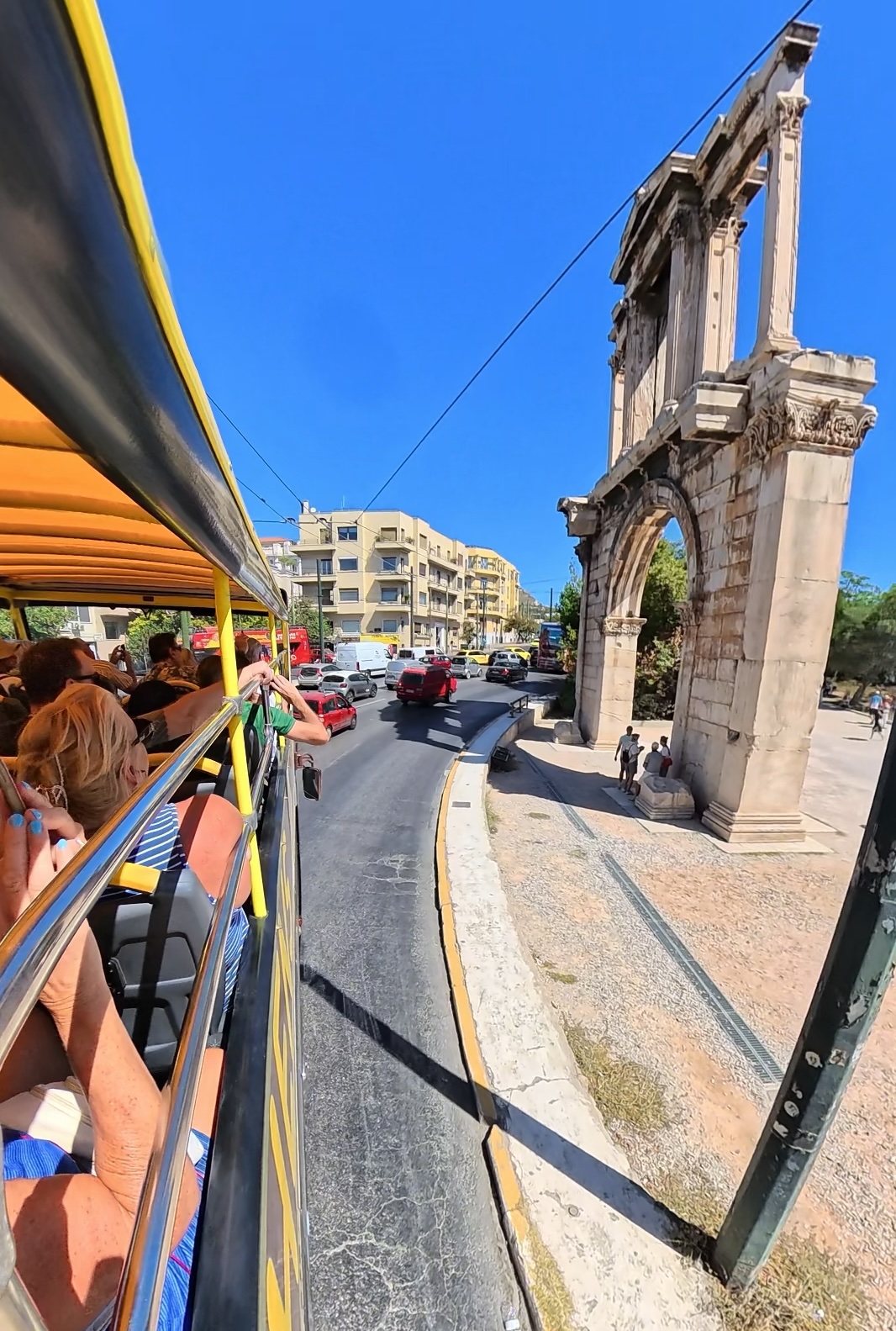
We don’t normally book hop-on hop-off bus tours, but our Athens sightseeing package included one, so we decided to give it a try. And honestly, I was glad we did.
After spending hours walking around the city, it was nice to sit down, give our feet a break, and still see more of Athens. We used the bus to visit sites that were further away from our hotel and enjoyed seeing different parts of the city along the route.
It’s not necessarily the fastest transportation option because Athens traffic can be busy, but I think it’s useful for first-time visitors who want to cover more ground without walking everywhere.
If you’re visiting Athens during warmer months and want some beach time, consider exploring the Athens Riviera. This coastal area stretches south of the city and includes beaches, waterfront restaurants, and seaside neighborhoods such as Glyfada and Vouliagmeni.
Depending on which area you’re visiting, transportation options include trams, other public transportation, taxis, and private transfers.

If you have an extra day, there are several destinations you can visit from Athens without changing hotels. These are three I’d consider depending on whether you prefer island scenery, coastal views, or ancient history.
Hydra was one of my favorite experiences of our entire Greece trip.
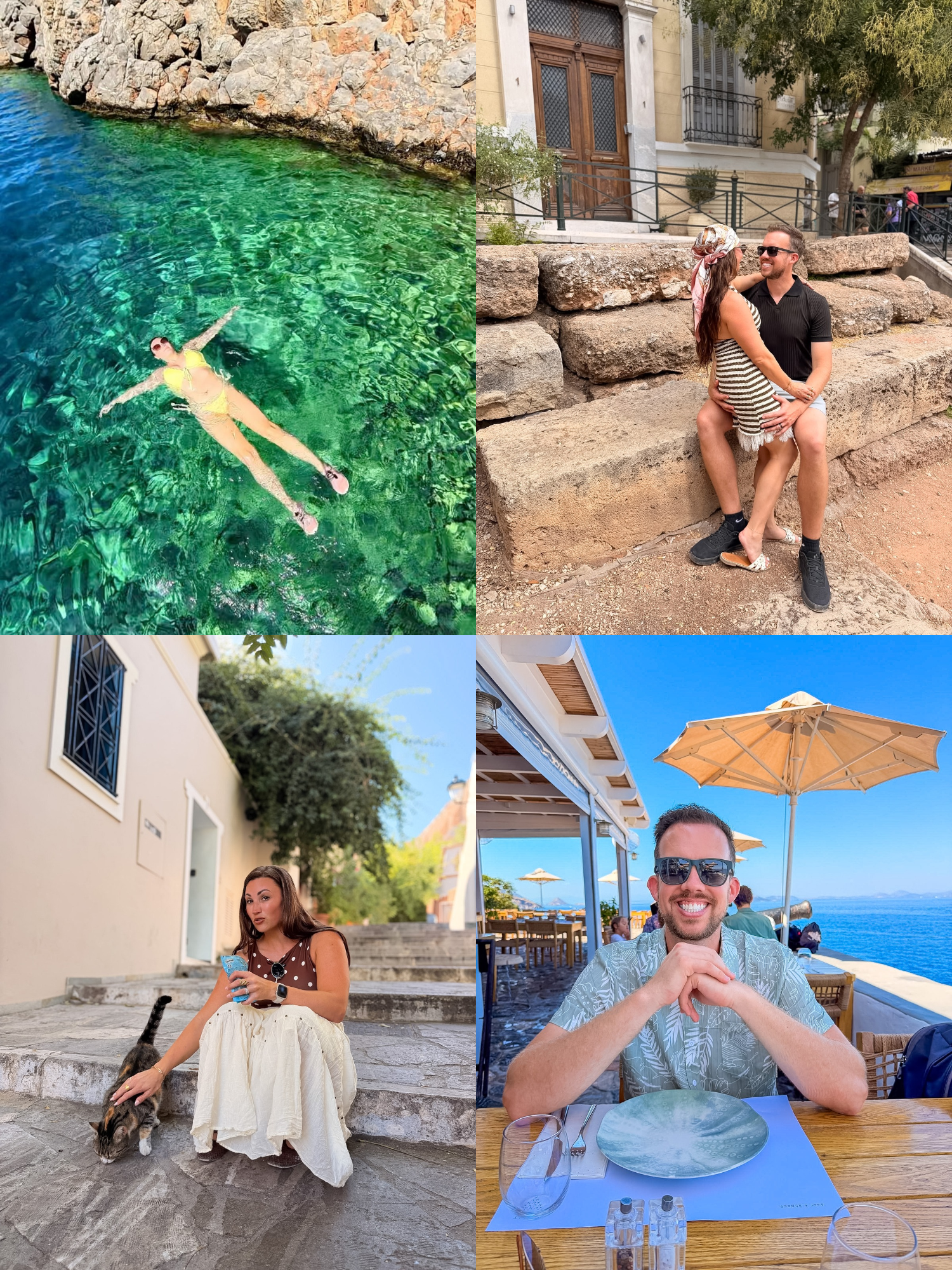
We took a ferry from Piraeus and spent the day exploring the harbor, walking through car-free streets, swimming in incredibly clear water, and enjoying an excellent lunch.
What surprised me most was how much we could experience in one day, although I definitely would have enjoyed staying longer. If you want to visit a Greek island while staying in Athens, Hydra would be my first recommendation based on our experience.
For ferry information, transportation to Piraeus, and booking tips, read my How to Take a Day Trip from Athens to Hydra.
Cape Sounion is located along the southern coast of Attica and is home to the Temple of Poseidon. The temple sits on a headland overlooking the Aegean Sea, making it a popular destination for sunset views.
It’s approximately 1–1.5 hours from Athens by road, depending on traffic, so it’s a reasonable half-day or late-afternoon excursion. I’d consider Cape Sounion if you want to see more of the coastline without spending an entire day away from Athens.
Delphi is an important archaeological destination in the mountains northwest of Athens.
The ancient sanctuary was associated with the Oracle of Delphi and includes the Temple of Apollo, an ancient theater, and an archaeological museum.
Getting there generally takes approximately 2.5–3 hours each way by road, making it a full-day excursion. We didn’t visit Delphi, but I’d consider it for anyone particularly interested in Greek mythology, ancient history, and mountain scenery.
If you’d rather not arrange transportation for Delphi or Cape Sounion yourself, a guided day trip could make planning easier.
For a first visit, I’d recommend spending at least three days in Athens. That gives you enough time to visit the major historical attractions while still enjoying the restaurants, shopping, and neighborhoods.
With four or five days, you can explore at a slower pace and add a museum, more archaeological sites, or a day trip.
A few things I’d recommend based on our trip:
And don’t feel like you need to purchase admission to every archaeological site. We enjoyed seeing several from outside.
We spent a lot of time walking, so I’d bring water, sunscreen, and a portable charger. I’d also recommend a lightweight shopping bag because we kept finding stores and vendors we wanted to browse.
Products I’d bring again are my Brita Water Bottle, Clutch Powerbank, iPhone Tripod, and Nano Bag.

Exploring Plaka, Anafiotika, and Monastiraki Square are some of my favorite free activities. You can also visit Hadrian’s Arch, enjoy public viewpoints, and see portions of several archaeological sites without purchasing admission.
Absolutely! We walked almost everywhere in central Athens and used a hop-on hop-off bus and taxis when needed. I wouldn’t rent a car if you’re primarily visiting the main attractions in central Athens.
Before our trip, I thought Athens would mostly be about seeing the Acropolis and checking off historical landmarks. Instead, I came away liking the city as a whole much more than I expected.
If I went back, I’d absolutely revisit some of our favorite restaurants, do more shopping, and spend another day on Hydra. I might even make time for a few more historical attractions. But let’s be realistic.
I’d probably plan my sightseeing around where I wanted to eat.
If you end up booking anything for your trip, using my affiliate links helps support my blog at no extra cost to you. I spend a lot of time researching and writing these guides, so I really appreciate the support.

It’s not too late to trade the winter weather for a little sunshine this December! ☀️🌴
If a last-minute tropical getaway sounds like exactly what you need, consider this your sign to book the trip.
From beautiful beaches to warm-weather escapes, I’ve rounded up a few destinations worth adding to your December travel plans.
Head to my blog for a little last-minute travel inspiration and start planning your escape! ✈️

Looking for the best breakfast café in Downtown Miami? Café Bastille is a must-visit.
From French-inspired breakfast favorites to beautiful pastries and creative coffee drinks, this spot is worth adding to your Miami itinerary. And the pistachio pancakes? Reason enough to get up early.
What to order:
Pistachio pancakes
Breakfast croissant
Iced chai latte
Whether you’re spending the weekend in Miami or looking for brunch near the Miami Cruise Port, Café Bastille deserves a spot on your list.
Read my full review for everything you need to know before visiting, from what to order to seating and wait times.
The part of European travel nobody puts in the highlight reel.
The blisters, the 20,000 steps before lunch, the train you almost missed, and somehow still saying “this is the best trip ever.” 😂
Thanks for following along on my travels! If you’re planning your own European getaway, you’ll find all my destination guides and itineraries on the blog. Link in bio!
If I could go back to one of the beaches in Hydra, Greece, it would be Avlaki. 🇬🇷
Of the two swimming spots I visited, this one was my favorite because it felt quieter, more private, and had the perfect spot for cliff jumping. It was a little rockier getting into the water, so water shoes are worth bringing, but it was such a fun way to spend part of the day.
If you’re visiting Hydra, add Avlaki Beach to your list!
I don’t even like seafood but @sunsethydra surprised me!
The panko-crusted feta with prickly pear chutney and pistachios was one of my favorites, and the Sunset Salad with fresh oranges and homemade orange-ginger dressing was so good. Even the bread and olive oil stood out!
Brad ordered the fresh catch of the day, sea bass, and loved it. And yes, even I enjoyed a bite!
Comment whether or not you’re a big seafood fan! 👇

Follow @travelwithwendyplummer for Beautiful Beach Destinations, City Guides, Foodie Spots, and Luxury Hotel Recommendations.