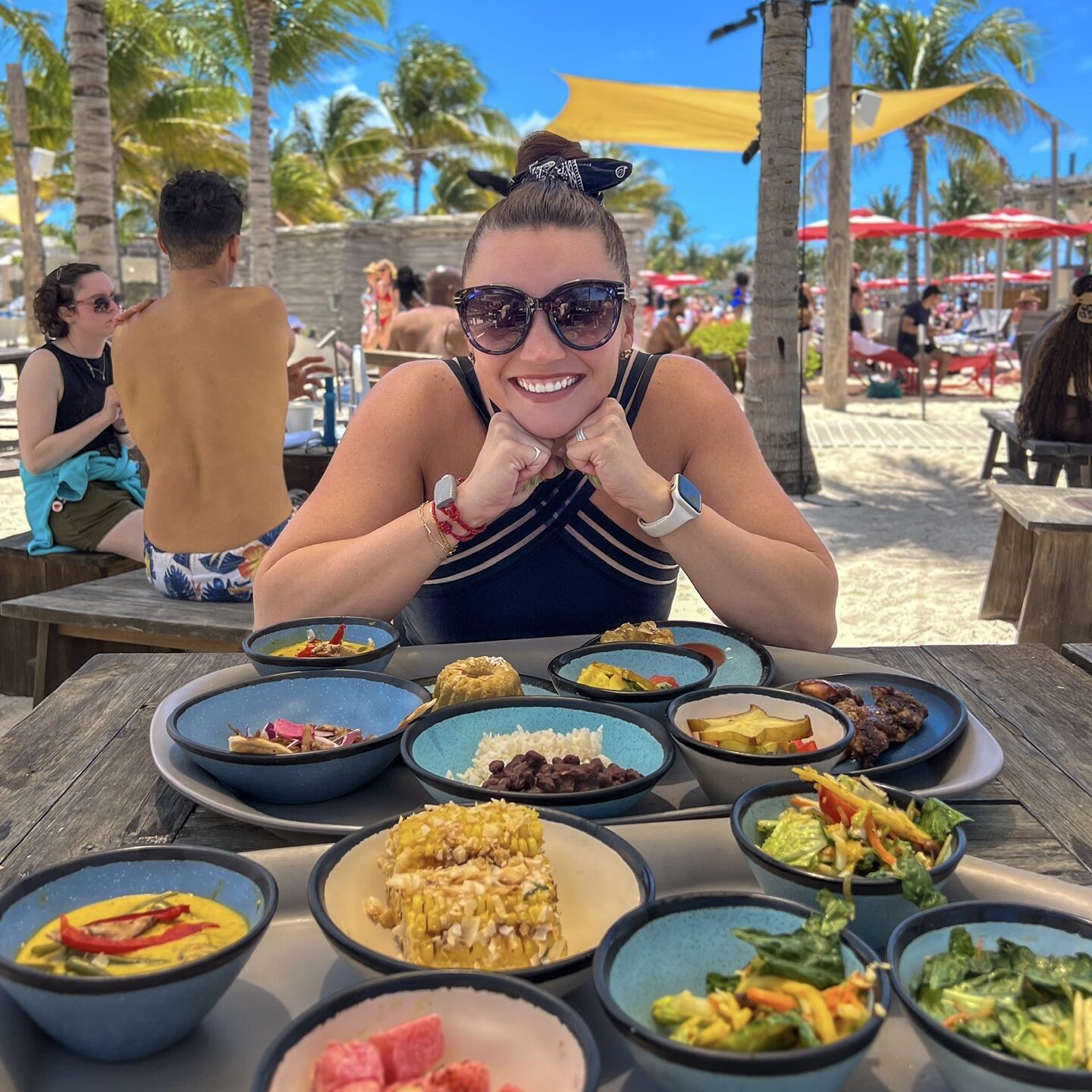
If you’re wondering what to eat in Greece, I have 25 Greek foods to add to your list, including traditional appetizers, regional specialties, street food, seafood, and desserts. If there’s one thing I could go back to Greece for tomorrow, it would be the FOOD.
After visiting Santorini, Athens, Olympia, and Hydra, Greece has become one of my favorite destinations for food, with France being a very close competitor.
We tried everything from traditional Greek appetizers to elaborate tasting menus, but some of my favorite dishes were surprisingly simple combinations of tomatoes, olive oil, cheese, and fresh bread.
And then there were the Santorini tomato fritters. I could have eaten those EVERY DAY.
I feel like I ate everything in Greece. Like, literally ALL of their food. Ha! I’ll be sharing what we personally ordered, where we ate it, and a few other famous Greek foods to look for.
And while I love trying new foods, that doesn’t mean I’m going to love every single one. Looking at you, halvas.

One thing I LOVED about eating in Greece was ordering several appetizers to share. It’s an easy way to try different foods, and some of our appetizers ended up being my favorite dishes of the entire trip.
If you’re visiting Santorini, PLEASE try the tomato fritters.
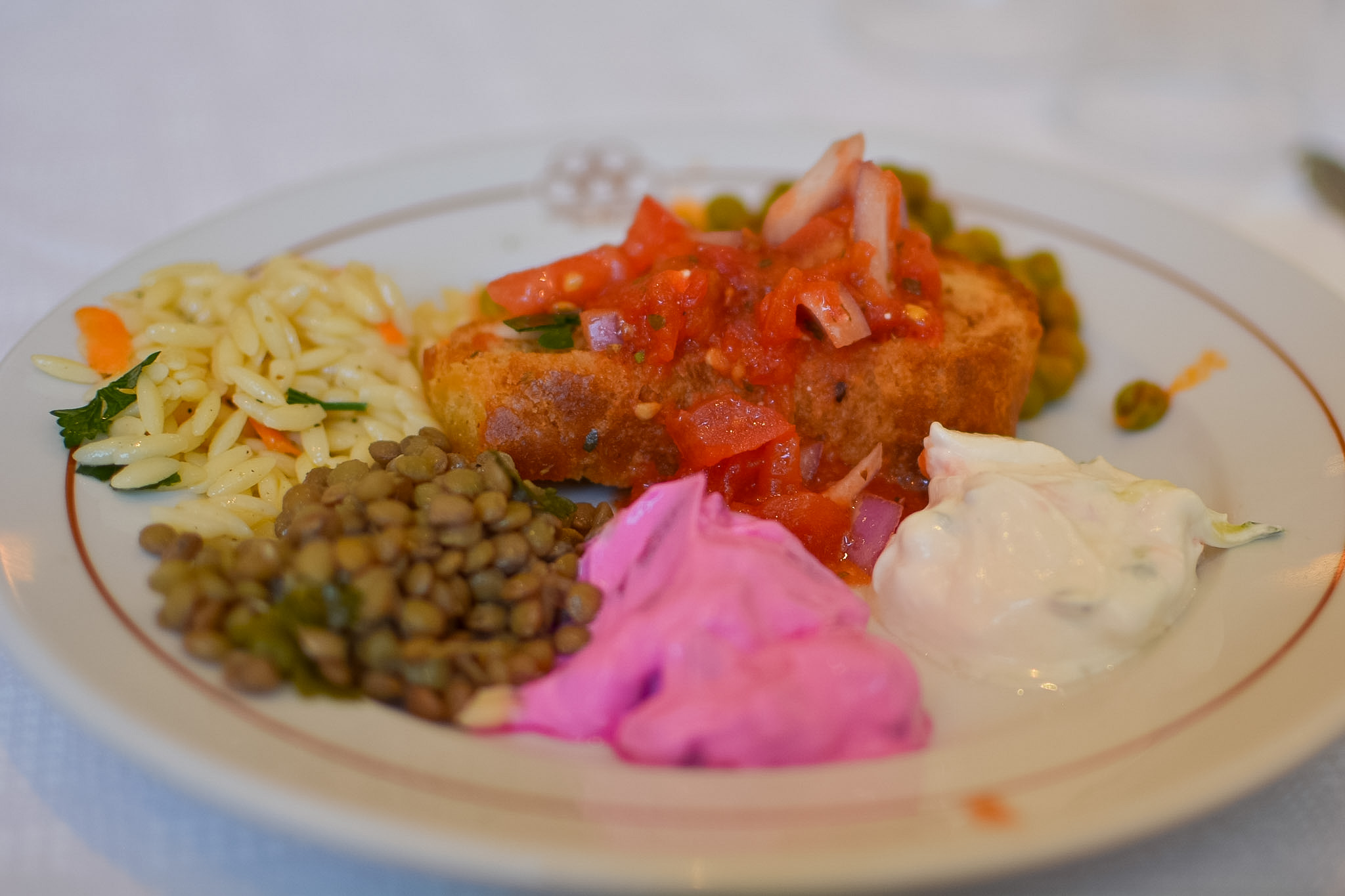
Also called tomatokeftedes, they’re made with tomatoes, onions, herbs, and flour, then fried until crispy. Santorini is particularly known for its small, flavorful tomatoes.
We ordered them at Cave of Nikolas during our self-drive boat day, and they were INCREDIBLE. Crispy on the outside with a softer, flavorful center. These were easily one of my favorite foods on the island.
Would I order them again? In a HEARTBEAT.

If you’re visiting Santorini, read my Cave of Nikolas Santorini Review: What to Order and What to Know for more details about our meal.
I am a dip person, so Greece was basically speaking my language.
Tzatziki is made with thick Greek yogurt, cucumber, garlic, olive oil, and herbs. It’s cool, creamy, tangy, and especially good with warm bread or grilled meat.
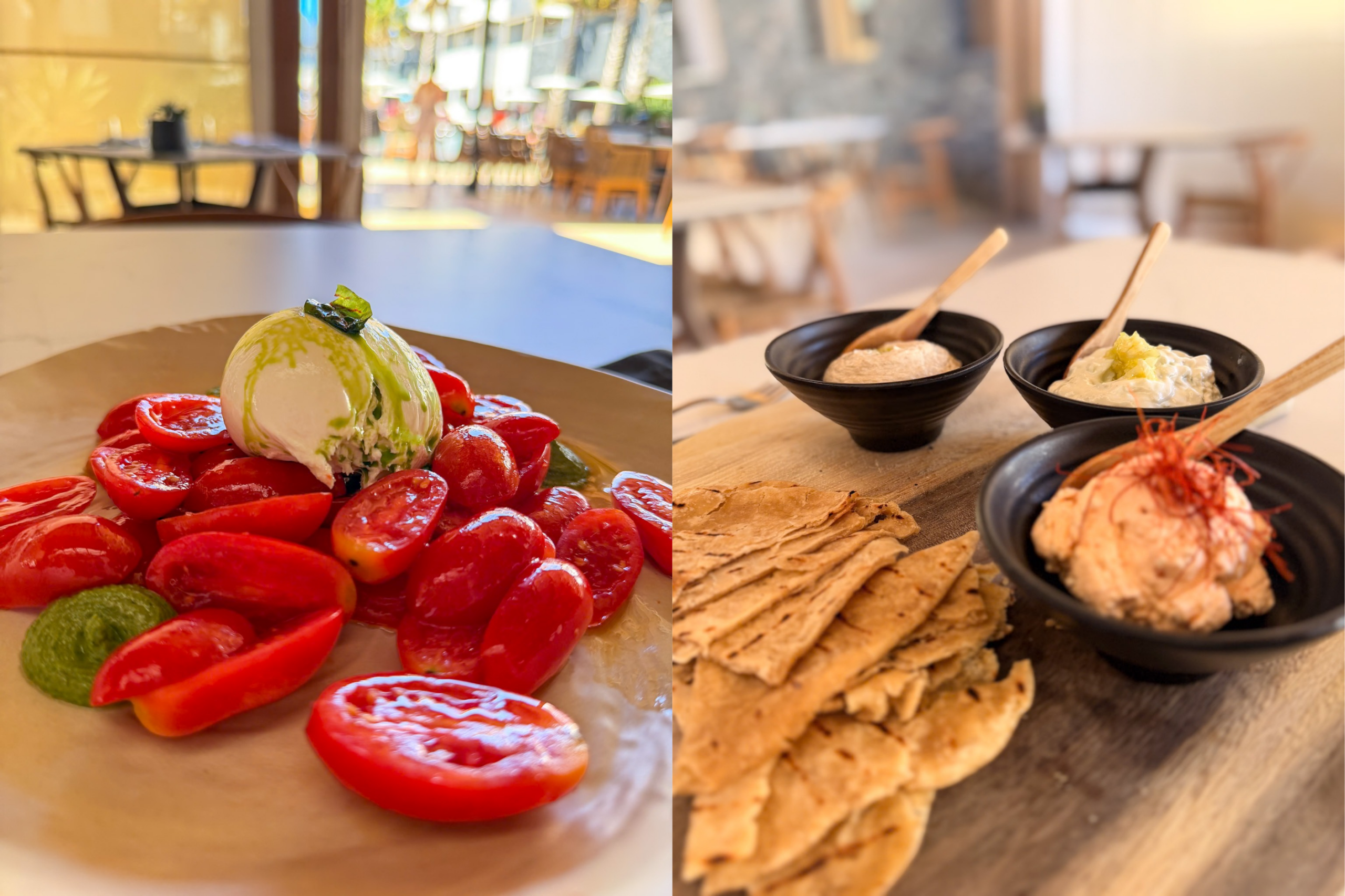
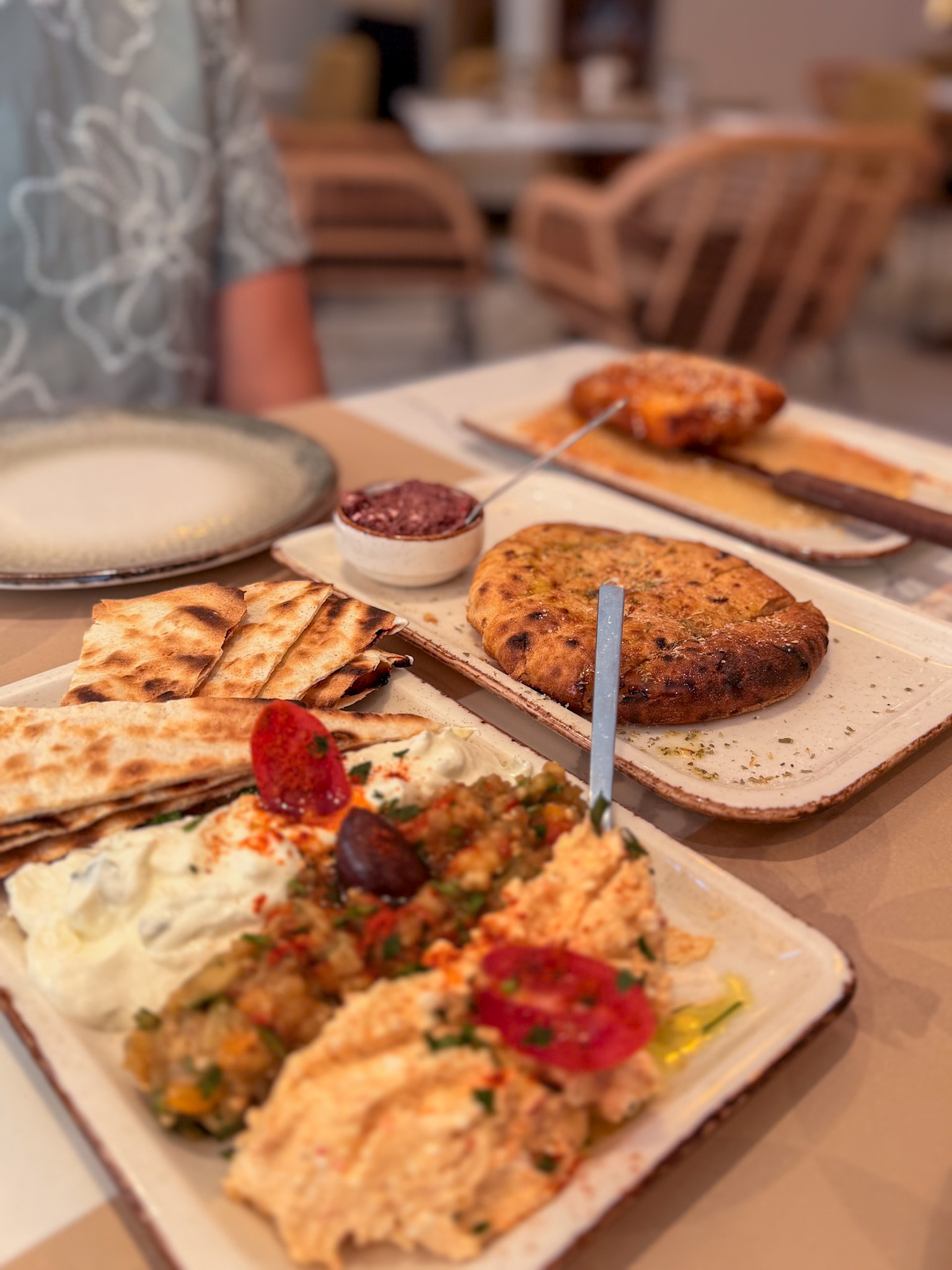
At Alyssos in Athens, we ordered three different Greek dips with a variety of homemade breads.
CHEF’S KISS.
I could have made an entire meal out of the dips and bread.
If you love cheese, Greece is going to make you VERY happy.
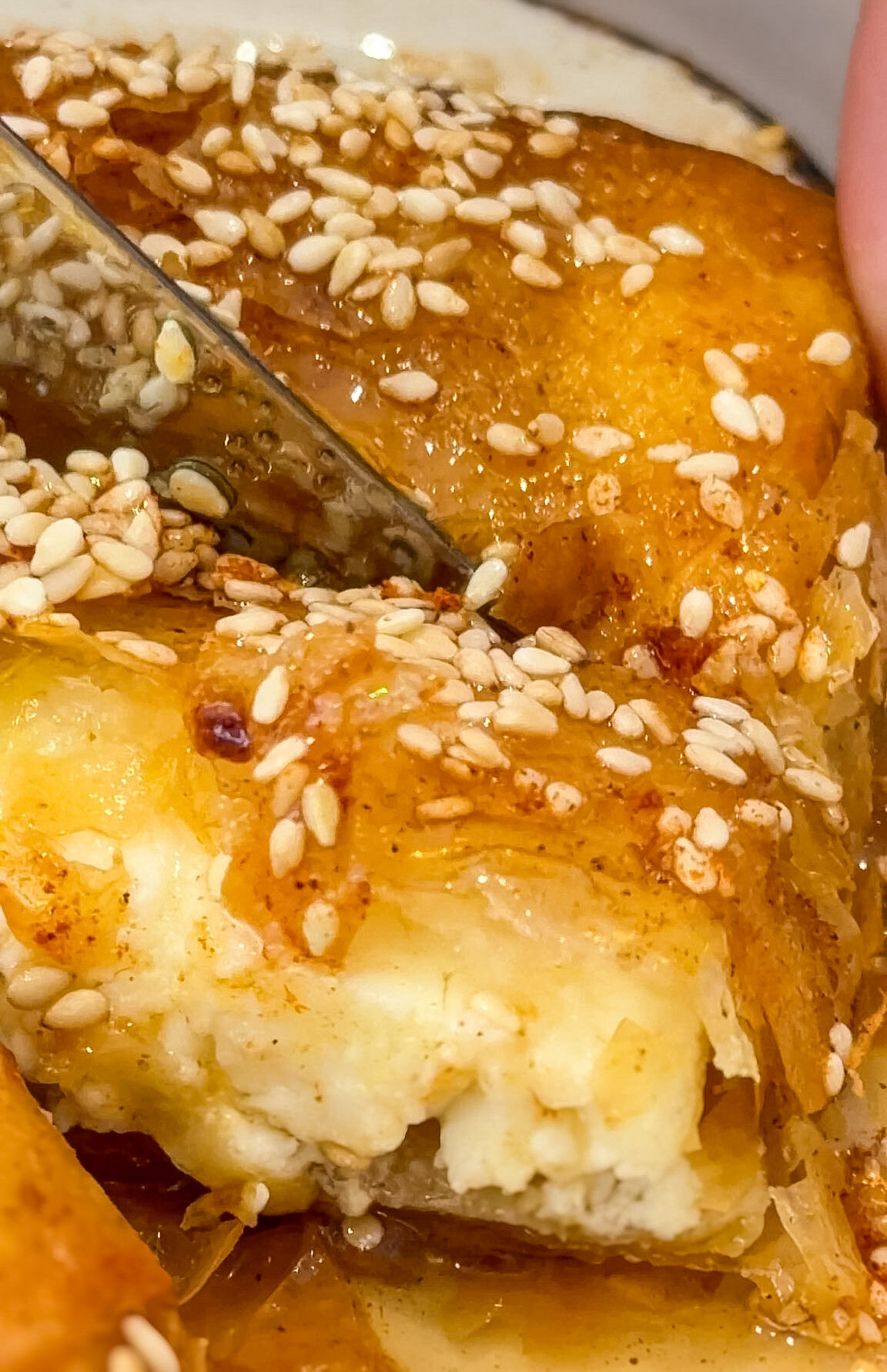
Saganaki traditionally refers to cheese cooked in a small frying pan until golden. You’ll also find fried feta wrapped in crispy phyllo pastry, often served with honey.
We tried several versions, including fried feta wrapped in phyllo with honey and sesame, and another coated in panko breadcrumbs with prickly pear chutney and Aegina pistachios.
That second version was one of my favorite appetizer discoveries of the trip. Salty, creamy cheese with something sweet and crunchy YES.
Tirokafteri is a creamy Greek cheese dip usually made with feta or another cheese and spicy peppers. We tried a spicy cheese dip as part of our appetizer sampler, although the menu didn’t specifically identify it as tirokafteri.
Whatever it was, it was SPICY.
I’m a complete wimp when it comes to spicy food, so this was a little much for me. If you enjoy heat, however, you’ll probably love it.
Melitzanosalata is a traditional dip made with roasted eggplant, olive oil, lemon, garlic, and sometimes herbs. Depending on the preparation, it can have a slightly smoky flavor.
Our dip sampler also included an eggplant dip, although I can’t confirm the exact traditional Greek name from the menu. If you see several Greek dips offered together, I’d recommend ordering the sampler rather than individual portions.
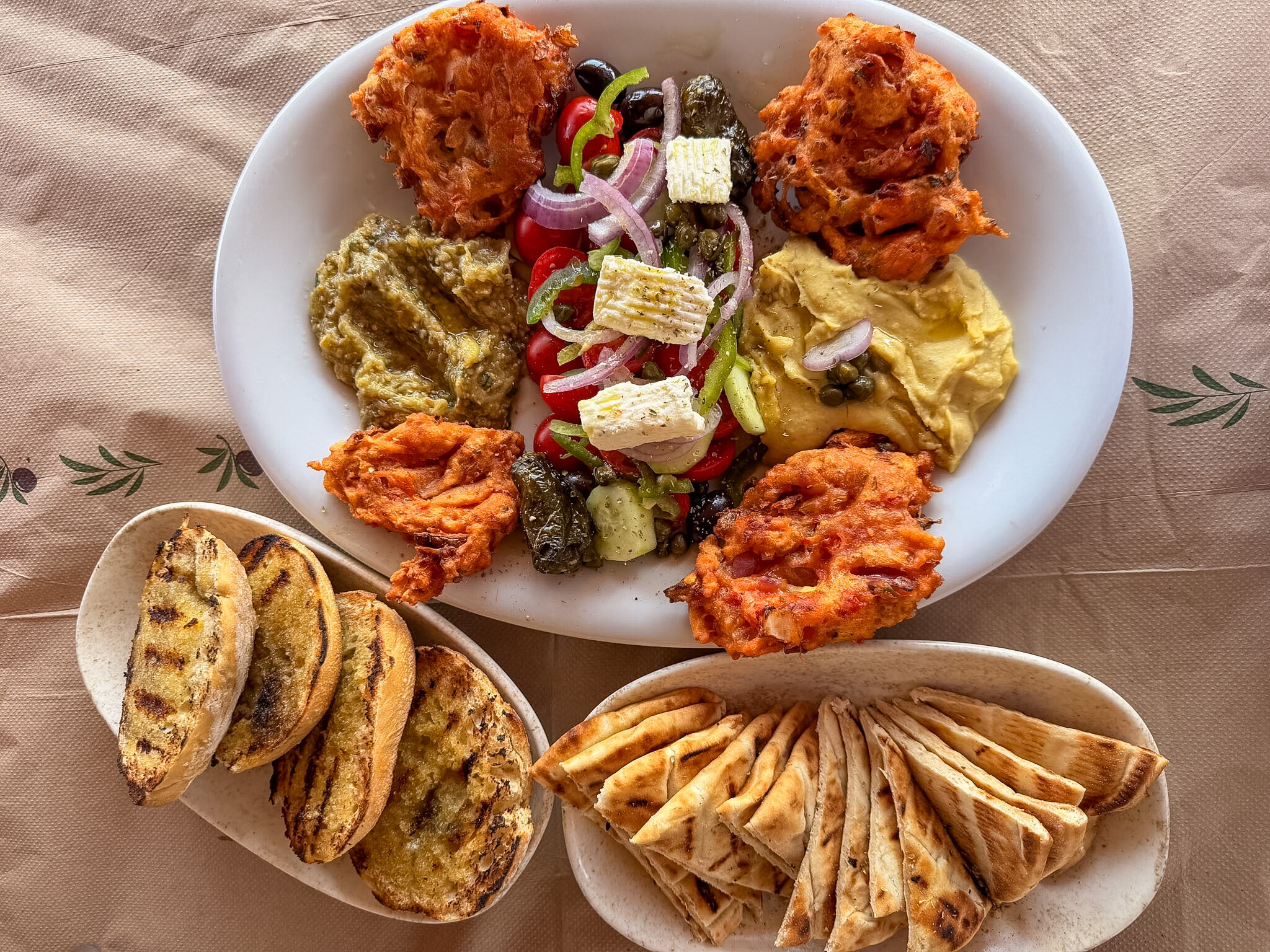
Despite the name, Santorini fava isn’t made from large green fava beans. It’s a smooth, golden purée made from yellow split peas, commonly topped with olive oil, onions, and capers.
Santorini is known for its locally grown fava, so this is a regional specialty to look for at traditional tavernas on the island.
Horiatiki, or village salad, is what most of us know as Greek salad. A traditional version includes tomatoes, cucumber, red onion, olives, feta, oregano, and olive oil.
And something you might notice? Usually no lettuce.
We ordered a different variation that included cherry tomatoes, grated carrot, sesame, croutons, pomegranate seeds, balsamic vinaigrette, and anthotyro cheese.
It wasn’t a traditional horiatiki, but it reminded me how GOOD the produce and cheese were throughout Greece.
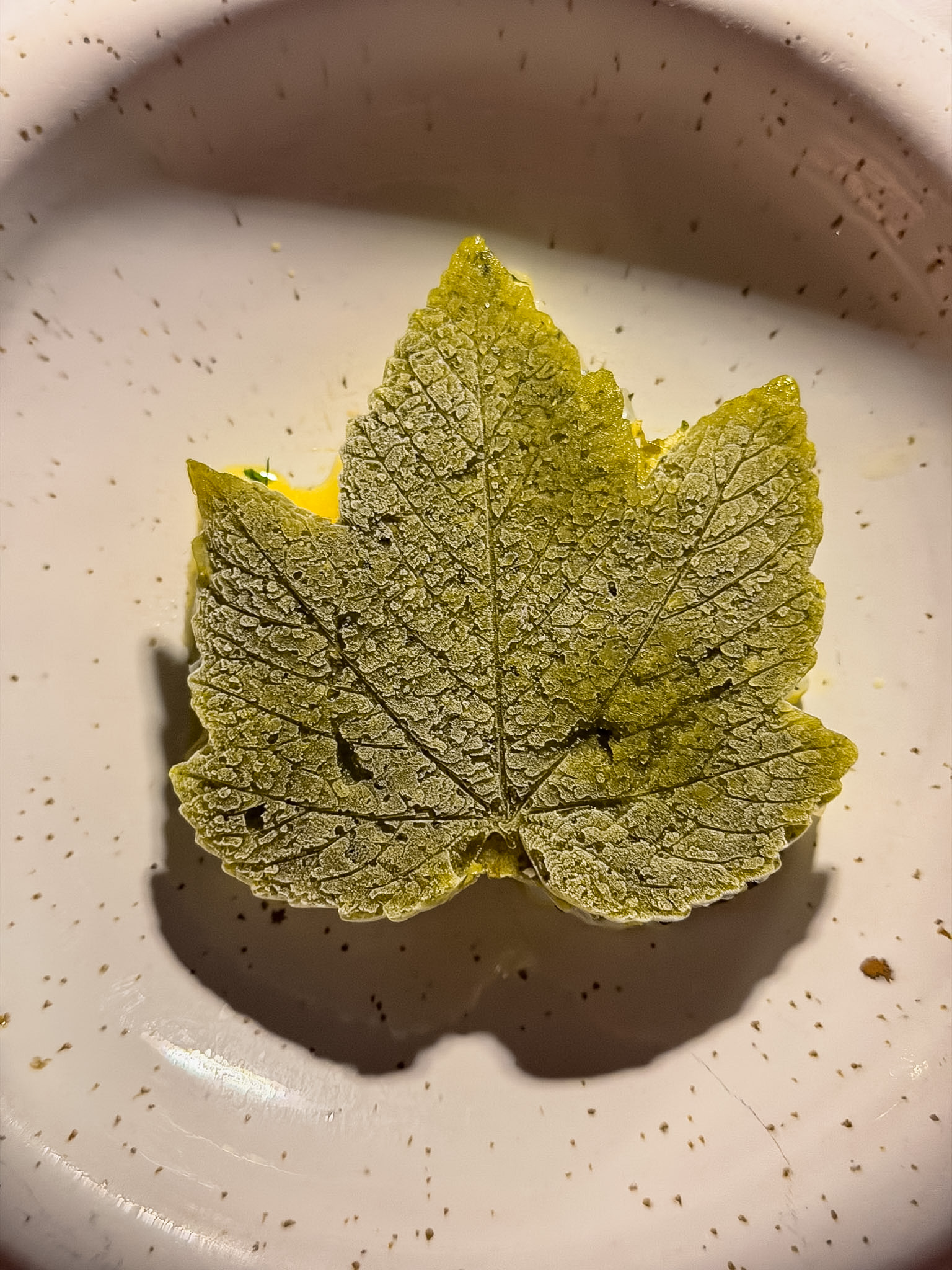
Dolmades, or dolmadakia, are grape leaves stuffed with rice, herbs, and sometimes meat. We tried traditional dolmades in Santorini. And apparently grape leaves are an acquired taste I did NOT acquire.
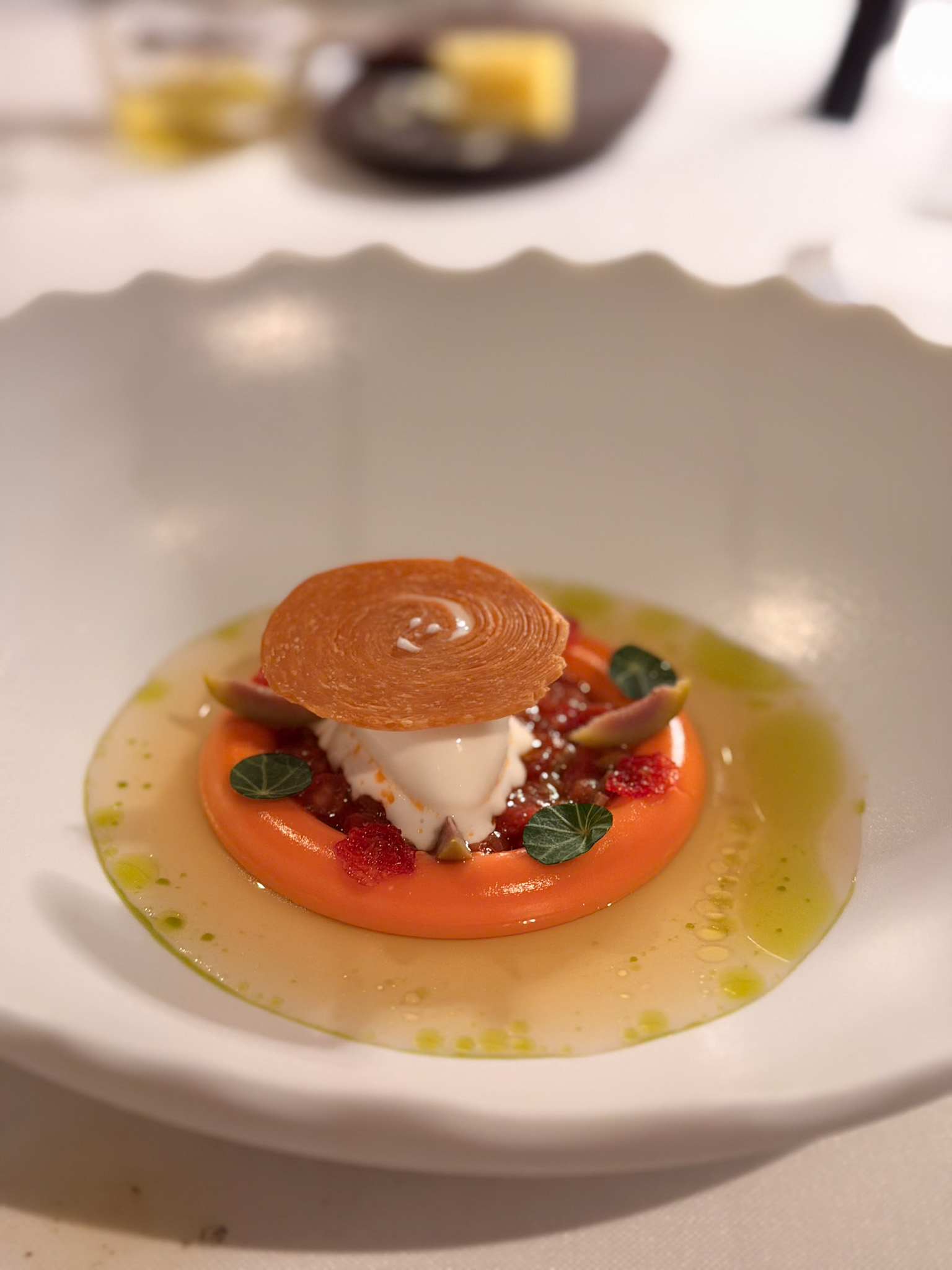
The flavor was stronger than I expected, and these weren’t one of my favorites. We also tried a completely modern interpretation during a tasting-menu dinner in Athens. I’d still recommend trying traditional dolmades at least once. You may absolutely love them.
If there’s one thing I learned about myself in Greece, it’s that I REALLY love Greek cheese. Of course, there’s feta, but we discovered several other varieties throughout our trip.
We tried mizithra with figs, and OH MY GOSH. It was SO good, especially with fresh sourdough bread. We also enjoyed xinomyzithra in a Santorinian salad, chloro cheese, and anthotyro in another Greek salad.
And one of my favorite bites of the entire trip was a slow-roasted Florina pepper with feta mousse. If you love cheese, don’t stop with feta.
Dakos is a traditional Cretan dish made with barley rusk topped with tomatoes, olive oil, oregano, and cheese, often mizithra. Think of it as somewhere between rustic bruschetta and Greek salad over crunchy bread. The tomato juices and olive oil gradually soften the rusk.
We didn’t try traditional dakos, but after eating so many delicious combinations of Greek tomatoes, cheese, bread, and olive oil, I can absolutely understand the appeal.
It’s something I’d look for when visiting Crete or if I spotted it on a menu elsewhere in Greece.


Beyond appetizers, Greece has plenty of hearty baked dishes, grilled meats, and inexpensive street foods that are perfect when you’re out sightseeing.
Souvlaki is a popular Greek street food made with pieces of meat, usually pork or chicken, grilled on skewers.
You can order the meat on its own or sometimes wrapped in pita with vegetables, sauce, and fries.
It’s a convenient choice for a casual lunch, and you’ll find souvlaki shops throughout Greece.
Gyros are similar to souvlaki, but the meat is cooked on a vertical rotating spit and shaved into thin slices rather than grilled on skewers.
Pork and chicken are common options, usually served in warm pita with tomatoes, onions, tzatziki, and sometimes French fries.
It’s another filling, inexpensive option when you want something quick between sightseeing stops.
Moussaka is one of Greece’s most famous traditional dishes. It’s a baked casserole made with layers of eggplant, often potatoes, seasoned ground meat, and a creamy béchamel topping.
We had what I believe was moussaka during our trip, and OH MY GOSH.
It was AMAZING.
Rich, hearty, creamy, and exactly the sort of meal I’d want again.
Would I order it again? ABSOLUTELY.
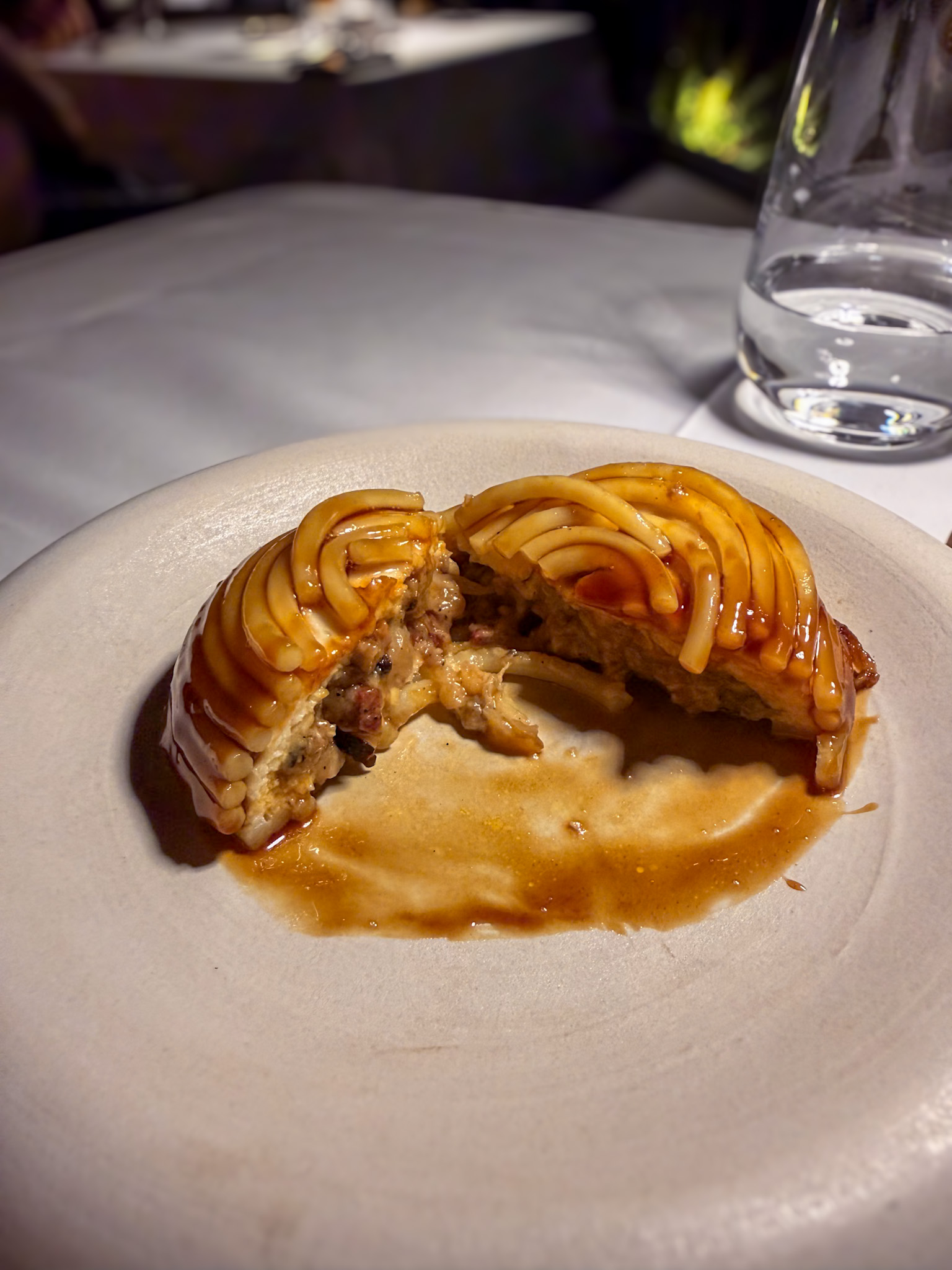
Pastitsio is often compared to lasagna, although it’s typically made with tubular pasta, seasoned meat sauce, and béchamel baked until golden.
We tried a creative interpretation during a tasting-menu dinner in Athens.
I enjoyed seeing how the restaurant reimagined traditional Greek dishes, although I’d still love to try a classic version of pastitsio at a taverna.
Keftedes are Greek meatballs made with ground meat, onions, herbs, and spices.
They’re often fried and served as appetizers, although you’ll also find them as main dishes. Depending on the restaurant, they may come with tomato sauce or a yogurt-based dip.
They’re another good option if you’re ordering several small dishes to share.

An Athens food tour with Secret Food Tours is a great way to sample traditional Greek dishes and discover foods you might not think to order on your own. I’ve taken several tours with this company, and they’re my favorite!
Gemista is a traditional Greek dish made with tomatoes, peppers, or other vegetables stuffed with rice, herbs, and sometimes ground meat.
The vegetables are baked until tender, allowing their juices to flavor the filling. Some versions are vegetarian. We tried a risotto called Gemista that was inspired by the traditional flavors rather than being the classic stuffed-vegetable dish.
Kleftiko is a traditional Greek lamb dish slowly cooked with garlic, lemon, herbs, and potatoes until tender. Some versions are wrapped in parchment paper during cooking to retain moisture and flavor.
We didn’t order kleftiko, but it’s a hearty dish I’d look for at a traditional Greek taverna if you enjoy slow-cooked meat.
I’d also recommend stopping at a local Greek bakery. They’re convenient places to find inexpensive breakfasts, snacks, and lunches without needing a restaurant reservation.
Spanakopita is a savory pie made with spinach, herbs, and often feta wrapped in flaky phyllo pastry.
You’ll find individual pies or larger slices at Greek bakeries. It’s an easy option for breakfast, a snack, or a casual lunch if you enjoy spinach and feta.
Tiropita is a Greek cheese pie usually made with feta or other cheeses wrapped in phyllo, although some versions use puff pastry. Rich, salty cheese wrapped in warm, flaky pastry.
Considering how much I loved Greek cheese, this is exactly the sort of thing I’d be hunting down at a bakery.

Seafood isn’t usually what I order, but it’s a major part of Greek cuisine, particularly on the islands. Thankfully, Brad was more than willing to handle that part of the research.
Fresh fish is common at waterfront restaurants throughout the Greek islands. Depending on the day’s catch, you may find sea bass, sea bream, and other Mediterranean fish prepared with olive oil, lemon, and herbs.
During our day trip to Hydra, Brad ordered fresh sea bass.
Our server explained the available fish before we ordered, and the sea bass was mild, delicate, and moist. Brad LOVED it.
Even though seafood isn’t my thing, I appreciated how much attention they put into helping us choose the fish.
Read my Sunset Restaurant Hydra Review: What to Order and What to Know for more details about our waterfront lunch.
Grilled octopus is another seafood dish you’ll see at coastal tavernas throughout Greece. It’s typically cooked until tender, then grilled for a lightly charred exterior and served with ingredients like olive oil, lemon, vinegar, or herbs.
That will be a big HELL TO THE NO for me.
Tentacles in my mouth? Nope. Absolutely not. Ha!
We didn’t order this one, but if you’re a seafood lover and considerably more adventurous than I am, it’s a popular Greek specialty to try.
And now for one of my favorite subjects.
Dessert.
Greek sweets frequently include honey, nuts, cinnamon, phyllo, and creamy fillings. Some are REALLY rich, making them good desserts to share.
Loukoumades are small fried dough balls served warm with honey or syrup, sometimes topped with cinnamon or nuts. They’re crispy on the outside and soft inside. You’ll also find modern versions with chocolate or pistachio toppings.
If doughnuts are your thing, this seems like a fairly obvious decision.
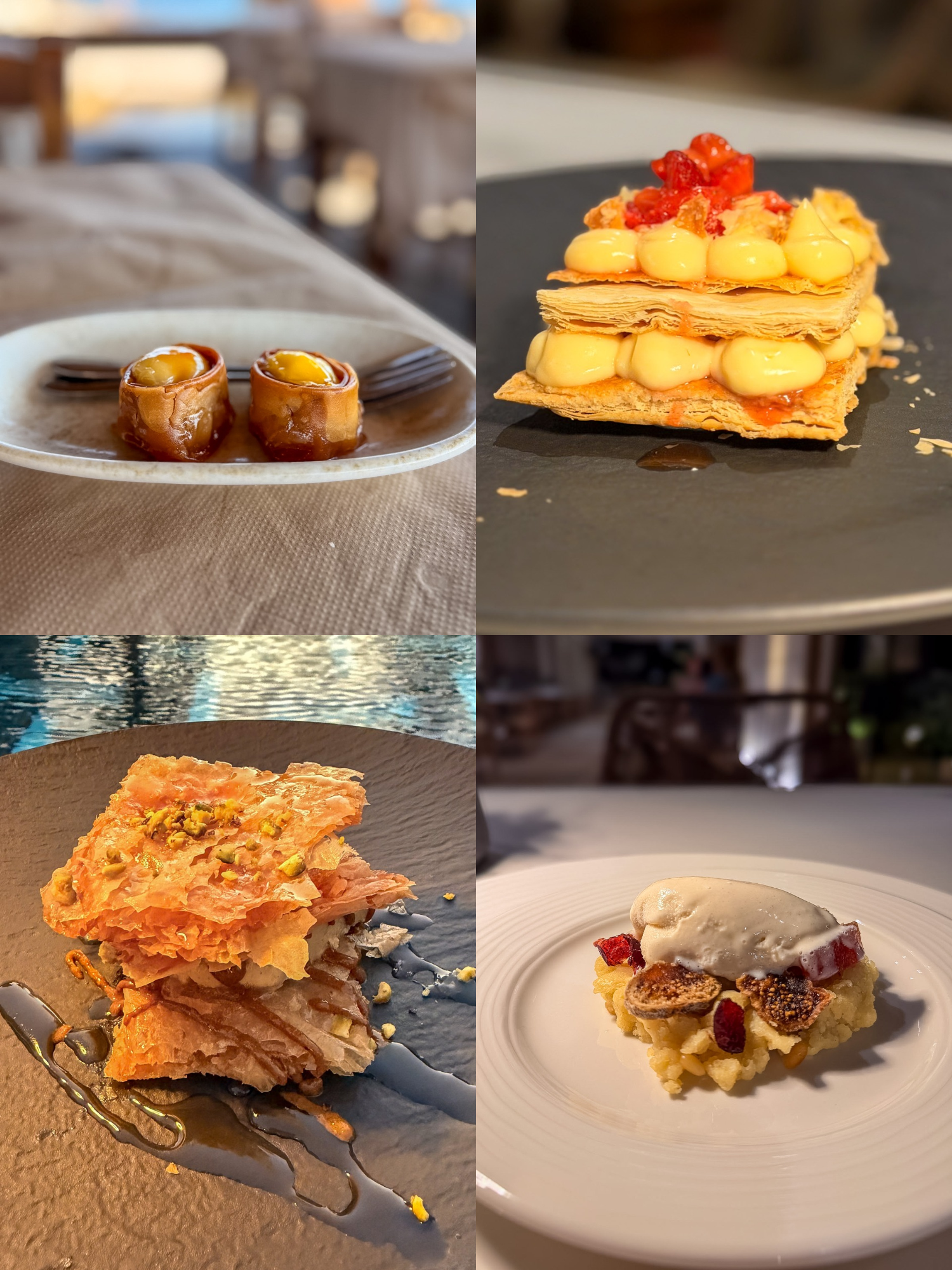
Baklava is made with layers of thin phyllo pastry, chopped nuts, and honey or sweet syrup. We tried it several times during our trip, and it was INCREDIBLE.
Sweet, crispy, nutty, and everything I wanted it to be. It is VERY sweet, though, so a little goes a long way after a big meal.
We also tried some incredible contemporary desserts. A caramelized milk tart ended up being my favorite dessert of the entire Greece trip. I’d happily go back for that alone.
Well, here’s one I can confidently say was NOT my favorite. We tried halvas during dinner in Santorini. Our waiter actually warned us that it could be an acquired taste.
Naturally, I still needed to try it. And he was right. I HATED it.
Halvas comes in several varieties in Greece, including versions made with semolina or sesame. Depending on the recipe, the texture can be dense, sweet, or slightly crumbly.
Whatever version we had, it just wasn’t for me. Thankfully, the restaurant staff brought us a millefeuille afterward, and THAT was delicious.
I’d still tell you to try halvas because you may love it. And even if you don’t, at least you’ll know.
Greek yogurt is thick, creamy, and slightly tangy, often served with honey, nuts, or fresh fruit. It’s a simple breakfast or a lighter dessert after several days of elaborate meals.
Greece produces some excellent honey, so I’d especially look for locally sourced varieties when they’re available.
You can eat relatively inexpensively in Greece or spend well over €100 per person on an elaborate tasting menu.
For example, one of our fried feta appetizers was €7.50, and a sampler of three Greek dips was €9. Some of our fine-dining tasting menus, however, cost considerably more.
You definitely don’t need to spend a fortune to eat well. Some of my favorite dishes were simple, inexpensive appetizers.
If you’re visiting Athens for the first time, a food tour is a good way to sample several traditional Greek dishes while exploring local markets and food shops.
I don’t usually eat seafood, and I had some INCREDIBLE meals in Greece. Between the cheeses, dips, grilled meats, vegetables, pastries, and desserts, there was always plenty to order.
Even the tasting-menu restaurants we visited accommodated my preferences.
For more recommendations, read my What to Eat in Greece If You Do Not Like Seafood guide.

My advice? Try a few familiar dishes, but don’t be afraid to order something you’ve never heard of. You might discover a new favorite.
And try ALL the Greek cheeses. At some point, I started to wonder if I was enjoying a culinary vacation or auditioning for My 600-lb Life. I mean, how much cheese can one person eat? A lot. The answer is a lot.
And if you see tomato fritters in Santorini? ORDER THEM. You can thank me later.
If you end up booking anything for your trip, using my affiliate links helps support my blog at no extra cost to you. I spend a lot of time researching and writing these guides, so I really appreciate the support.
We stayed at several different hotels during our Greece trip, including the Radisson Blu Zaffron Resort in Santorini, where we enjoyed some of the dishes mentioned in this article.
If you’re comparing accommodations, you can browse Booking.com or Hotels.com.
For more about our Santorini hotel, read my Radisson Blu Zaffron Resort Santorini Review: Is It Worth It?
If you’d like to explore Greece beyond its restaurants, you can compare sightseeing excursions, food tours, and other experiences through GetYourGuide.
We rented a car in Santorini, which gave us the flexibility to visit different villages, restaurants, and attractions around the island.
If you’re planning to drive, compare rental prices through Discover Cars.
My Brita Water Bottle and Clutch Powerbank are two travel essentials I like having for long sightseeing days.

Looking for the best breakfast café in Downtown Miami? Café Bastille is a must-visit.
From French-inspired breakfast favorites to beautiful pastries and creative coffee drinks, this spot is worth adding to your Miami itinerary. And the pistachio pancakes? Reason enough to get up early.
What to order:
Pistachio pancakes
Breakfast croissant
Iced chai latte
Whether you’re spending the weekend in Miami or looking for brunch near the Miami Cruise Port, Café Bastille deserves a spot on your list.
Read my full review for everything you need to know before visiting, from what to order to seating and wait times.

The part of European travel nobody puts in the highlight reel.
The blisters, the 20,000 steps before lunch, the train you almost missed, and somehow still saying “this is the best trip ever.” 😂
Thanks for following along on my travels! If you’re planning your own European getaway, you’ll find all my destination guides and itineraries on the blog. Link in bio!
If I could go back to one of the beaches in Hydra, Greece, it would be Avlaki. 🇬🇷
Of the two swimming spots I visited, this one was my favorite because it felt quieter, more private, and had the perfect spot for cliff jumping. It was a little rockier getting into the water, so water shoes are worth bringing, but it was such a fun way to spend part of the day.
If you’re visiting Hydra, add Avlaki Beach to your list!
I don’t even like seafood but @sunsethydra surprised me!
The panko-crusted feta with prickly pear chutney and pistachios was one of my favorites, and the Sunset Salad with fresh oranges and homemade orange-ginger dressing was so good. Even the bread and olive oil stood out!
Brad ordered the fresh catch of the day, sea bass, and loved it. And yes, even I enjoyed a bite!
Comment whether or not you’re a big seafood fan! 👇
Taking a day trip from Athens to Hydra? Here are 3 things to know before you book!
Book a high-speed ferry from Piraeus. Our ride took just 1 hour and 15 minutes each way, giving us almost 7 hours to explore.
Check your ferry options. We took Alpha Lines to Hydra and Magic Sea Ferries back. I personally preferred Alpha Lines for its open outdoor deck!
Plan to explore on foot. Hydra is car-free, and the ferry drops you right at the heart of town, making it easy to explore the harbor, shops, and waterfront restaurants as soon as you arrive.
Hydra ended up being one of my favorite days in Greece! Head to the blog for my full ferry guide, booking tips, and everything I wish I’d known before going.

Follow @travelwithwendyplummer for Beautiful Beach Destinations, City Guides, Foodie Spots, and Luxury Hotel Recommendations.