
West Fork Trail Sedona is a shaded canyon hike with towering red rock walls, 13 creek crossings, and the option to continue through the water beyond the maintained trail.
It quickly became one of my favorite hikes in Sedona. I love a good creek hike, and this one had everything I was hoping for: beautiful scenery from start to finish, plenty of shade, fun stream crossings, and relatively easy terrain.
The main challenge is the distance rather than steep climbing, making West Fork a strong option for active adults, families with older children, and anyone looking for a longer Sedona hike without scrambling up exposed red rocks.
This West Fork Trail guide covers parking, trail difficulty, water shoes, creek crossings, timing, what the hike is actually like, and the tips that helped us have such a good experience.
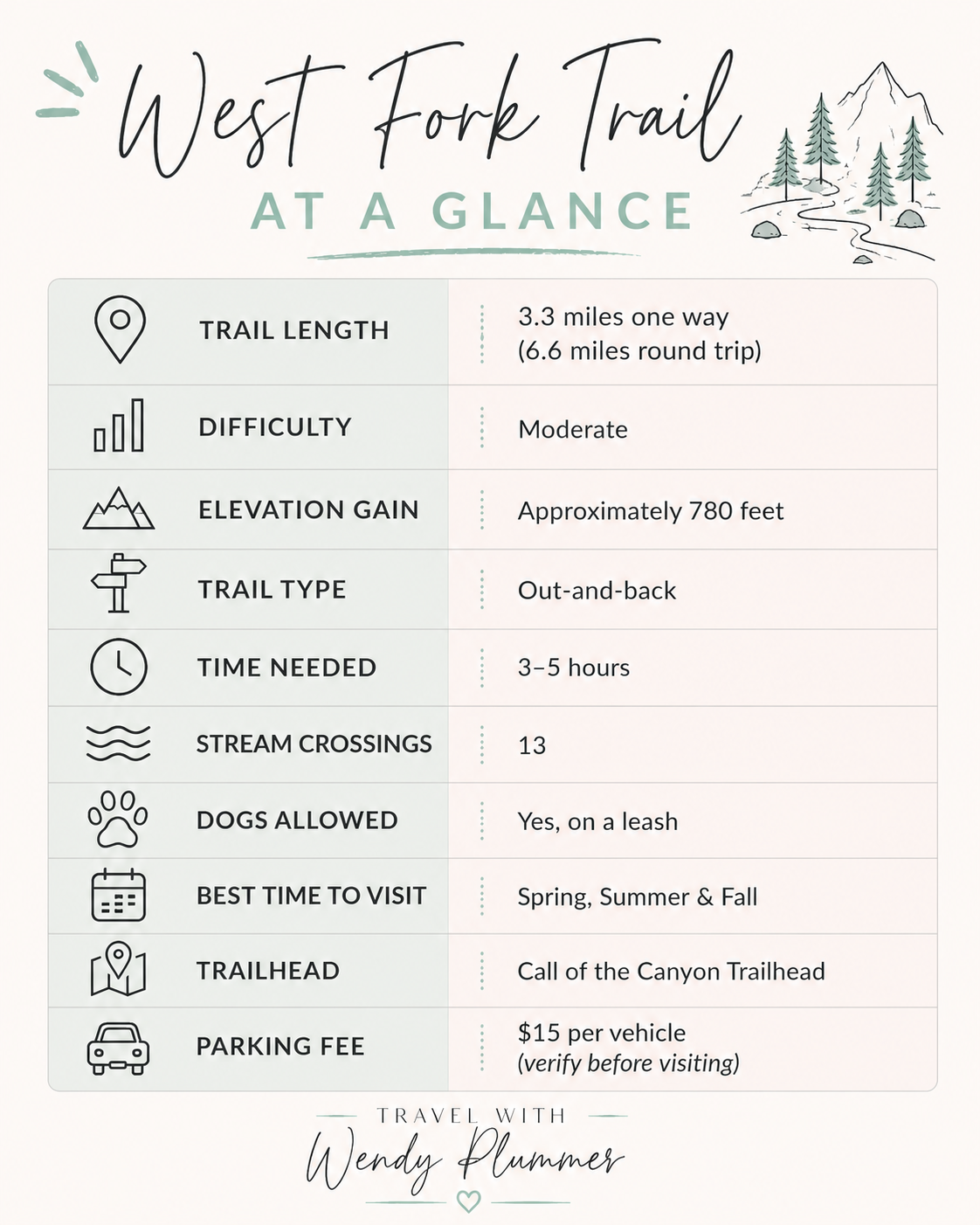
I hiked West Fork Trail in June and completed the entire maintained trail before continuing through the creek beyond the official endpoint.
The terrain was easier than I expected, and the combination of shade, creek crossings, and changing canyon scenery made it one of my favorite hikes in Sedona.
West Fork is generally rated as moderate, but I thought the difficulty came primarily from the distance. The terrain was much easier than many of Sedona’s steeper hikes. For more trails that provide great scenery without difficult climbing, see my Best Easy Hikes in Sedona for Beginners.
West Fork Trail is located in Oak Creek Canyon, approximately 30 minutes north of Uptown Sedona along Highway 89A.
The trail begins at the Call of the Canyon Trailhead, which also provides access to the Red Rock–Secret Mountain Wilderness.
We stayed at Sky Ranch Lodge, and the drive to the trailhead took about 30 minutes. My Sky Ranch Lodge Review: Is It Worth Staying on Airport Mesa? covers the rooms, location, views, food truck, and what it was actually like staying there.
Wendy’s Tip: Stop at Sedonuts on the way to the trailhead. Coffee and a donut make a much better 6:30 a.m. hiking strategy than pretending you are excited about a protein bar.
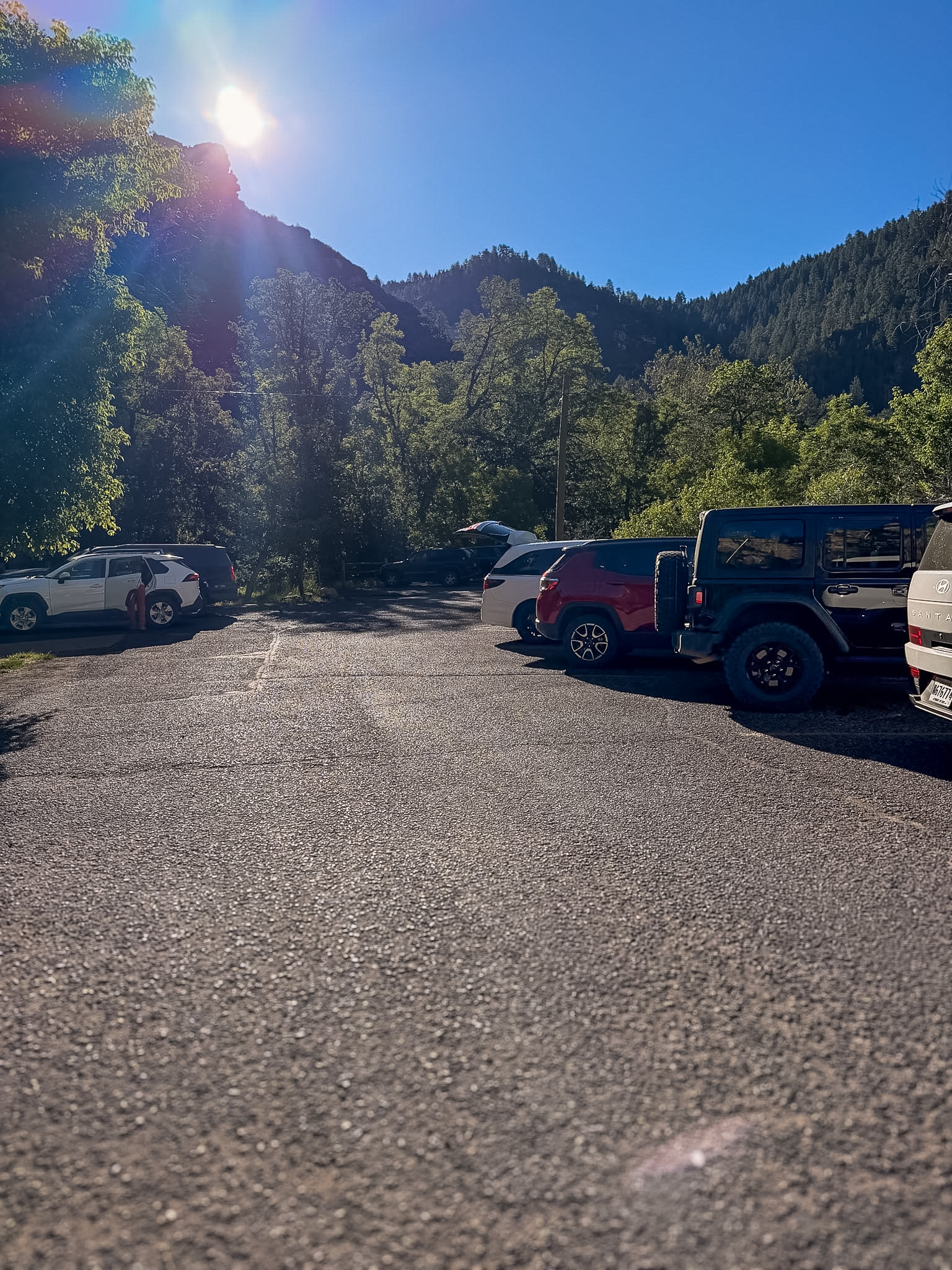
Parking for West Fork Trail is available at the Call of the Canyon Trailhead directly off Highway 89A.
During our visit, parking cost $15 per vehicle.
We arrived at approximately 7:15 a.m., shortly after the trailhead opened, and the parking lot was only about 25% full. Finding a space was easy and much less stressful than I expected.
When we returned around 12:30 p.m., the lot was roughly 85% full. There were still a few open spaces, but the trailhead was noticeably busier.
Parking availability can vary by season and day of the week, but I would still arrive as close to opening as possible during the summer, on weekends, and especially during the fall foliage season.
An early arrival gives you more than a better chance of finding parking. You will also have cooler temperatures and a quieter first half of the hike.
A rental car is the easiest way to reach West Fork Trail and explore the rest of Sedona at your own pace. You can compare rates through Discover Cars.
Restrooms are available at the trailhead before you begin hiking.
I did not notice a water bottle filling station, so arrive with all the water you expect to need. We also packed snacks and LMNT electrolyte packets, which were helpful during such a long hike.
A reusable Brita Water Bottle or hydration reservoir can help you carry enough water without relying on trailhead facilities.
Wendy’s Tip: Even if you normally tolerate warm-weather hiking well, starting early is still worth it. Parking is easier, the first several miles are cooler, and the trail is much more peaceful.
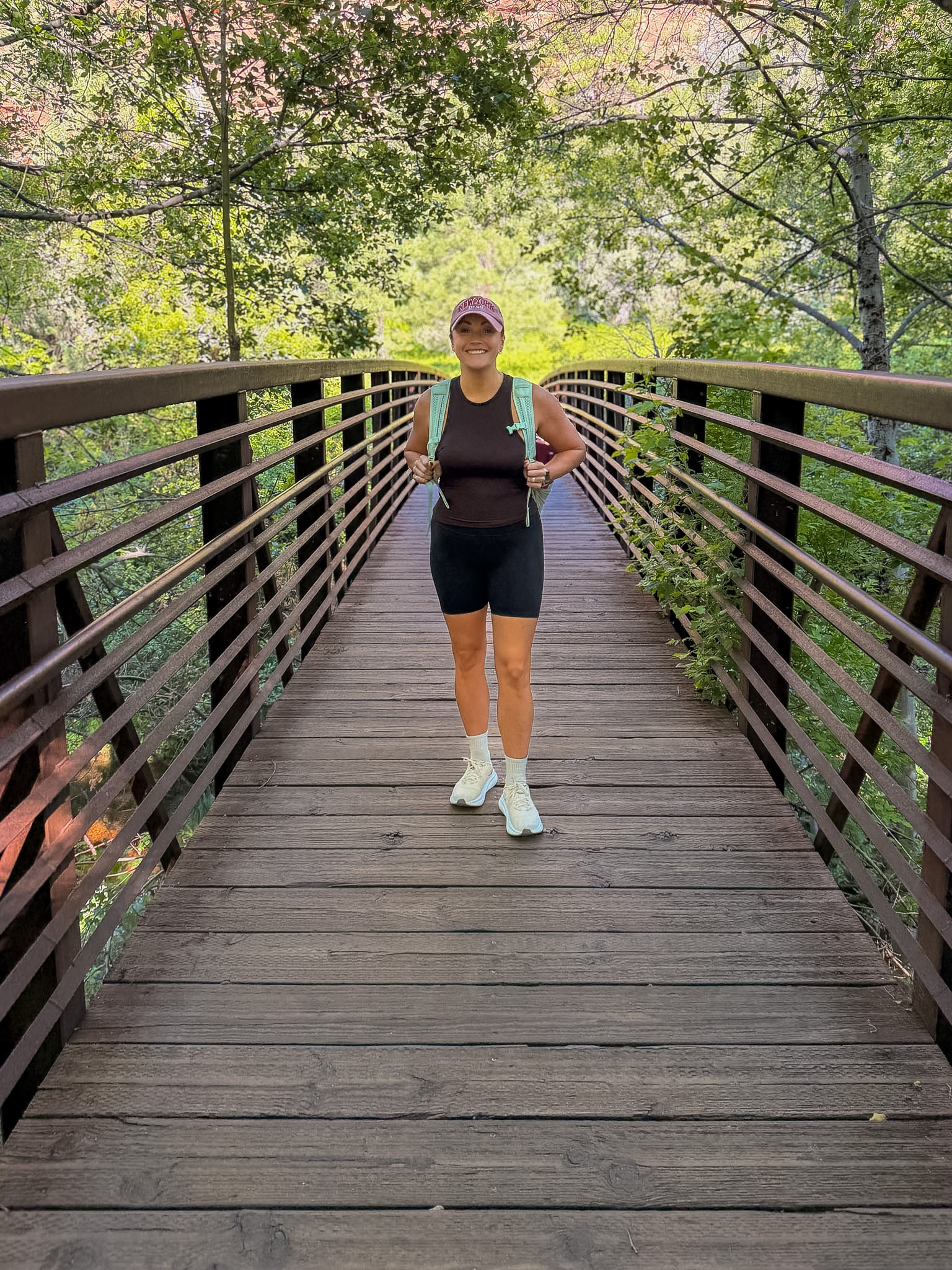
One of my favorite things about the West Fork Trail hike is how often the scenery changes.
You are not simply walking along the same dirt path for more than six miles. The trail moves beside Oak Creek, crosses the water repeatedly, passes beneath trees, and continues deeper between increasingly tall canyon walls.
That variety made the distance feel shorter than it actually was.
The hike begins on a wide, well-maintained dirt path surrounded by trees and red rock canyon walls.
It immediately feels different from Sedona’s exposed desert hikes. Instead of climbing across open red rock beneath the sun, you spend much of the hike walking under tree cover or in the shadow of the canyon.
The terrain is mostly flat with gentle elevation changes. There are no long, steep climbs and no significant rock scrambling along the maintained trail. The first mile is already extremely scenic, with views of Oak Creek winding through the canyon.
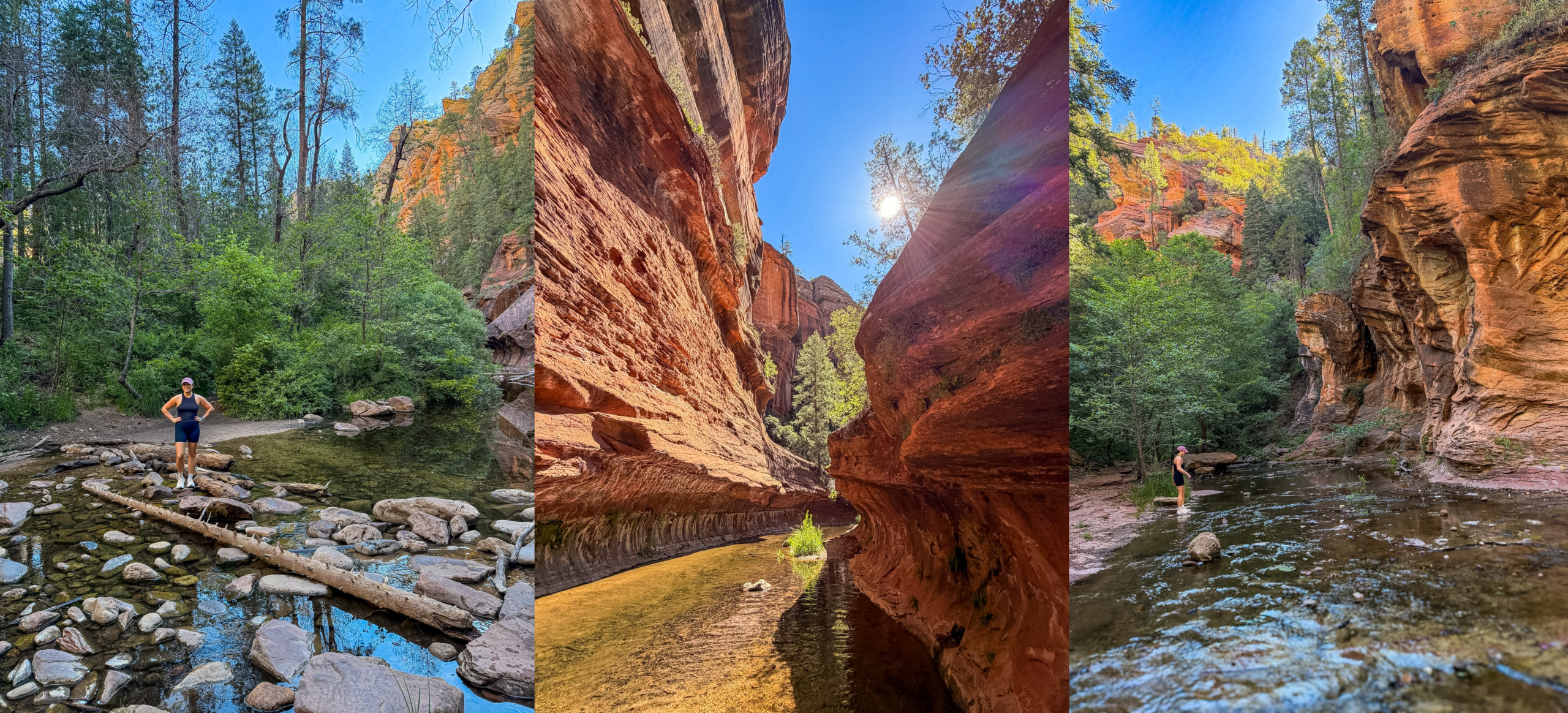
There are 13 creek crossings along the maintained West Fork Trail.
These crossings were one of the parts I was most curious about before the hike. I expected them to be more difficult and thought there was a good chance my feet would be wet almost immediately.
Most of the crossings had rocks positioned across the water. I wore regular tennis shoes and was able to keep my feet dry by carefully stepping or hopping from rock to rock.
You need some balance, and conditions could change depending on the water level, but I did not find the crossings particularly difficult during our visit.
You can also walk directly through the creek if you are wearing appropriate shoes and do not mind getting wet.
The crossings add a little adventure without turning the hike into a technical challenge. They also break up the distance and give you something different to navigate every few minutes.
A Phone and Wallet Crossbody Strap is useful here if you plan to take photos while crossing. It keeps your phone attached to you instead of giving it an opportunity to begin its own journey down Oak Creek.
Save this for later on Pinterest so you don’t forget it.
The scenery becomes even better as you move farther into the canyon.
The cliffs grow taller, the canyon gradually narrows, and the creek winds through increasingly lush vegetation. It feels completely different from the open desert landscape many travelers picture when they think about hiking in Sedona.
This was my favorite portion of the maintained trail. Between the tall canyon walls, shade, creek, and changing views, I found myself stopping frequently to look around and take photos.
It is a long hike, but it never felt boring.
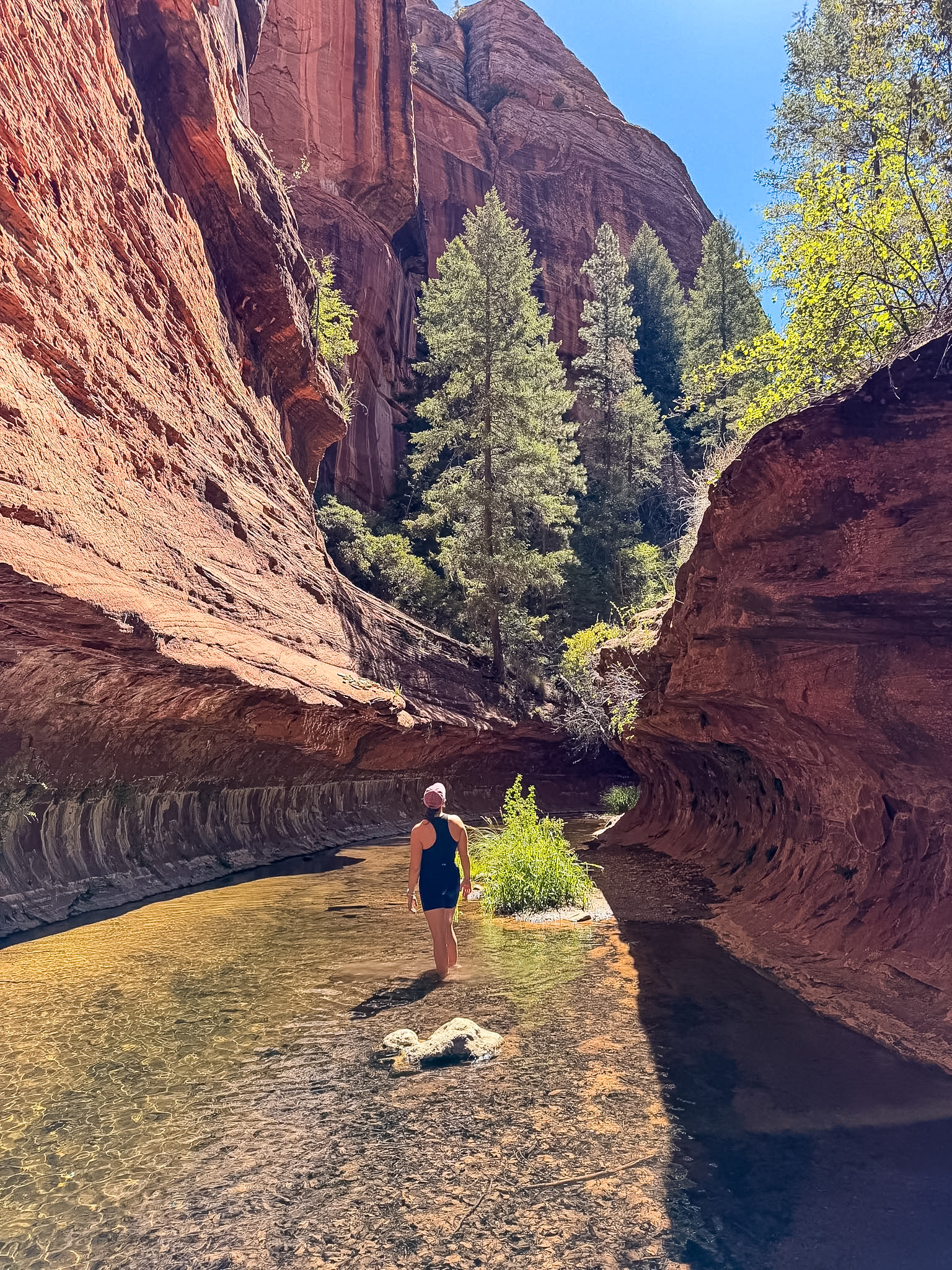
The maintained trail ends after approximately 3.3 miles.
Many hikers turn around at this point, which still gives you a beautiful 6.6-mile round-trip hike. However, the official endpoint does not mean you have reached the end of everything there is to explore.
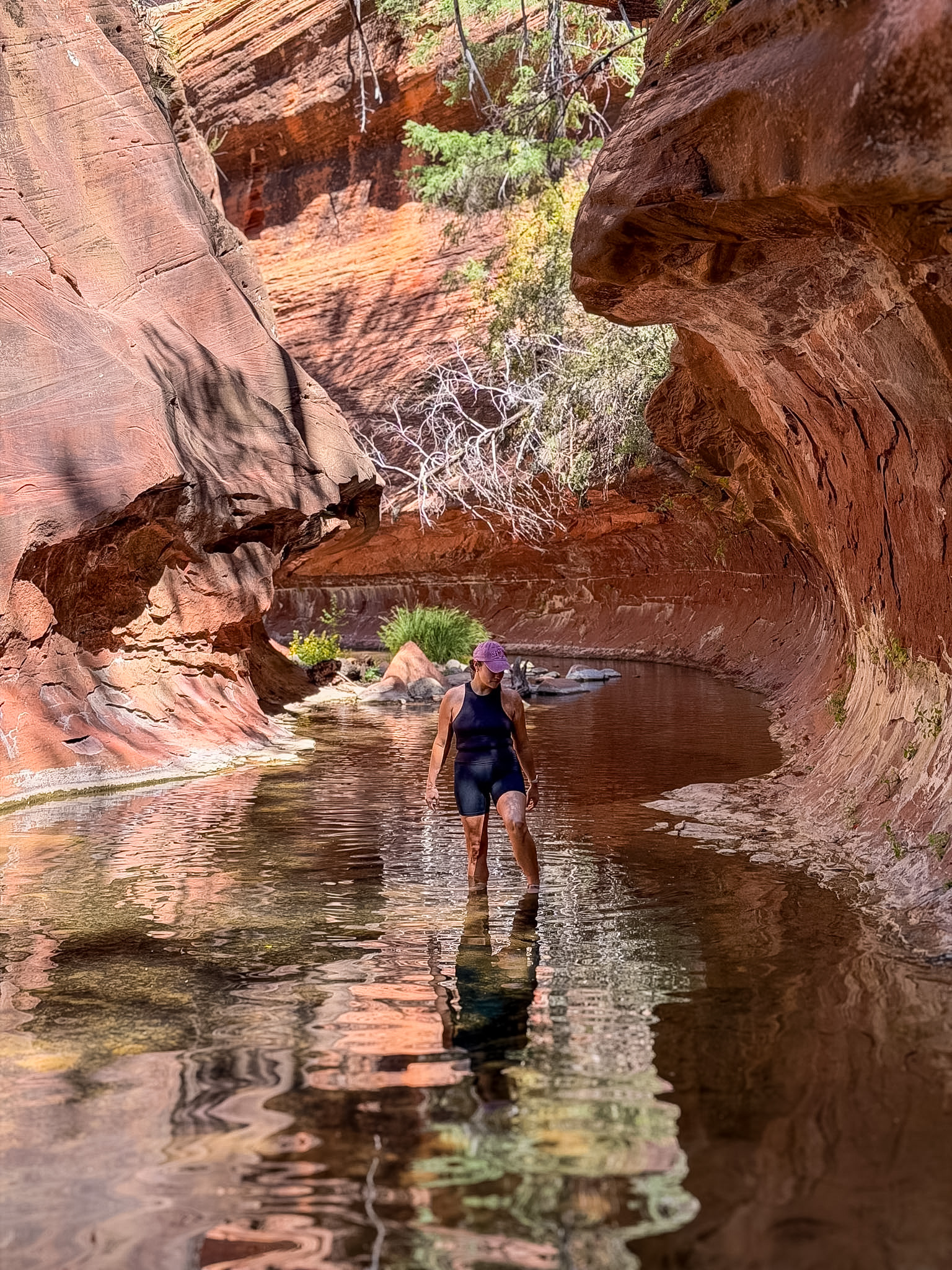
Beyond this point, the canyon becomes narrower and continuing requires walking directly through the creek.
We changed into water shoes and continued approximately another mile through the water. This extra section became one of my favorite parts of the entire hike.
Walking through the creek with the canyon walls closing in around us felt like a completely different experience from the maintained trail. Because we had started early, we also had that part of the canyon entirely to ourselves.
Wendy’s Tip: Do not automatically turn around at the maintained endpoint. Bring water shoes so you at least have the option to continue into the narrow canyon.
You do not need water shoes for most of West Fork Trail.
I completed the maintained section in regular tennis shoes and kept my feet dry by stepping across the rocks at all 13 creek crossings.
Water shoes only became necessary once we continued beyond the official endpoint and began walking directly through the creek.
Wendy’s Tip: Wear regular hiking shoes or supportive tennis shoes for the maintained trail. Pack lightweight water shoes and change into them only if you continue beyond the official endpoint.
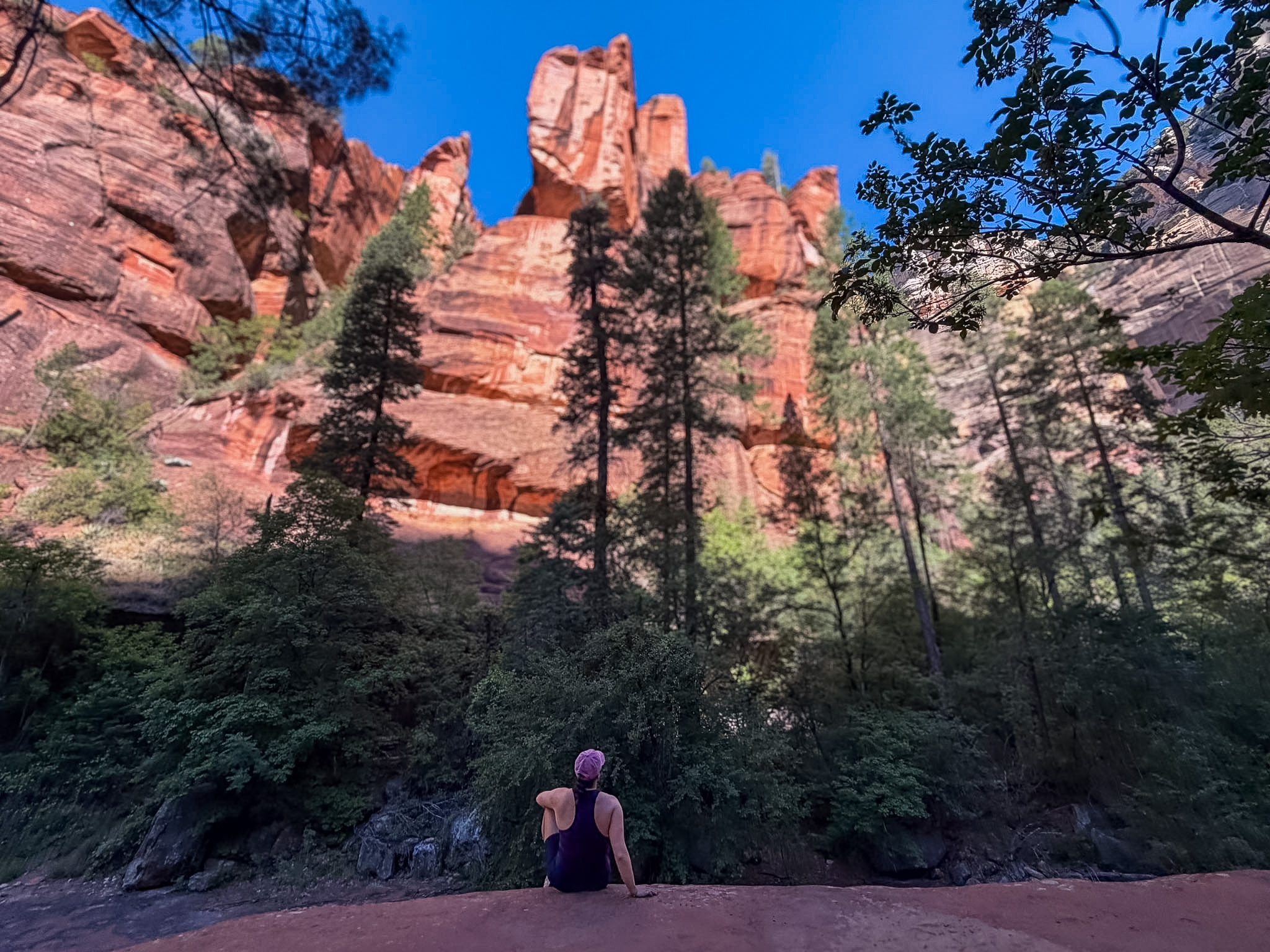
I would rate West Fork Trail as moderate, but the rating is mostly due to the distance.
The maintained trail is approximately 6.6 miles round trip. If you continue beyond the official endpoint, your total distance can easily reach eight miles or more.
Unlike many other popular hikes in Sedona, West Fork does not involve sustained steep climbs, exposed slickrock, or significant scrambling. Most of the trail is relatively flat with gradual elevation changes.
The creek crossings create a small additional challenge, especially if you are trying to keep your shoes dry. You need enough balance to move across uneven and potentially slippery rocks.
Overall, I think the hike is manageable for most people in reasonably good physical condition who are comfortable walking several miles.
It would work well for active adults, families with older children, and hikers who want substantial mileage without the steep terrain found on many Sedona trails.
The full hike may be less appropriate for very young children, anyone with balance concerns, or travelers who are not accustomed to walking longer distances.
Wendy’s Tip: Do not let the moderate rating scare you if distance is not a problem. The terrain is easier than many of Sedona’s other popular hikes, and the changing scenery helps the miles pass quickly.
Most hikers should allow approximately three to five hours to complete West Fork Trail.
Your exact time will depend on your pace, how often you stop for photos, how busy the creek crossings are, and whether you continue past the maintained endpoint.
We spent around five hours hiking. That included completing the maintained trail, continuing approximately another mile through the creek, taking photos, eating snacks, and stopping frequently to enjoy the canyon.
I would avoid planning this hike when you only have a narrow window. It is not difficult terrain, but it is still a long outing, especially once you include the drive from Sedona and time spent at the trailhead.
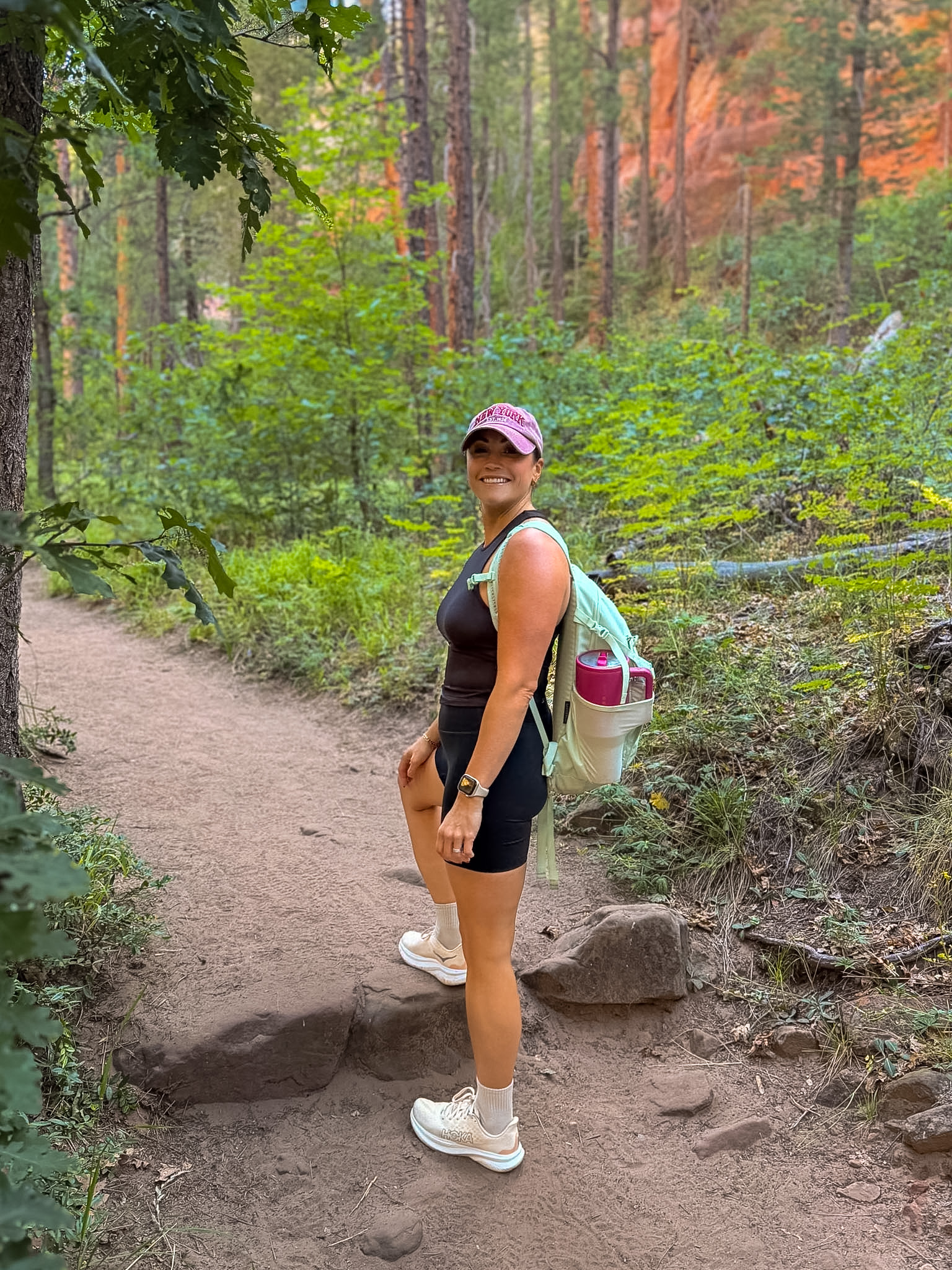
Yes. West Fork Trail has considerably more shade than many hikes around Sedona.
The combination of tree cover and tall canyon walls protects large sections of the trail from direct sunlight. This made the hike much more comfortable during our June visit.
The morning temperature remained pleasant for most of our hike. It did not begin feeling noticeably warm until we were heading back toward the parking lot, and by then we only had a couple of miles remaining.
The shade makes West Fork a strong summer hiking option, but it does not eliminate the need for water, electrolytes, sun protection, and an early start.
I still recommend applying face sunscreen before starting. I use SuperGoop Face Sunscreen, especially on long outdoor days when reapplying over makeup is not part of the plan.
For a complete look at the clothing, footwear, and layers that worked during my trip, read What to Wear in Sedona in June.
Early morning is the best time to hike West Fork Trail, especially during summer and fall.
In summer, starting close to the 7:00 a.m. opening helps you complete most of the hike before the warmest part of the day. The trail has plenty of shade, but it is still a long hike, so bring enough water, snacks, and electrolytes.
Fall is popular because of the changing leaves, which also means larger crowds and more competition for parking. Plan to arrive early if you are visiting during peak fall color.
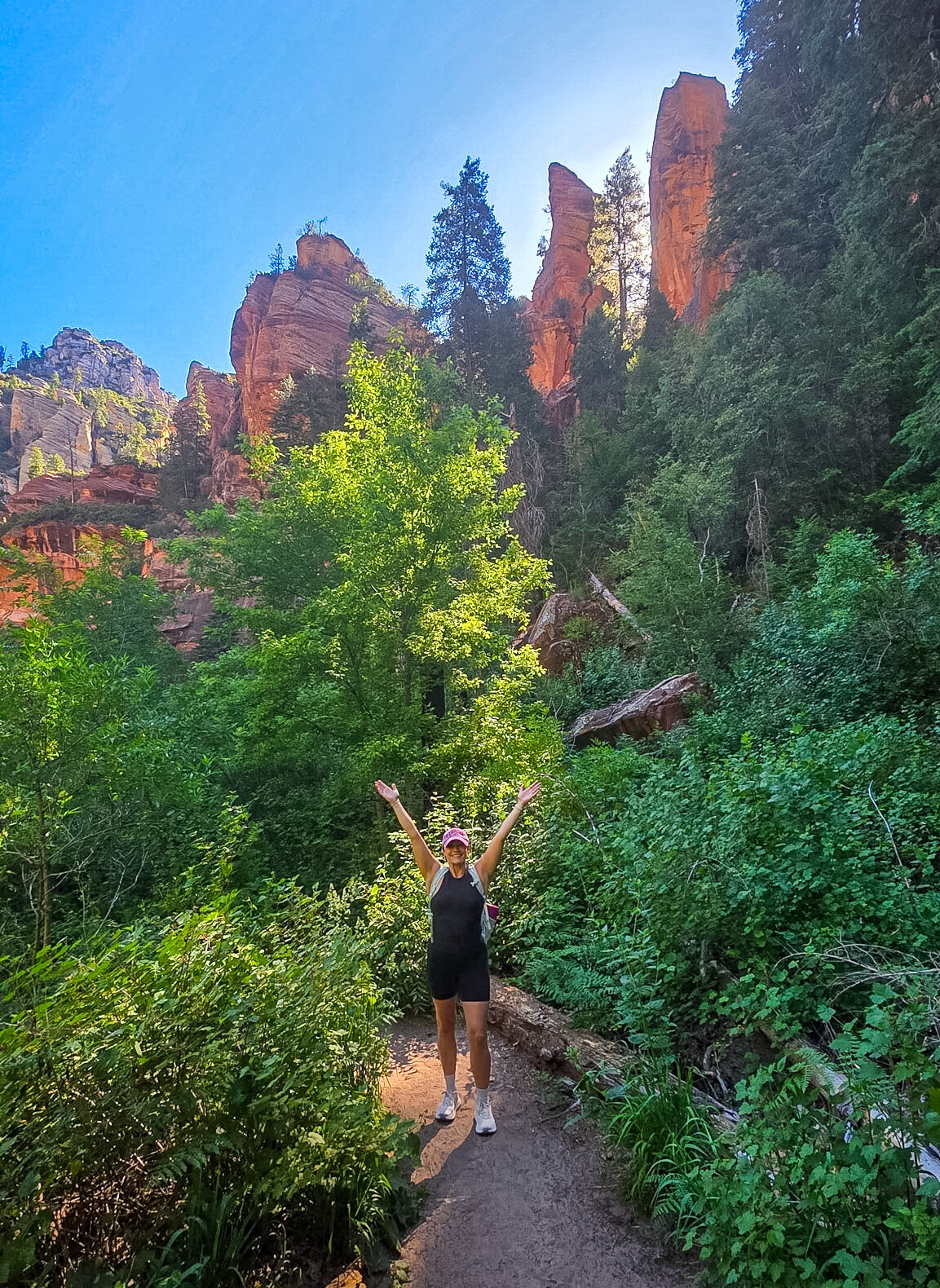
You do not need specialized equipment for the maintained trail, but a few items will make the hike much more comfortable.
I recommend bringing:
I wore regular tennis shoes and had no problems on the maintained trail. Hiking shoes may provide better traction and support, particularly if the rocks are wet.
Because we started early, we still had much of the afternoon available after finishing around 12:30 p.m.
West Fork works well as the main activity in a larger Sedona day. After hiking, you could return to town for lunch or choose a less strenuous afternoon activity.
Possible pairings include:
My Best Restaurants in Sedona: Where to Eat for Every Budget can help you choose where to go when you are ready for something more substantial than trail snacks.
West Fork Trail ended up being one of my favorite hikes in Sedona because it felt completely different from the area’s more exposed red rock trails. The narrow creek section beyond the maintained endpoint was the highlight for me, and I would bring water shoes and continue through it again.
You do not have to hike the full 6.6 miles to enjoy West Fork. Since it is an out-and-back trail, you can turn around whenever you are ready and still experience the creek, shade, and canyon scenery.
My Rating: 5/5
I would recommend West Fork Trail to first-time Sedona visitors who enjoy longer hikes and like a little adventure. I would gladly put it back on my itinerary during a future trip.
If you end up booking anything for your trip, using my affiliate links helps support my blog at no extra cost to you. I spend a lot of time researching and writing these guides, so I really appreciate the support.

Confession: my newsletter is where the good stuff lives. Not the polished, edited-for-the-grid stuff, the “here’s the hole-in-the-wall I almost skipped” stuff, the packing lists I actually use, the “don’t book this hotel” warnings before you waste your money on them.
The newsletter is basically me texting you before a trip instead of after one. Sign up and you’ll be the first to know where I’m headed next, plus a few things I’ll never post here.
Link in bio if you want in. ✈️

Yes, it’s only July. Start planning anyway. Fall books faster than people expect, and a few of these destinations are worth getting ahead of. Here are five places worth putting on your radar right now.
Ireland: Cooler temps, moody skies, dramatic coastline fall was made for it. Tourist crowds drop, the green stays, and the whole country feels a little more like itself.
Great Smoky Mountains, TN/NC: Fall foliage in the Smokies is the real thing. The color peaks mid-October and the views from the ridgelines are hard to argue with. It’s also one of the most visited national parks in the country, so going on a weekday makes a real difference.
New York City: Fall is NYC at its best comfortable temps, the energy of the city shifting into a new season, and every neighborhood doing something worth showing up for. It’s also just a great walking city when it’s not brutally hot.
Japan: Fall foliage season is as good as spring cherry blossoms and somehow less talked about. The colors are dramatic, the temples and gardens are stunning, and it’s worth planning around peak dates by region.
Mystic, Connecticut: Small, walkable, genuinely charming Mystic in fall feels like exactly what a New England autumn is supposed to look like. Easy to pair with a broader New England road trip if you want to extend it.
Full guides linked in bio 🍂
There are two kinds of travelers: people who plan a trip and then figure out where to eat, and people who book a restaurant and then build the rest of the itinerary around it.I am the second kind. I will not apologize for this.
The reservation gets locked in first. The hotel search happens within the same 24 hours. The flights get compared around the restaurant’s hours of operation. The rest of the trip exists to fill the days before and after the table I actually came for.
If this sounds unhinged, I completely understand. It has also resulted in some of the best meals of my life, so I’m going to keep doing it.
Drop a 🍽️ if you plan your trips around food too.
Let’s talk about when to actually book that Dubai trip you’ve been pinning for two years. I get asked this constantly, so here’s the honest breakdown: October through April is your window. Anything outside that and you’re basically touring in a sauna!
October and November give you warm days and cooler nights, which is basically the sweet spot for wandering around without melting. December through February is peak season: gorgeous weather. March and April are the quiet insider pick, right before summer heat shows up and ruins everyone’s plans.
Saving this for later? That’s what it’s here for. Full breakdown linked in bio.
If you’re chasing energy, beaches, nightlife, and nonstop luxury, Dubai takes the crown. If you’re craving culture, iconic architecture, and meaningful landmarks at a slower pace, Abu Dhabi shines.🤍
My advice? Base yourself in Dubai and do Abu Dhabi as a day trip! The perfect balance of excitement and culture in the UAE.
Want the full breakdown? Check out my Dubai and Abu Dhabi guide for tips, itineraries, and must-sees!

Follow @travelwithwendyplummer for Beautiful Beach Destinations, City Guides, Foodie Spots, and Luxury Hotel Recommendations.