Things to do in Gouda Netherlands ended up being much more varied than I expected before visiting. I mostly associated Gouda with cheese, but the city felt far more relaxed, historic, and food-focused once we arrived. It’s smaller than Amsterdam or Haarlem, easy to walk around, and has this slower pace that made it feel noticeably different from some of the busier tulip season destinations.
We only stayed overnight and spent about five extra hours exploring the next day, but I could have easily stayed longer. Gouda felt especially different at night once the crowds disappeared and the canals, old buildings, and market square became much quieter.
If you’re planning a larger Netherlands trip during spring, Gouda fits very naturally into routes like my 5 Day Netherlands Tulip Itinerary: Keukenhof, Windmills & Tulip Fields or 7 Day Netherlands Tulip Season Itinerary: The Ultimate Spring Trip because it’s easy to combine with nearby cities without feeling overwhelming.
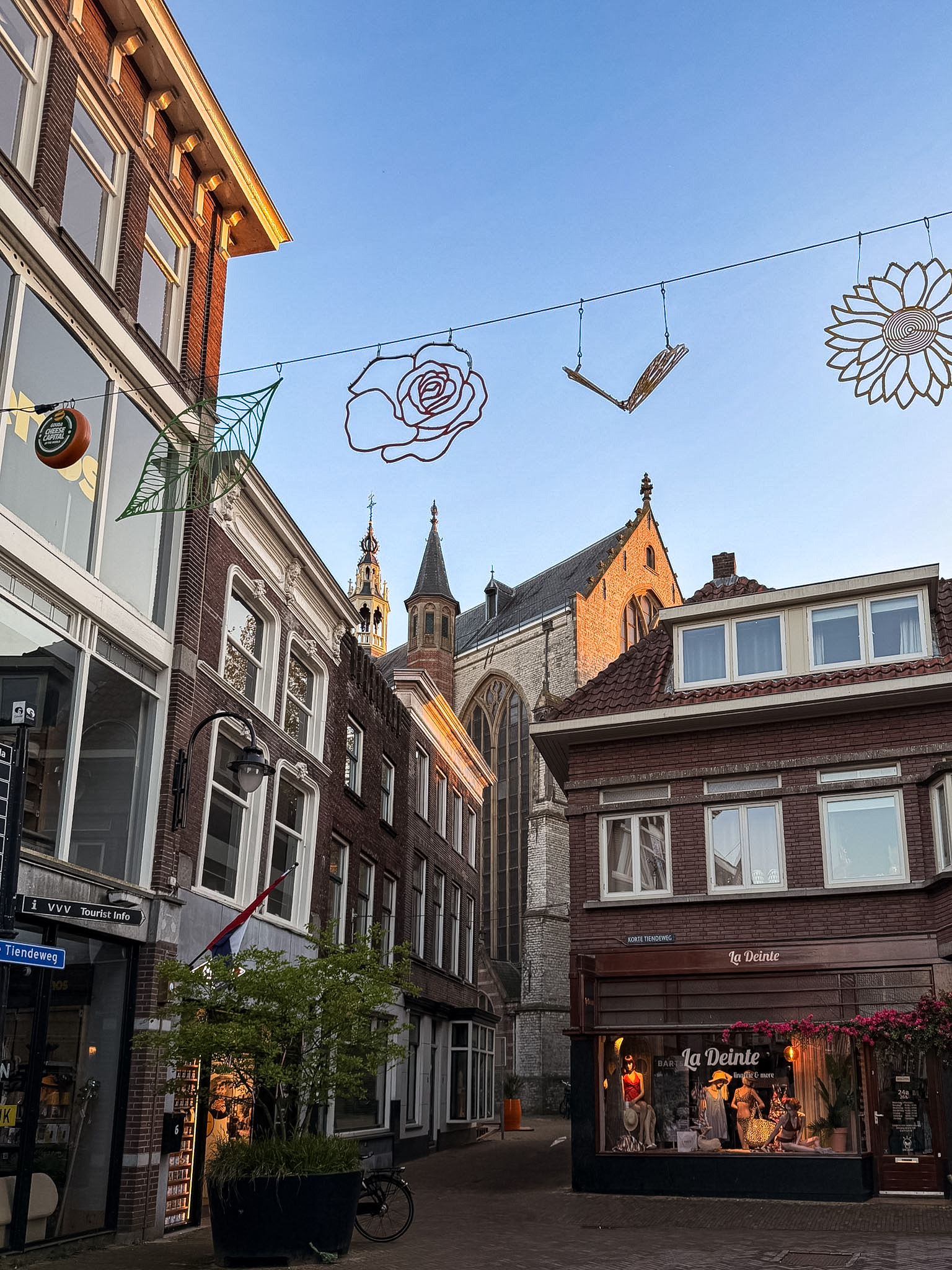
One of the things that stood out most was how compact everything felt. You can walk through canals, small shopping streets, bakeries, cafés, and historic squares without needing much of a plan.
Compared to Amsterdam, the city felt calmer and far less hectic. Even during the cheese market, it never felt overwhelmingly crowded outside the main square itself.
The historic center is centered around Markt, Gouda’s main square, which is honestly one of the prettiest squares we visited in the Netherlands. The old Gothic town hall sitting in the middle immediately grabs your attention, especially once the market stalls and cafés start filling the area during the day.
At night, though, the whole atmosphere changes completely. We arrived in the evening, checked into our room, then headed to dinner while wandering through the canals afterward. The city felt peaceful, quiet, and much more local once most of the day visitors left.
If you’re trying to decide where to base yourself during tulip season, my Where to Stay in the Netherlands (Best Areas to Do in One Trip) guide helps break down which cities work best for different trip styles.
The Gouda Cheese Market was probably the biggest thing I was curious about before visiting.
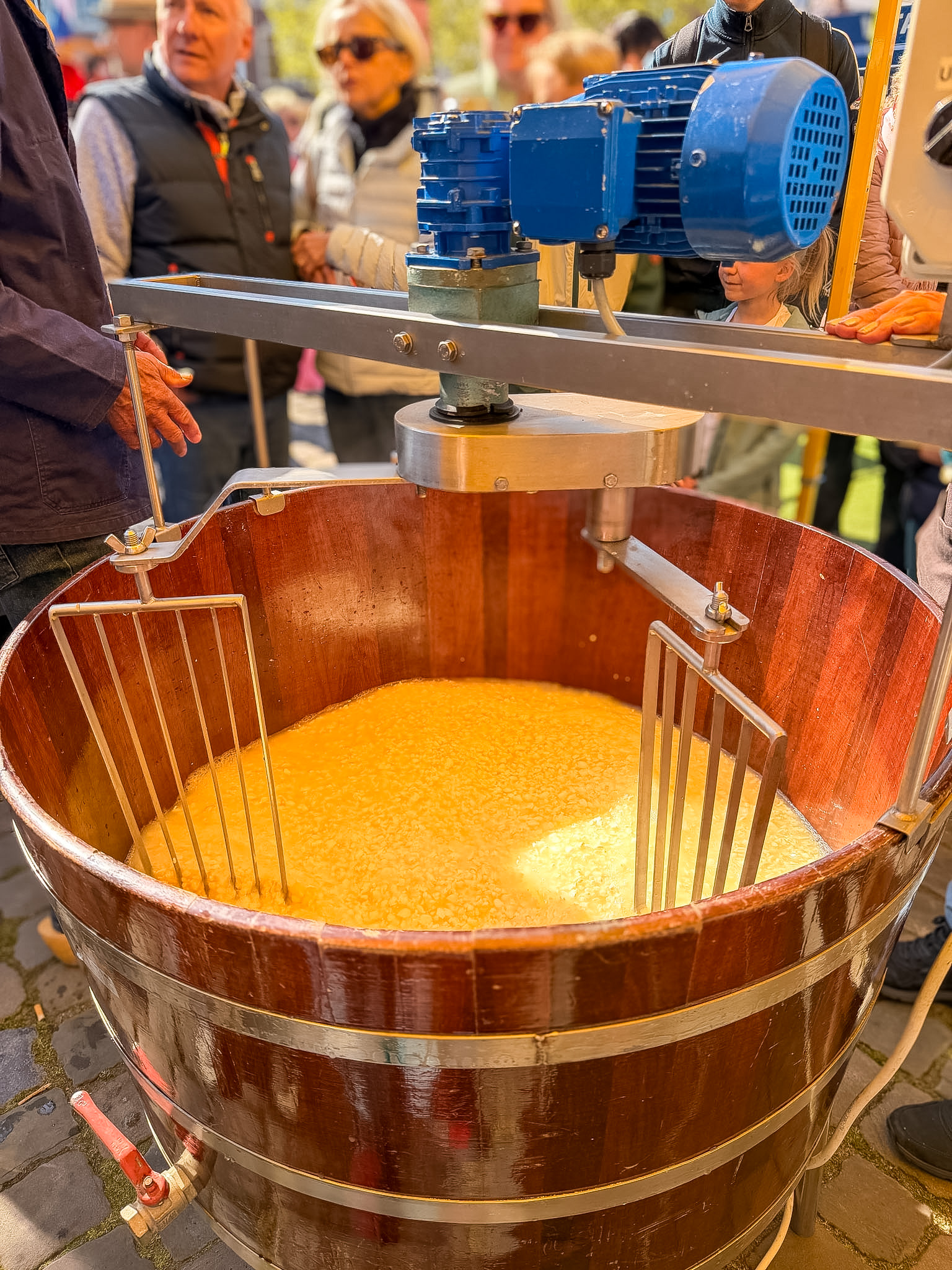
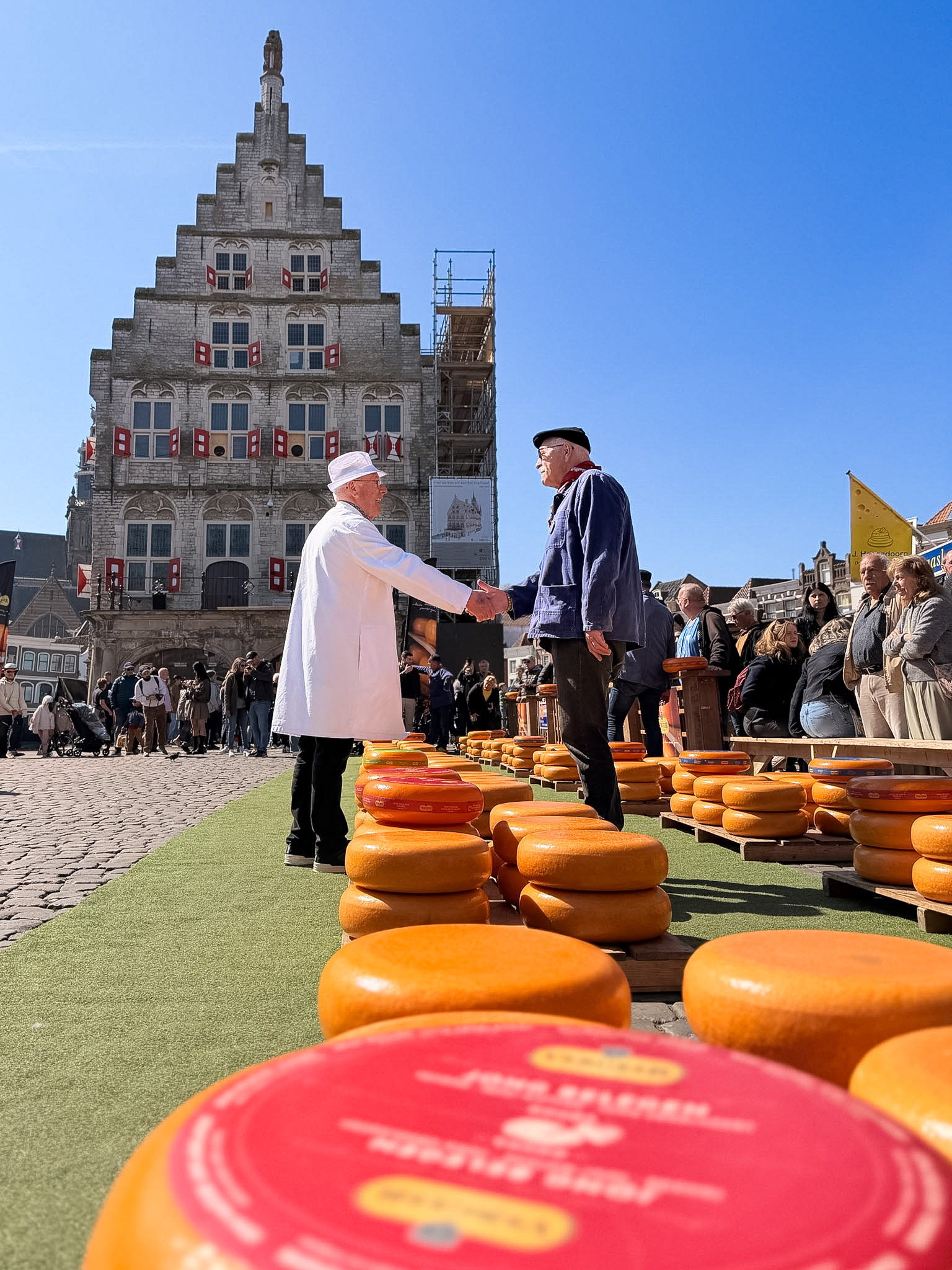
What surprised me most was that it felt more like a live Dutch history experience than an actual functioning local market. There are still real cheese deals happening, but there’s also a lot of reenactment, demonstrations, traditional clothing, staged moments, and photo opportunities mixed in throughout the morning.
It was more touristy than I expected, but still fun to experience once you understand what it actually is.
Historically, farmers from around Gouda brought cheese into the city because Gouda had official market rights during the Middle Ages. Deals were negotiated using a traditional hand-clapping system called “handjeklap,” and the cheese was weighed inside the Waag before sales became official.
At the time, this was serious business tied directly to the local economy.
Today, the market blends history with tourism. You’ll still see demonstrations of old trading customs and cheese weighing, but it’s very much designed as an attraction now too.
The market also had vendors, food stalls, cheese shops, souvenirs, and snack stands set up around the square, which made the entire area feel lively during the morning.
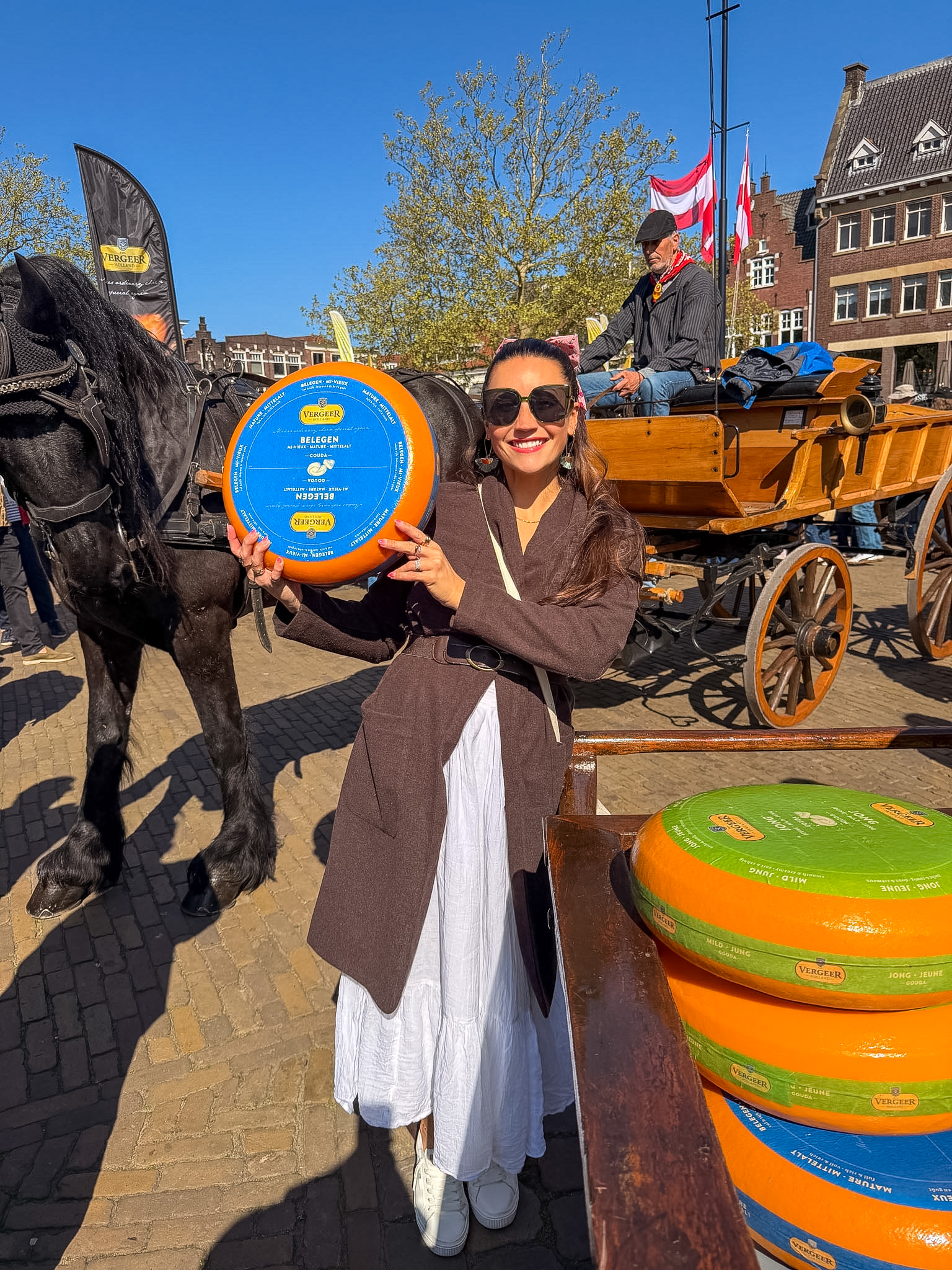
The Gouda Cheese Market does not happen every day.
It’s seasonal and usually runs on Thursday mornings from around April through late August during tulip season. Most years it operates roughly from 10:00 AM to 12:30 PM in the main market square.
That’s important to know before planning your trip because if you visit on another day, you’ll still get the canals, cheese shops, bakeries, and historic center, but you will not see the actual cheese trading demonstrations or market reenactments.
For anyone road tripping between cities, my Driving in the Netherlands (What It’s Really Like for Tourists) guide helps a lot with parking, navigation, and what driving around the country is realistically like.
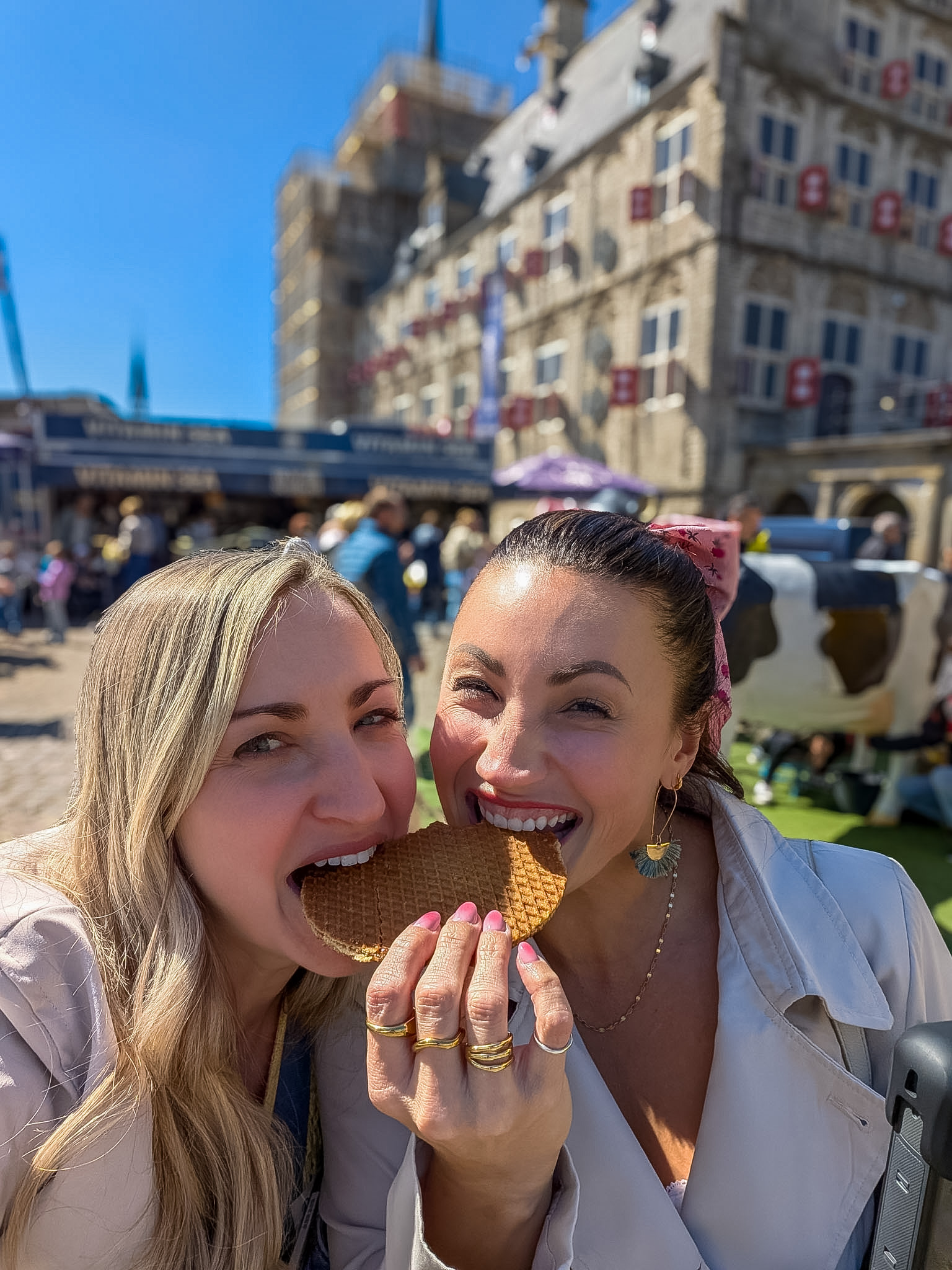
Most people immediately associate Gouda with cheese, but the city is also considered the birthplace of the stroopwafel.
The original stroopwafels were created here centuries ago by local bakers using leftover crumbs, dough, and syrup. Once you know that, it suddenly makes sense why the entire city smells like warm caramel waffles half the time.
We grabbed a fresh-made stroopwafel from the market, and I feel like that’s basically mandatory while visiting Gouda.
The fresh ones are completely different from the packaged versions most people have tried before. Warm syrup in the middle, softer waffle texture, slightly crisp edges. I fully understand the obsession now.
Between the cheese shops, bakeries, cafés, and food stalls, Gouda ended up feeling like one of the most food-focused cities we visited in the Netherlands.
Save this for later on Pinterest so you don’t forget it.
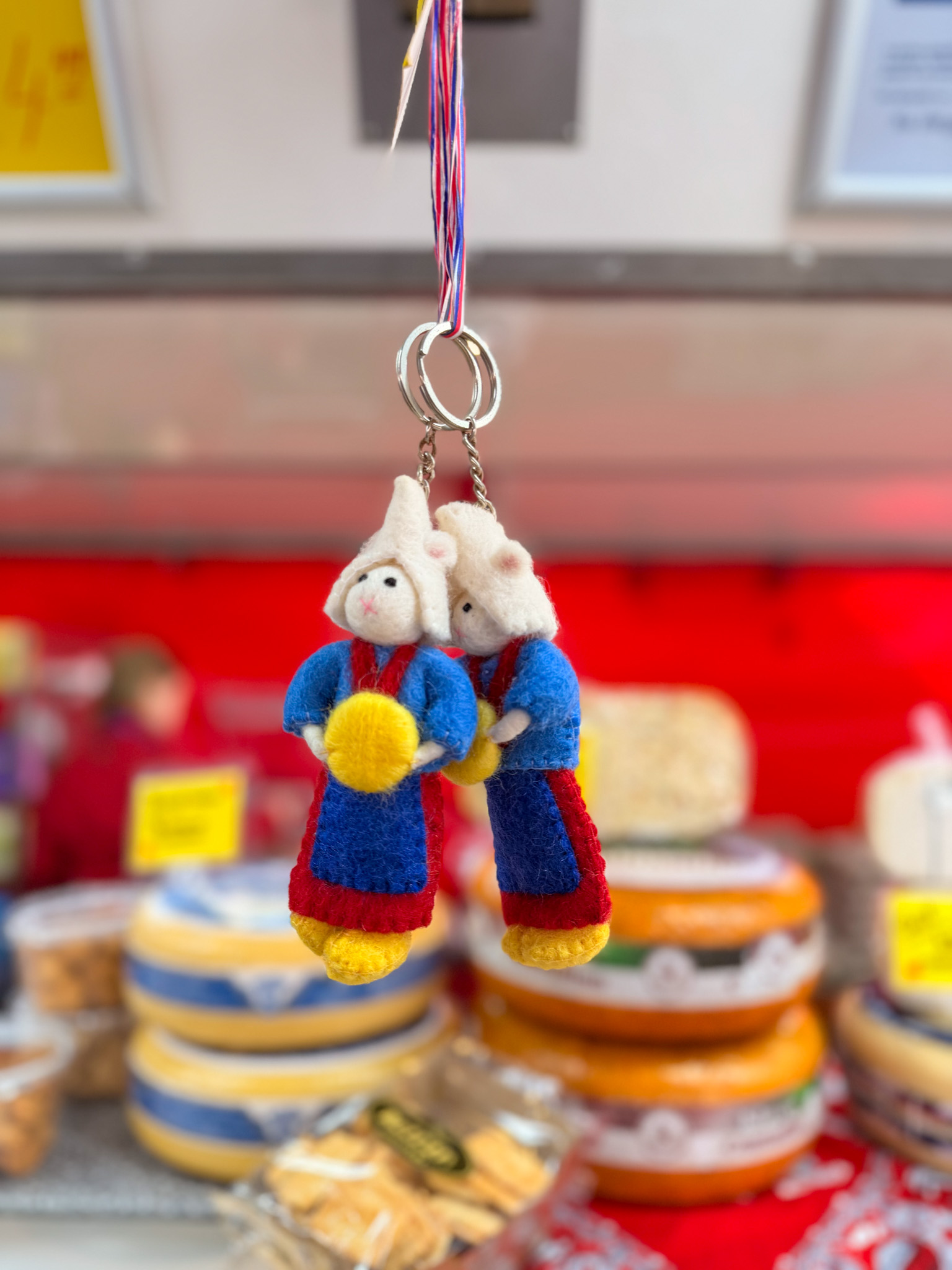
You really cannot visit Gouda without trying a ridiculous amount of cheese. We sampled several varieties throughout the city and ended up buying some souvenirs afterward too. Most shops offer tastings, so it’s easy to try different ages and flavors before buying anything. There were so many varieties beyond standard Gouda too. Truffle cheese, smoked goat cheese, cumin cheese, pesto cheese, paprika garlic cheese.
If you enjoy the cheese-focused side of Dutch travel, you’d probably also like Clara Maria Cheese Farm Netherlands Review.
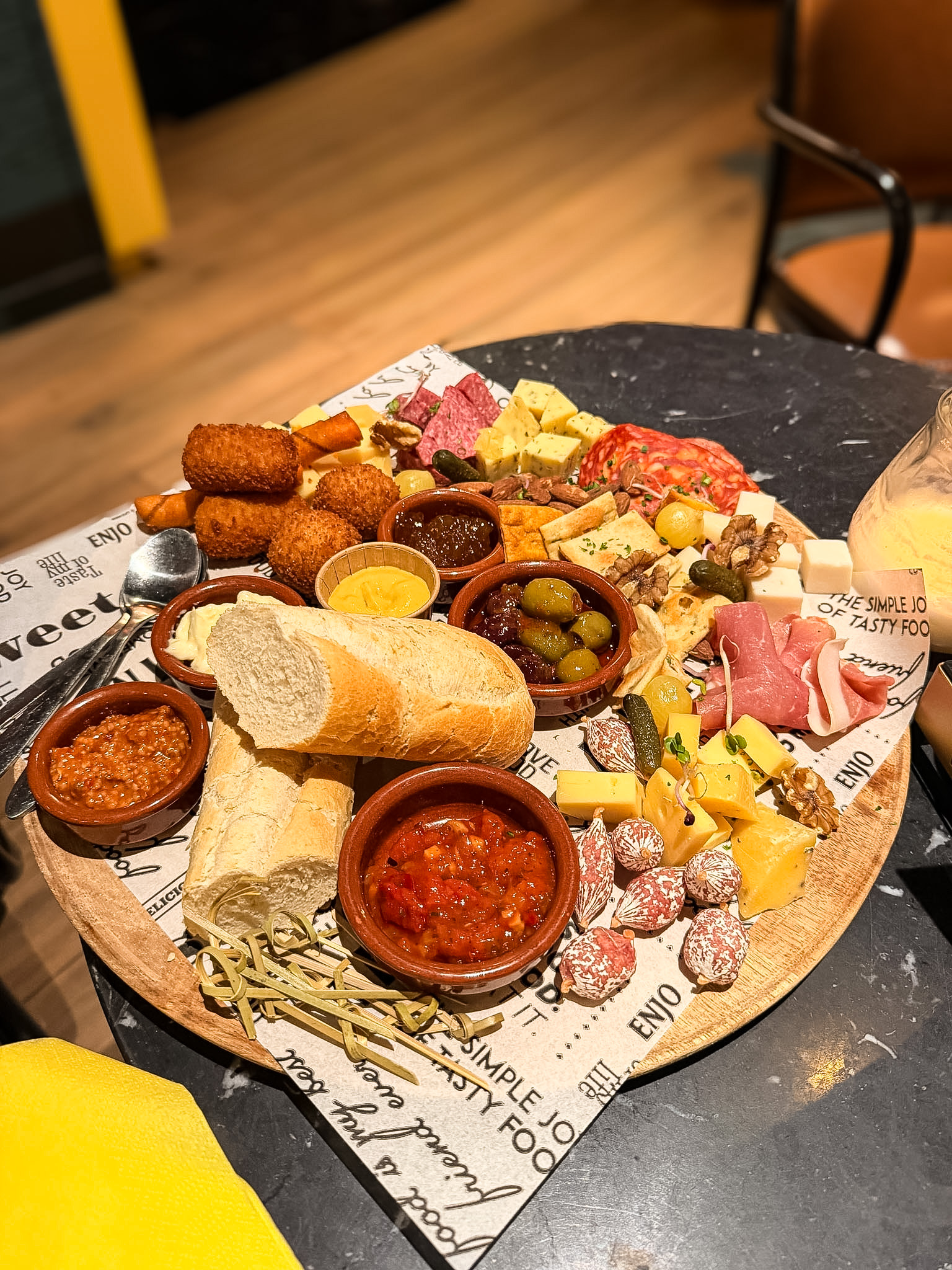
For dinner, we went to Kaasbar Gouda, which was a “Gouda” decision!
The restaurant is very centered around Dutch cheese comfort food. Cheese boards, fondue, croquettes, burgers topped with Gouda, loaded fries covered in cheese sauce, bitterballen, and basically every possible form of melted cheese you could think of.
The atmosphere felt casual and cozy instead of fancy, which worked perfectly after a long travel day.
We ordered the cheese board along with the Gouda cheese fondue, which felt like the correct first-night-in-Gouda decision considering the city literally has cheese in the name.
The cheese board was great for trying several local varieties at once, while the fondue came with bread and vegetables for dipping and ended up being much more filling than expected.
By the end of dinner, I felt approximately 82% cheese.
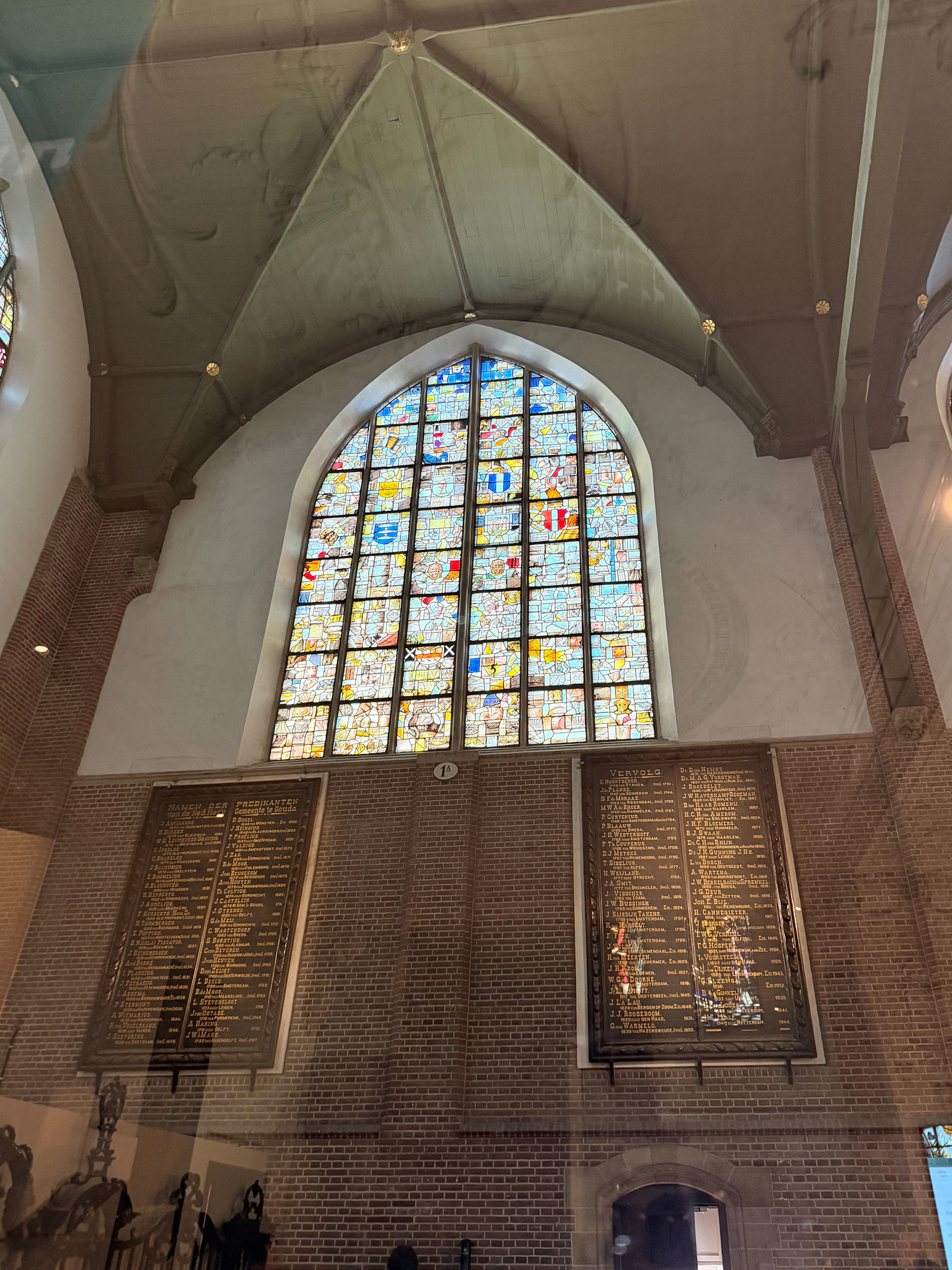
Sint-Janskerk is one of the most historically important churches in the Netherlands and worth visiting even if you normally don’t spend much time touring churches while traveling.
The church dates back to the 13th century and expanded multiple times as Gouda grew over the centuries. After a major fire in 1552 destroyed much of the building, it was rebuilt shortly afterward and eventually became the longest church in the Netherlands at around 123 meters long.
The biggest reason most visitors stop here today is for the famous “Gouda Glass.”
These enormous stained glass windows were created between 1555 and 1603, many designed by the Crabeth brothers, and they’re considered some of the most important Renaissance stained glass works in Europe.
Even if you are not deeply into architecture or church history, the scale of the windows is impressive once you’re standing inside.
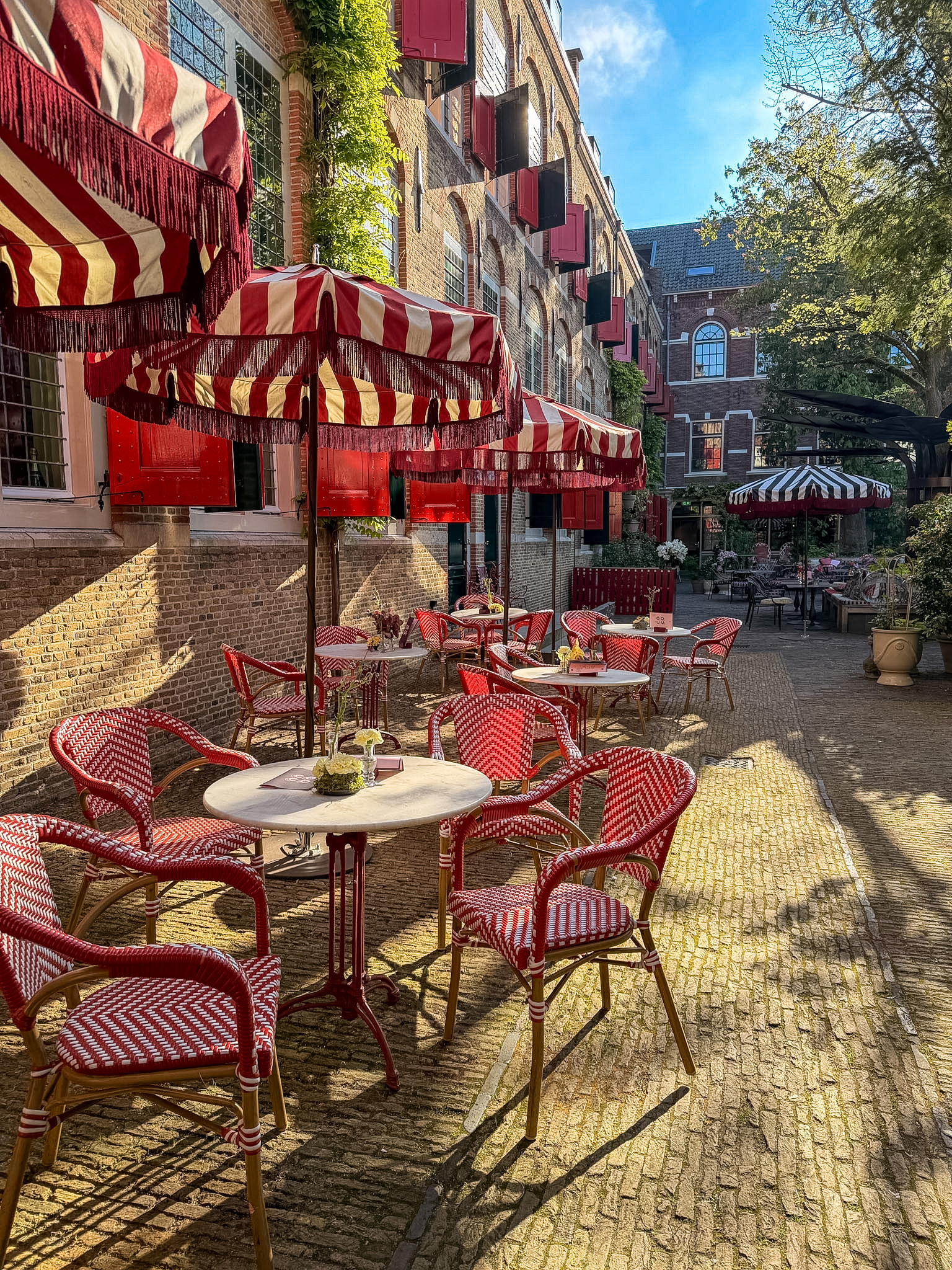
One breakfast spot I’d recommend is Café Coco, located inside the Relais & Châteaux Weeshuis Gouda hotel right in the center of the city.
The menu is much more modern brunch café than traditional Dutch breakfast.
They had smoothie bowls, yogurt dishes, sourdough egg breakfasts, sweeter dessert-style options, and some more savory plates with sausage, beans, avocado, spinach, and béarnaise sauce.
One of the sweeter dishes included blueberry crumpets with white chocolate and cinnamon sugar, which immediately caught my attention. The overall atmosphere felt trendy and cozy, its more of an elevated brunch café than quick coffee stop.
If you’re staying overnight in town, we stayed at Short Stay Gouda Review (Best Apartment Stay in Gouda?) which worked really well for walking around the city center.
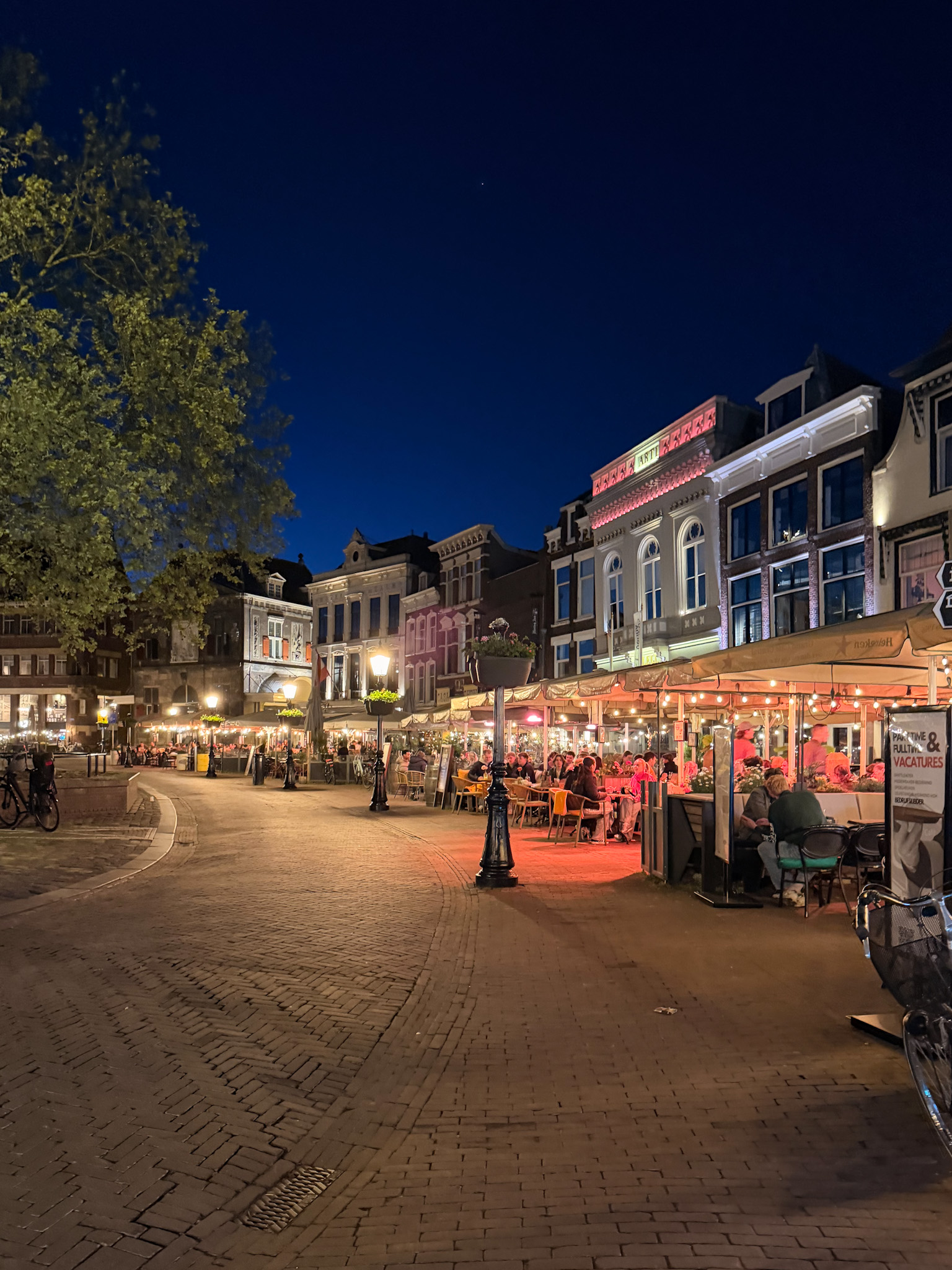
I think staying overnight in Gouda is absolutely worth it.
The city feels very different once the daytime crowds leave, especially around the market square and canals at night. During the evening, it became much quieter, calmer, and easier to explore casually.
It also works really well as a first stop after landing in the Netherlands because the city feels manageable and easy to navigate compared to Amsterdam.
You can comfortably see a lot in a short amount of time, but the slower pace makes it enjoyable to linger longer too.
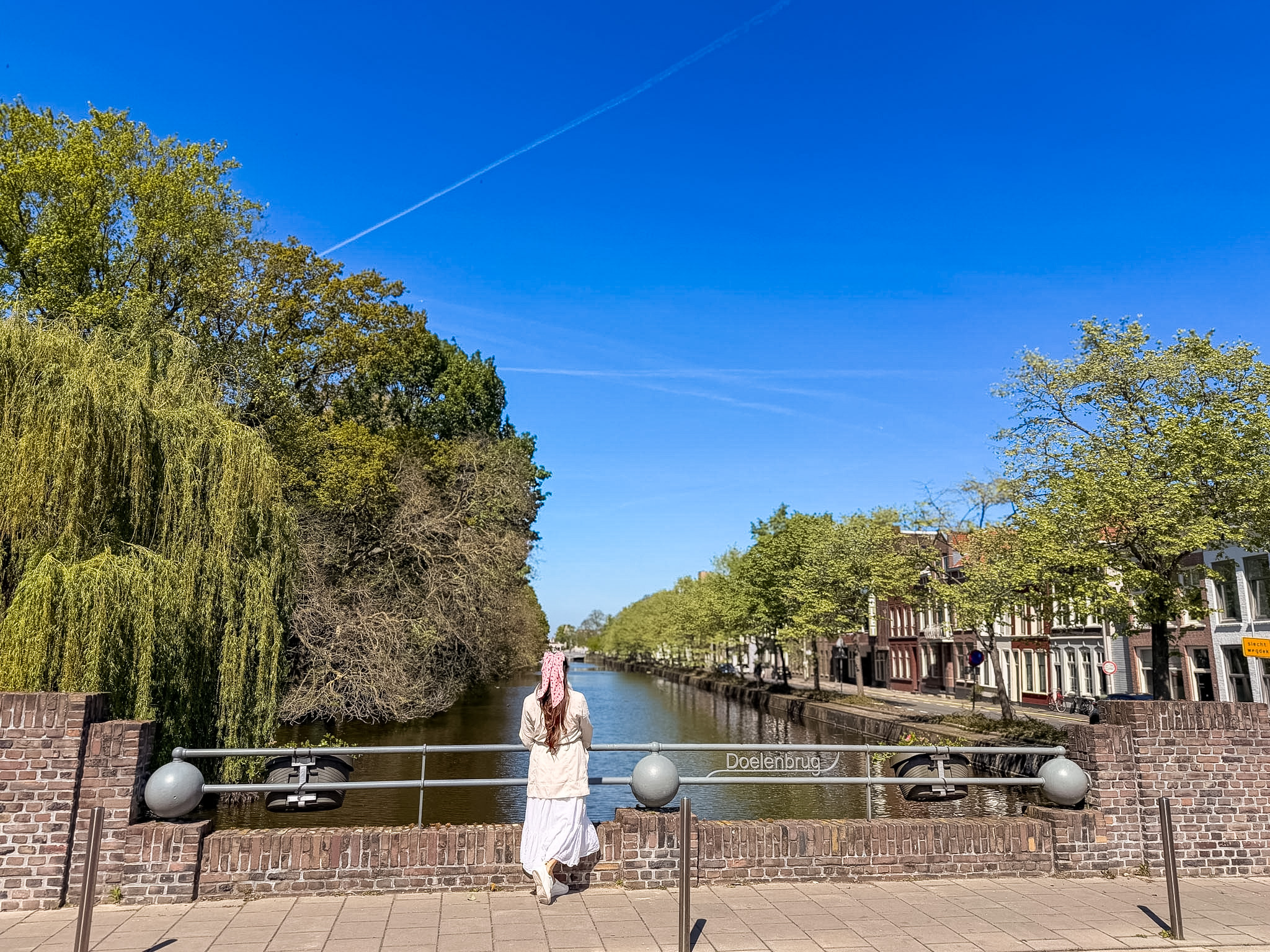
Gouda felt like a good middle ground between tourist-friendly and still historic.
Compared to nearby cities:
Gouda still attracts tourists, especially during cheese market mornings, but overall it felt less hectic than many other Dutch cities we visited during tulip season.
The combination of canals, food culture, historic architecture, cheese history, and walkability made it feel easy to enjoy without needing a packed itinerary.
If you’re exploring more nearby cities afterward, my Best Things to Do in Delft Netherlands and Best Things to Do in Haarlem Netherlands guides pair well with Gouda.
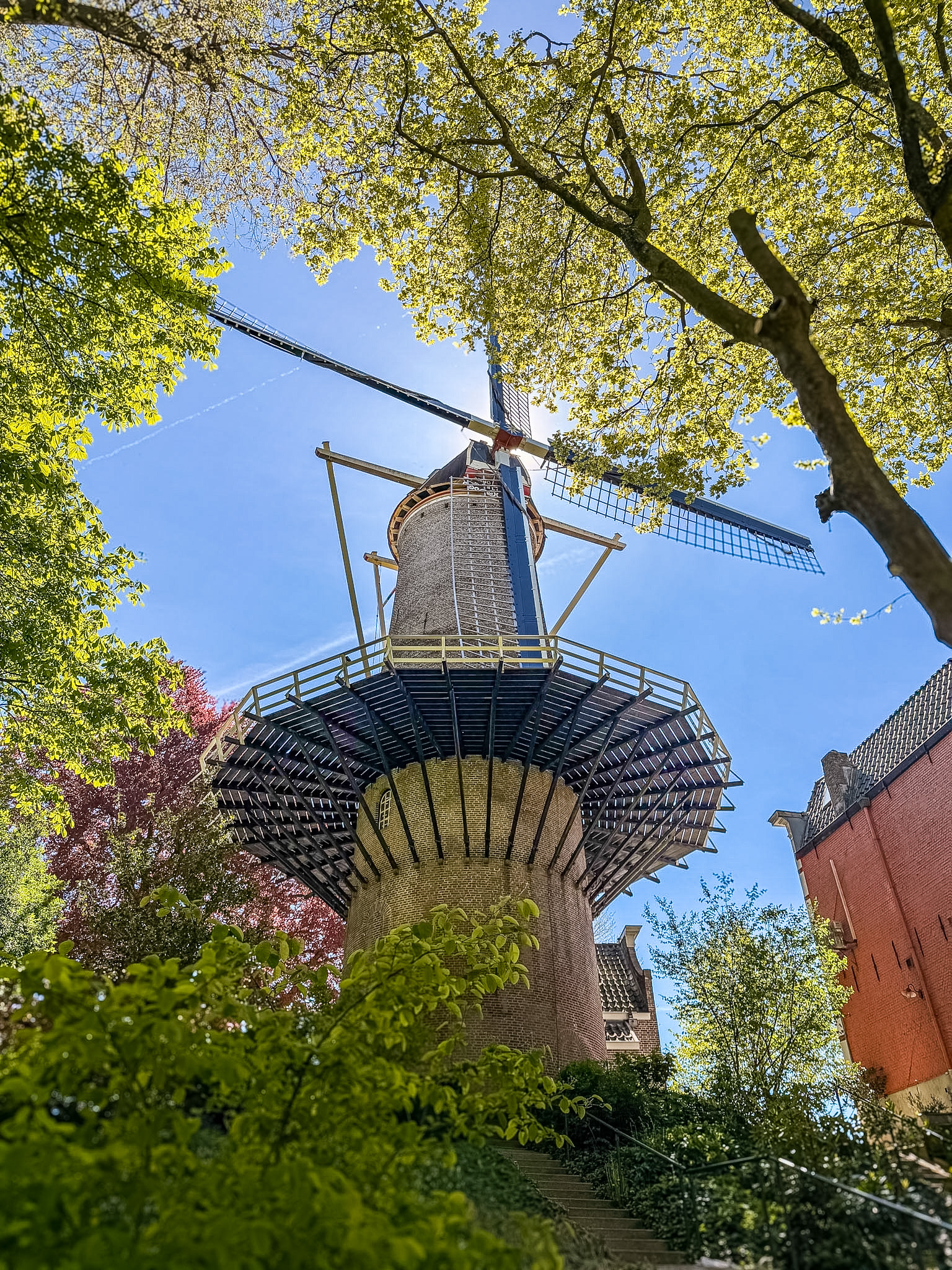
If you end up booking anything for your trip, using my affiliate links helps support my blog at no extra cost to you. I spend a lot of time researching and writing these guides, so I really appreciate the support.

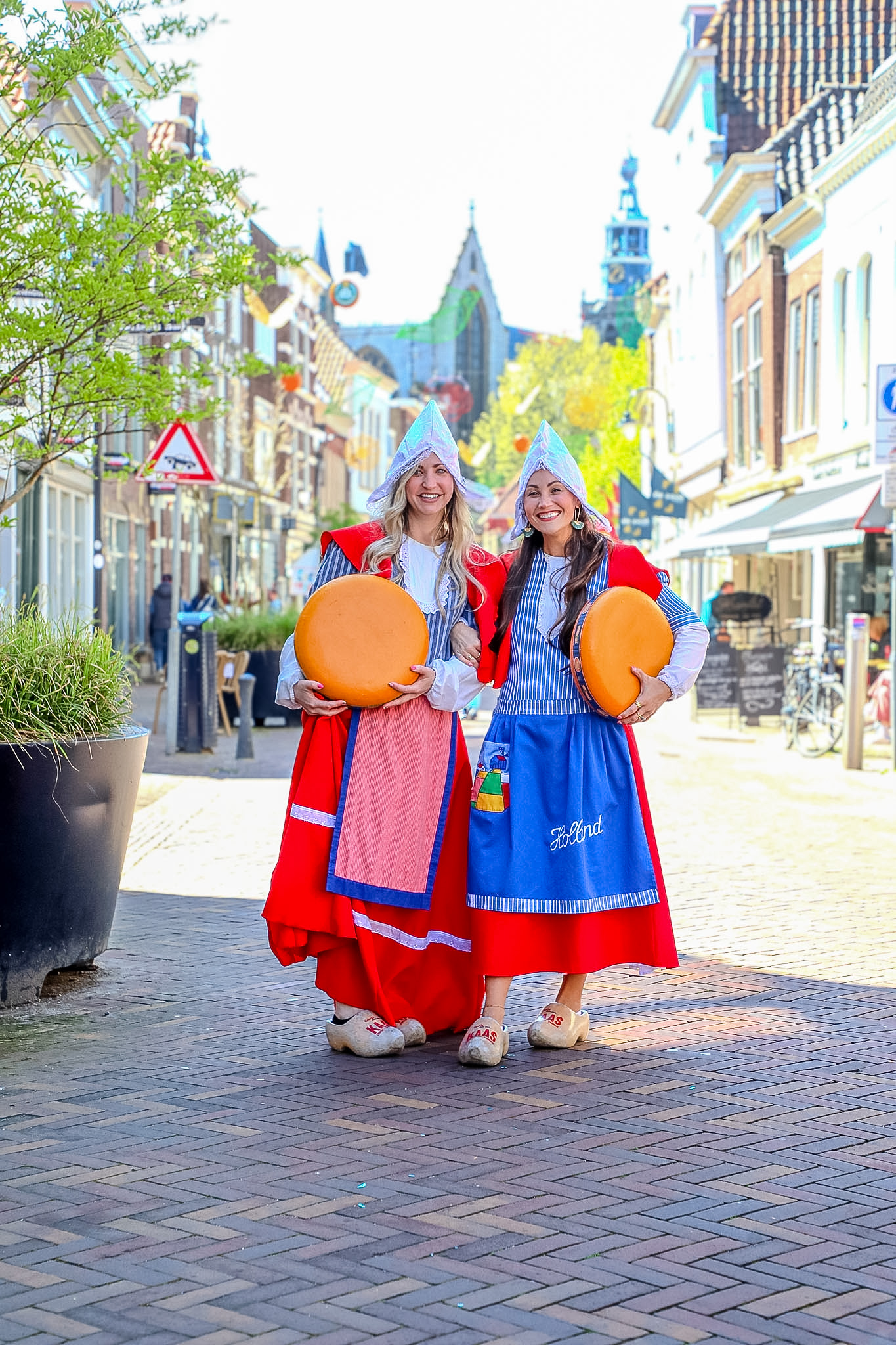
Booked this Bryson City yurt for the ‘ber months and it’s already my top fall pick this year. 🍂
The Junaluska Yurt sleeps six but feels more like a stylish cabin than a yurt, two real queen bedrooms with actual doors, a full kitchen, and a private bathroom with a walk-in shower. Check-in is just a door code texted to your phone, no lobby, no waiting.
The real win is outside: wraparound porch, private fire pit, free firewood, a gas grill, and Smoky Mountain sunsets that stop you mid-sentence, picture all of that with October color on the ridgeline. Heads up, the last stretch in is a gravel road, so skip the low-profile rental, and there’s no restaurant onsite, you’re minutes from Bryson City, Dillsboro, and Sylva for dinner.
Two to three nights is the sweet spot. (We actually stayed in the dead of winter and it was still stunning, fall just takes it up a notch.) Full review linked in bio.

Italian food felt like the last thing I expected to find in the middle of the Appalachian Mountains... until I sat down at Ilda in Sylva.🍝
They call it Italian-Appalachian, and that’s not just a tagline. Homemade pasta, craft cocktails, local ingredients pulled straight from the mountains around it, this is the kind of meal that makes you forget you’re two hours from the nearest city. It’s cozy, it’s a little upscale, and it is not a walk-in kind of place, call ahead, because tables go fast on weekends.
It’s not cheap, and it’s not trying to be. But if you’re already making the trip out to Sylva, this is the one reservation worth planning your day around.
Full write-up, including what to order, link in bio.
Booked my fall cabin before September even started, and I’m not sorry about it. 🍂
These are the stays that make you actually want the cold to hurry up fireplaces, mountain views, the kind of porch you don’t leave. Not every one of these is going to fit every trip, but if a cozy fall getaway is on your radar, this is the roundup to start with.
One of my favorite travel seasons is almost here, and I have zero chill about it. 🍁✈️
There’s just something about fall trips cooler air, apple orchards, that first flannel of the season, food that actually makes sense with the weather again. I’m already mentally packing for it before September even starts.
If fall is your favorite time to travel too, tell me where you’re headed... I’m taking notes for the list.
Pack your bags... ✈️🧳My hiking and road trip gear shop just got a refresh, and this is everything that actually earns a spot in my bag. The dry bag pulls double duty for beach days and trail days, the Osprey backpack is the one I grab for anything motorcycle or day-hike related, and the GoPro comes with me literally everywhere at this point.
Nothing on this list is filler it’s all stuff I’ve used, packed, and repacked more times than I can count. Full shop linked in my bio if you want to build out your own kit before your next trip.

Follow @travelwithwendyplummer for Beautiful Beach Destinations, City Guides, Foodie Spots, and Luxury Hotel Recommendations.